
Rear-end accident attorney fresno ca farm truck collision: A practical guide
Picture a stretch of Highway 99 south of Fresno during almond harvest, where a tractor pulling a trailer loaded with bins creeps along at 15 miles per hour while cars close in behind at 60. A collision in that setting raises questions a typical rear-end crash doesn’t. A rear-end accident attorney fresno ca farm truck collision case usually turns on speed differential, visibility equipment, and who had the last clear chance to avoid impact, and the answers often differ from a standard two-car freeway crash.
Key Takeaways
- Speed gap matters most: Farm equipment often moves 15-25 mph slower than surrounding traffic, which shifts part of the fault analysis toward following distance and driver attentiveness.
- Lighting and marking rules apply: California requires slow-moving vehicles to display a reflective SMV emblem and functioning lights after dark; missing equipment can shift liability toward the farm vehicle operator.
- Multiple insurance layers may exist: A claim might involve the driver’s personal policy, an employer’s commercial ag policy, or an equipment owner’s coverage, depending on who operated the vehicle and why.
- California’s minimum coverage may fall short: The state requires only $30,000 per person and $60,000 per accident in liability coverage, an amount that can be used up quickly after a serious crash.
- Evidence is more specialized: Photos of the SMV triangle, equipment width, load type, and field entry points can matter as much as the police report itself.
At a Glance: Farm Vehicle Rear-End Crashes Near Fresno
| Factor | Typical Passenger-to-Passenger Crash | Farm Truck / Ag Vehicle Crash |
|---|---|---|
| Speed differential | Usually minimal | Often 15-40 mph, higher impact risk |
| Visibility equipment | Standard brake lights | SMV triangle, sometimes flashing amber lights required |
| Possible liable parties | One driver, one insurer | Operator, farm employer, equipment owner, possibly a labor contractor |
| Common road types | City streets, freeways | Rural two-lane highways (99, 41, 168, 180) |
| California minimum liability coverage | $30,000/$60,000 | Same minimum, but commercial ag policies may carry higher limits |
| Evidence priorities | Dashcam, skid marks, witness statements | SMV emblem condition, load type, field access points, harvest schedule |
| Typical claim timeline | Several months to a year | Can take longer if multiple insurers or entities are involved |
1. Understand Why Farm Truck Collisions Are Different
Fresno County sits in the heart of California’s Central Valley, where agriculture isn’t background scenery, it’s the daily traffic pattern. Tractors, grape trailers, and harvest equipment share the same rural highways as commuters and freight trucks, sometimes moving at a fraction of posted speed limits. That gap between a farm vehicle’s pace and everyone else’s creates a distinct kind of rear-end risk.
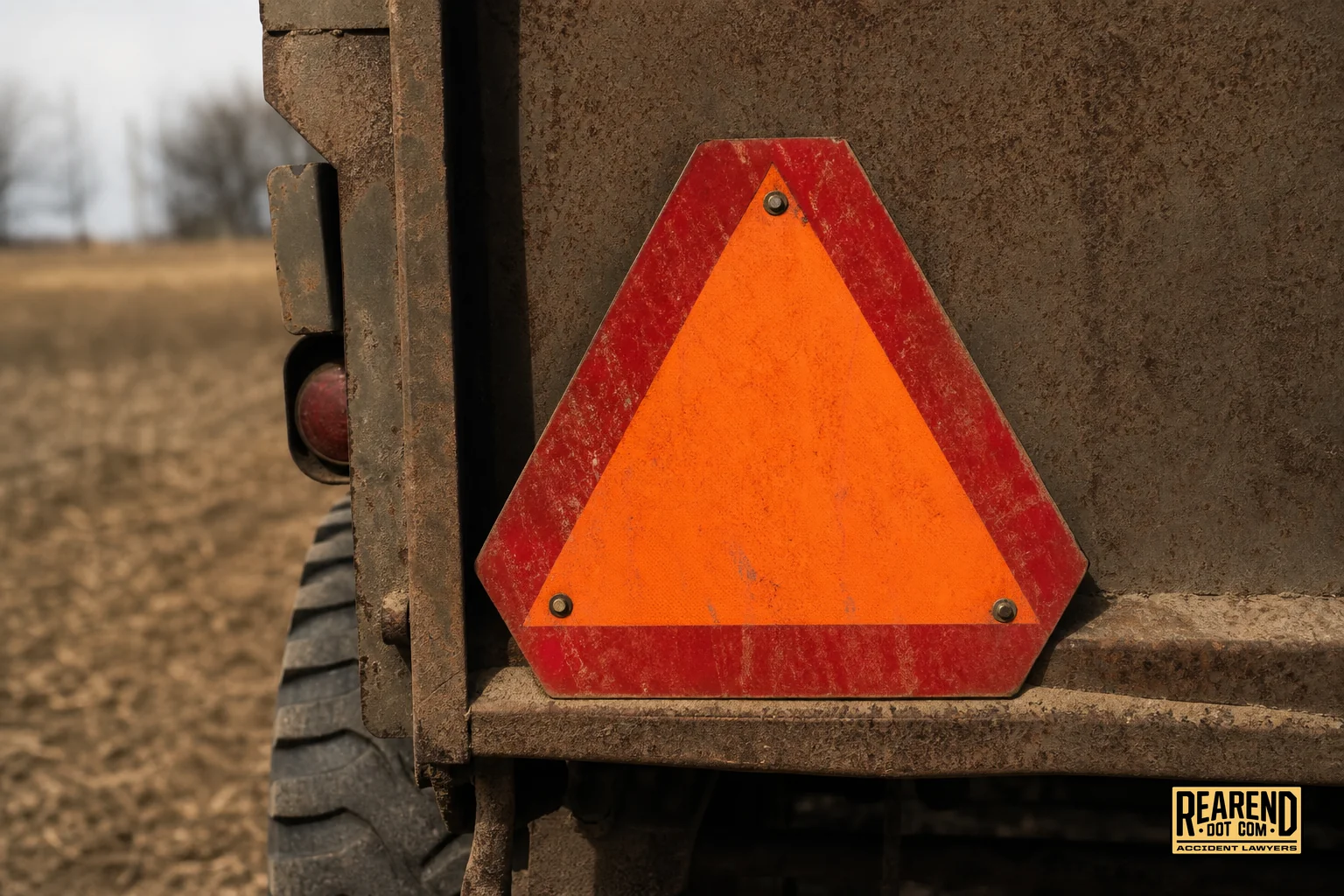
Farm equipment is generally required to display a reflective orange slow-moving-vehicle (SMV) emblem when traveling under 25 mph, along with any lighting the vehicle code requires for low-visibility conditions. When that equipment is missing, damaged, or obscured by dust and debris, following drivers may have less warning than they would behind a typical car. That single detail can change how fault gets divided.
At the same time, a driver approaching from behind generally still carries a duty to watch the road and leave enough space to stop safely, even around slower traffic. Courts and insurers usually look at both sides: was the farm vehicle properly marked and lit, and was the following driver paying attention and keeping a reasonable distance? Neither question resolves the case alone.
2. Identify Who May Be Responsible
Fault in a farm truck rear-end collision can spread across more parties than a standard crash. Consider a few common scenarios:
- The farm vehicle operator: If the equipment lacked required markings, had a burned-out light, or made an unexpected turn into a field without signaling, the operator may share fault.
- The following driver: If the driver was distracted, following too closely, or misjudged the vehicle’s speed, they may bear primary responsibility, similar to many standard rear-end cases.
- An agricultural employer or labor contractor: If the equipment operator was working for a farm business at the time, the employer’s commercial policy might come into play under vicarious liability principles.
- An equipment owner separate from the operator: Leased or rented farm equipment sometimes involves a third company that maintains and insures the machinery.
Because more than one entity might carry potential responsibility, an early investigation matters. A rear-end accident involving multiple parties often requires sorting out several policies before a fair number can even be discussed.
3. Gather Evidence Specific to Agricultural Vehicle Crashes
Standard crash evidence, like photos of vehicle damage and the police report, still matters here. But farm vehicle cases usually call for a few additional details that a general fender-bender wouldn’t require.
What to Document at the Scene
- Condition and placement of the SMV emblem, or whether one was present at all
- Whether the equipment’s lights, if any, were functioning at the time of the crash
- The type of equipment involved (tractor, combine, grain trailer, sprayer) and its approximate width and load
- Nearby field entrances, driveways, or irrigation crossings the vehicle may have been entering or exiting
- Contact information for any farmworkers or passersby who witnessed the crash
If the report is incomplete or contains errors about the equipment involved, that alone doesn’t end your options. Similar to other crash types, you can generally still file a claim if the police report is wrong, using photos, witness statements, and other evidence to fill gaps.
Why Timing Matters More in Rural Areas
Farm equipment often clears the road quickly once a crash is reported, since harvest schedules and field access can’t always wait. Photos and video taken within the first hour, before the equipment is moved or the scene is cleared, tend to hold more weight than descriptions written from memory later. The general guidance from the rear-end accident checklist for the first 24 hours applies here too, just with a few added items specific to agricultural equipment.
4. Know How Fresno’s Rural Roads Affect the Claim
Corridors like Highway 99, Highway 41, Highway 168, and the two-lane county roads that connect Fresno’s outlying farming communities see heavy seasonal equipment traffic, especially during planting and harvest windows from spring through fall. Shoulders on many of these roads are narrow, lighting is limited outside of town centers, and dust from nearby fields can reduce visibility further.
Local sheriff’s deputies and CHP officers who patrol these routes are generally familiar with farm equipment traffic, but a busy harvest season can mean delayed response times and reports that focus more on immediate safety than on documenting equipment specifics. That’s part of why independent photos and witness accounts carry extra weight in these cases.
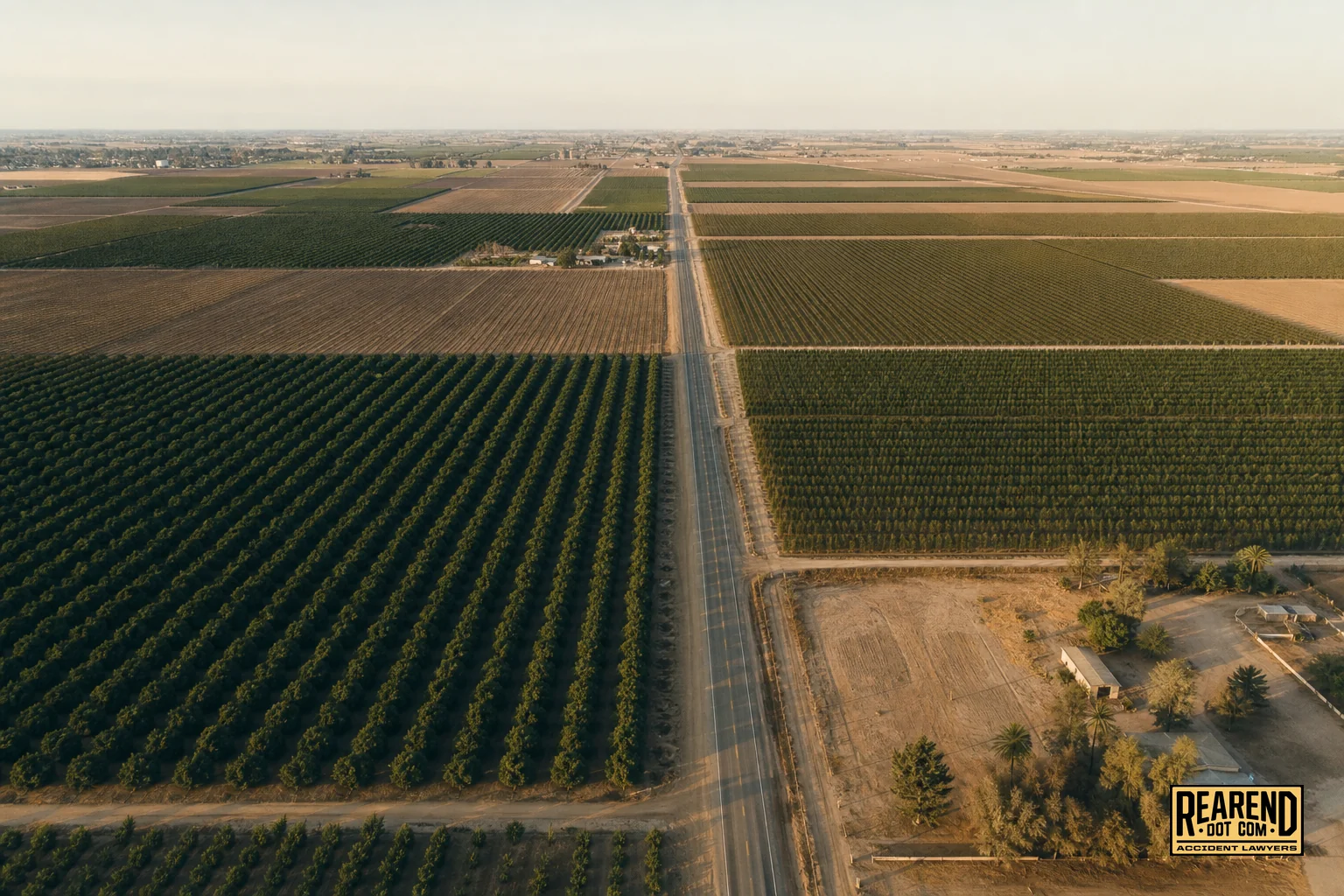
Weather and dust conditions specific to the Central Valley, combined with harvest traffic patterns, are details a Fresno-based case may need to explain to an insurer or, if it comes to that, a jury unfamiliar with the region. This is one reason working with an attorney who has handled numerous rear-end cases in this specific area can help frame the claim accurately.
5. Work Through the Insurance and Legal Process
Once you know roughly who may be at fault, the next step is figuring out which policy, or policies, should respond to your claim. This can take longer in ag-vehicle cases because it may involve confirming whether the operator was working within the scope of employment at the time, or whether the equipment itself was separately insured.
California law sets a minimum liability coverage of $30,000 per person and $60,000 per accident. That amount can be used up quickly once medical bills, lost wages, and vehicle repair costs are added together, particularly in a higher-speed impact involving heavy equipment. If the responsible party only carries the state minimum, your own underinsured motorist coverage may need to fill the gap, a topic covered in more depth in our piece on whether California’s minimum coverage is enough after a serious crash.
Farm businesses and equipment operators sometimes carry commercial agricultural policies with higher limits than a personal auto policy, which is one reason identifying the correct insured party matters so much in these cases. An insurance requirement overview from the California DMV outlines the state’s baseline rules, though commercial and agricultural vehicles can be subject to additional requirements under the Federal Motor Carrier Safety Administration depending on the vehicle’s classification and use.
If you’re unsure whether an insurance adjuster’s questions are appropriate to answer right away, it’s worth reviewing what generally happens after an adjuster calls following an accident before giving a recorded statement.
6. Choose the Right Attorney for This Type of Case
Not every personal injury lawyer has worked a case involving agricultural equipment, and the details, SMV compliance, employer liability, rural road conditions, aren’t things every firm deals with regularly. Rather than searching for a “specialized” farm-collision attorney, since no formal specialization exists in this niche, look for a skilled accident attorney who has handled numerous rear-end cases and can point to experience with unusual vehicle types or rural crash scenarios.
Questions Worth Asking
- Have you handled rear-end claims involving farm equipment, commercial trucks, or other slow-moving vehicles before?
- How do you plan to identify all potentially responsible parties and their insurance coverage?
- What evidence would you want collected from the scene, beyond the police report?
- How is your fee structured, and what happens if the case doesn’t result in compensation?
These questions mirror the broader guidance in our overview of no-fee rear-end representation, which explains how contingency arrangements generally work regardless of where in California the crash happened.
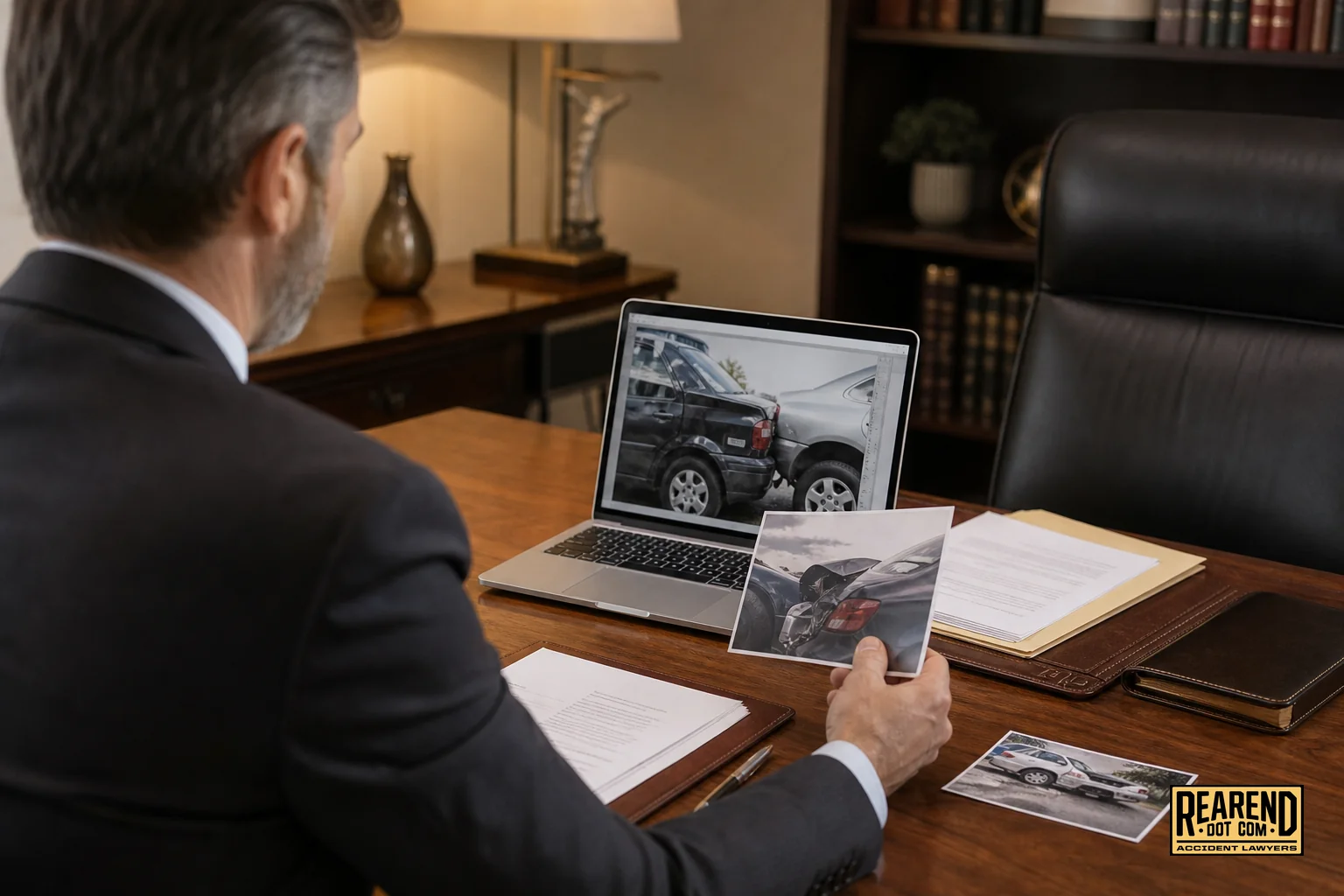
rearend.com works with a network of attorneys who take on rear-end cases, including less typical scenarios like farm equipment or commercial vehicle collisions around Fresno. If you’d like a starting point, you can review your claim in just a few clicks for free and get a sense of your options before deciding how to move forward.
Frequently Asked Questions
Can I sue if I was rear-ended by a farm vehicle?
Generally, yes. The same legal principles that apply to other rear-end crashes apply here: if another party’s negligence, whether that’s a following driver or an improperly marked farm vehicle, contributed to the crash, you may have grounds for a claim. Our general explainer on whether the California Highway Patrol handles fault determination on rural highways can also offer helpful context for how these reports get filed.
How much does a rear-end accident lawyer cost in a case like this?
Many firms, including the attorneys connected through rearend.com, generally work on a contingency basis, meaning you typically pay nothing upfront and the fee comes from any compensation recovered. If you want a rough sense of potential value before speaking with anyone, you can use a tool to calculate an estimate of what your potential claim could be worth, keeping in mind that farm-vehicle cases with multiple insurers can take longer to value accurately.
How long does a rear-end accident settlement involving a farm vehicle take?
These cases can take longer than a typical two-car crash because more than one insurance policy may need to be identified and involved. Settlement timing depends on how quickly liability is established between the operator, employer, and following driver, and how complex the medical or repair records are.
What if my car needs repairs after the crash?
Once your claim is underway, you can find trusted local auto body shops to get an estimate and begin repairs, separate from the legal side of your claim.
A rear-end collision with a farm truck or piece of agricultural equipment near Fresno rarely fits the mold of a typical fender-bender claim, and treating it that way can leave real compensation on the table. If you’re sorting through fault, insurance coverage, or evidence after a crash like this, start my claim today and get a clearer picture of where you stand before talking to an insurance adjuster on your own.
Related Articles


Need Legal Help After a Rear-End Accident?
Get a free consultation with our experienced legal team