
Oceanside Rear-End Crash: Is CA Minimum Coverage Enough?
If the driver who hit you in Oceanside only carries California’s minimum insurance coverage, that policy may cap out at $30,000 per person and $60,000 per accident, an amount that could fall short once medical bills, lost wages, and vehicle repairs are added up. Understanding this gap early, before you sign anything with an insurance adjuster, may help you protect what you’re owed.
Key Takeaways
- California’s minimum liability limits: $30,000 per person, $60,000 per accident for injuries, plus $15,000 for property damage, a floor set by state law, not a ceiling on what a crash might actually cost.
- Medical costs can outpace the minimum quickly: Emergency care, imaging, physical therapy, and chiropractic visits after a rear-end crash frequently reach into five figures within weeks.
- Underinsured motorist (UIM) coverage may help: If you carry UIM on your own policy, it could potentially cover the difference between the at-fault driver’s limit and your actual damages.
- Oceanside’s busier corridors see frequent rear-end crashes: Highway 76, El Camino Real, and the I-5 through Oceanside are common sites for sudden-stop collisions.
- A free case evaluation can clarify your options: Reviewing the at-fault driver’s policy limits and your own coverage before accepting any settlement offer may prevent leaving money on the table.
At a Glance: Minimum Coverage vs. Typical Rear-End Accident Costs
| Category | California Minimum Coverage | Possible Real-World Cost |
|---|---|---|
| Bodily injury (per person) | $30,000 | Could range higher with ER visits, imaging, and ongoing therapy |
| Bodily injury (per accident) | $60,000 | May be split among multiple injured occupants |
| Property damage | $15,000 | Newer vehicles or multi-car damage may exceed this |
| Physical therapy (6-8 weeks) | Not separately itemized | Often several thousand dollars alone |
| Lost wages | Not covered by minimum liability | Varies based on missed work and recovery time |
| Underinsured motorist (UIM) gap coverage | Optional, on your own policy | May help bridge the shortfall if purchased |
1. Understand California’s Minimum Insurance Requirements
California requires drivers to carry minimum liability coverage of $30,000 per person and $60,000 per accident for bodily injury, along with $15,000 for property damage. This structure is often shortened to “30/60/15” by attorneys and insurers alike. It’s a legal floor, the smallest amount a driver can carry and still be considered insured, not a guarantee that it matches the actual cost of a crash.
These limits apply statewide, whether the collision happens in downtown Oceanside, on the freeway near Camp Pendleton, or anywhere else in San Diego County. Many drivers carry only this minimum because it’s the cheapest option available, which means the driver who rear-ends you may be covered for far less than what your recovery actually requires.
2. Why Rear-End Crashes in Oceanside Often Cost More Than the Minimum
Oceanside’s traffic patterns create frequent stop-and-go conditions, particularly along Highway 76, El Camino Real, and the stretch of I-5 that runs through the city. Rear-end collisions often happen when a driver looks away for a moment, or following distance shrinks during congestion near shopping centers and beach traffic.
Even a moderate-speed rear-end impact can cause whiplash, soft tissue injuries, or disc issues that don’t show symptoms right away. A trip to urgent care, follow-up imaging, and several weeks of physical therapy can add up faster than most people expect. Combine that with a damaged bumper, trunk, or frame, and the total cost of a seemingly “minor” crash may climb well past what a minimum policy is built to pay.
For a closer look at how these numbers add up, see Rear-End Settlement Payouts: What Factors Affect the Amount?
3. What Happens When the At-Fault Driver Only Has Minimum Coverage

When a claim is filed against the at-fault driver’s insurer, that company generally pays up to the policy limit and no more. If your medical bills, lost wages, and vehicle repair costs total $45,000 but the driver only carries $30,000 in per-person coverage, the remaining balance doesn’t disappear. Someone still has to account for it, and without additional coverage, that responsibility may fall back on you.
This is precisely the scenario where underinsured motorist (UIM) coverage becomes relevant. If the numbers don’t add up in your favor, it’s worth understanding what other options might exist before accepting a settlement offer that only reflects the at-fault driver’s policy limit. You can learn more about how insurers evaluate and sometimes minimize payouts in Will Insurance Pay If I Was Rear-Ended or Will They Try to Lowball Me?
4. Checking Your Own Underinsured Motorist (UIM) Coverage
Underinsured motorist coverage is an optional add-on to your own auto policy. It’s designed to potentially cover the gap when the at-fault driver’s liability limits fall short of your actual damages. If you carry UIM coverage, your own insurer may pay the difference, up to your policy’s UIM limit, once the at-fault driver’s insurer has paid out its portion.
A few practical steps can help you understand where you stand:
- Pull out your auto insurance declarations page and look for a line labeled “Underinsured Motorist” or “UIM.”
- Note the dollar limits listed, these determine how much additional coverage may be available.
- If you’re unsure whether you carry UIM coverage at all, contact your insurer directly to ask.
- Keep this information on hand before any settlement discussion with the at-fault driver’s insurance company.
According to the California DMV’s insurance requirements page, the state sets these liability minimums but does not require drivers to purchase UIM coverage, which is why checking your own policy matters so much.
5. Steps to Take After an Oceanside Rear-End Collision
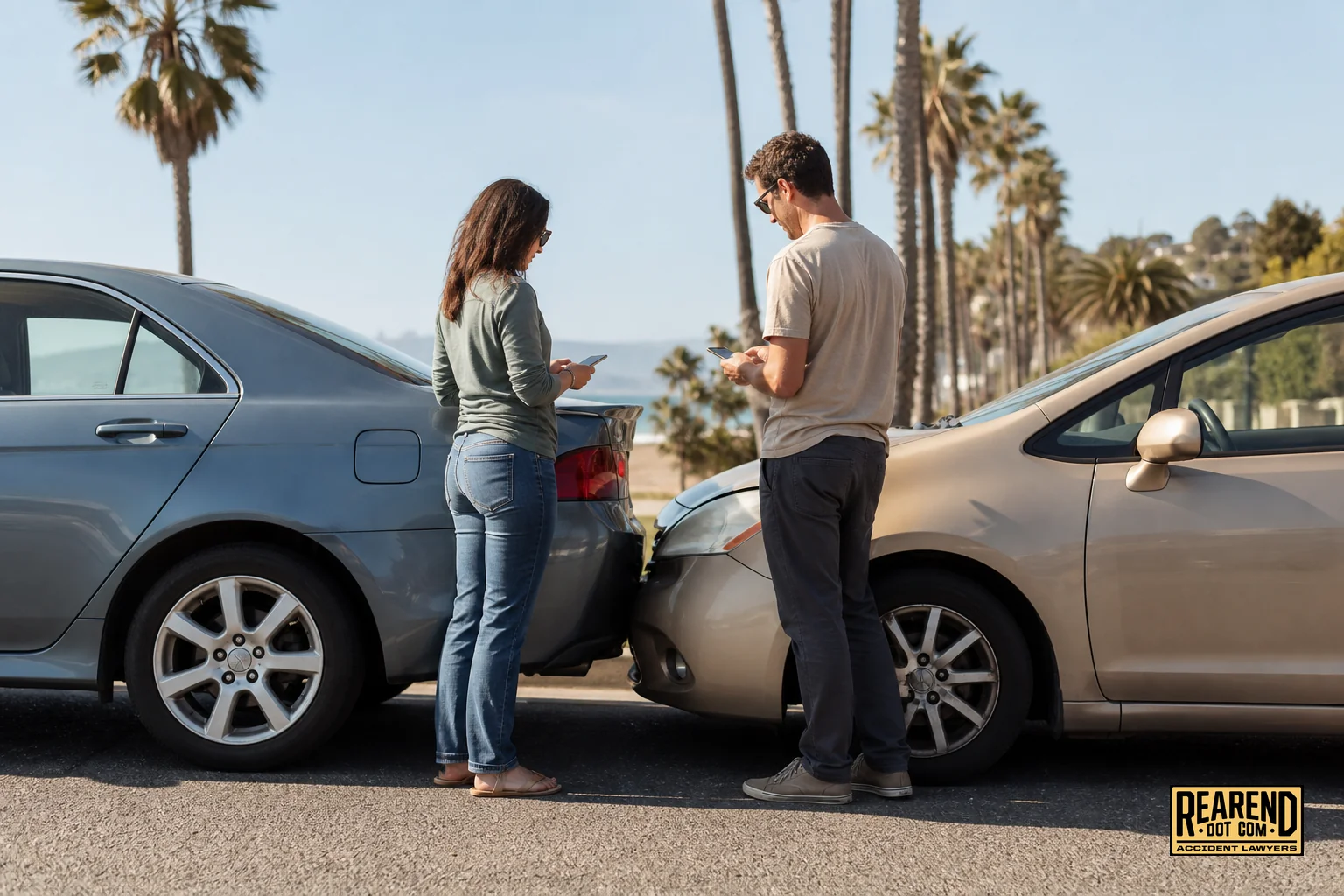
What you do in the days after a crash may affect how much of the gap between minimum coverage and your real damages you’re able to recover. Consider these steps:
- Document everything at the scene: Photos of vehicle damage, license plates, and the surrounding road conditions can matter later.
- See a doctor promptly: Some injuries, including whiplash, may not present symptoms for a day or two. A timely medical record also helps connect your injuries to the crash.
- Be cautious with recorded statements: Insurance adjusters may ask for a statement quickly, sometimes before you’ve seen a doctor. It’s generally wise to understand the extent of your injuries first.
- Get your vehicle assessed: A qualified body shop can provide a repair estimate that reflects the real cost of getting your car back to pre-accident condition. If you need a starting point, you can find trusted local auto body shops near Oceanside.
- Request a free case evaluation: Before accepting any offer, it may help to have someone review the at-fault driver’s policy limits against your actual damages. You can review your claim in just a few clicks for free.
For a step-by-step breakdown of the local claims process, see Rear-End Accident Legal Process Oceanside CA: What Victims Often Get Wrong, or review common pitfalls in the broader San Diego area at Rear-End Collision Legal Process San Diego CA: Common Mistakes to Avoid.
6. Common Questions Oceanside Victims Ask
How much does a rear-end accident settlement pay out?
Settlement amounts vary widely depending on injury severity, medical costs, lost wages, and available insurance coverage on both sides. There’s no fixed number, and cases with similar injuries can settle differently depending on the specific facts. For a detailed look at the variables involved, see How Much Is a Rear-End Accident Settlement Worth in California?
Can I sue if I was rear-ended?
Generally, yes, you may have grounds to pursue a claim or lawsuit against the at-fault driver, particularly if their insurance coverage doesn’t fully address your damages. Whether litigation makes sense often depends on the specifics of your case, including available coverage and the extent of your injuries.
What about rear-end collision repair?
Repair costs for a rear-ended vehicle depend on the extent of frame, bumper, and trunk damage. Getting an accurate estimate from a qualified shop early helps you understand whether the at-fault driver’s $15,000 property damage minimum will actually cover the repair.
How long does a rear-end accident settlement take?
Timelines vary based on how quickly you reach maximum medical improvement, how cooperative the insurer is, and whether a UIM claim is also involved. For a more detailed timeline breakdown, see How Long Does a Rear-End Accident Settlement Take From Filing to Payment?
7. How an Attorney Who Focuses on Rear-End Cases Can Help Evaluate Coverage Gaps
A skilled accident attorney who has handled numerous rear-end cases can help review the at-fault driver’s policy limits alongside your own UIM coverage, giving you a clearer picture of what may realistically be recoverable. This kind of review can be especially useful in Oceanside, where minimum-coverage drivers are not uncommon and where medical costs from a rear-end crash can climb quickly.
If you’re comparing your options, our guide on 10 Questions to Ask a Rear-End Accident Attorney Before You Sign Anything and 5 Signs Your Injury Attorney Is Not Fighting for You Hard Enough can help you evaluate whether the representation you’re considering is the right fit. Working on a no-fee-unless-you-win basis means there’s generally no upfront cost tied to getting that clarity.
If you were rear-ended in Oceanside and you’re unsure whether the at-fault driver’s minimum insurance coverage will actually cover your medical bills and vehicle damage, it may help to get a clear picture before you agree to anything. Start my claim today for a free review of your case, and find out whether an underinsured motorist claim or additional legal steps might apply to your situation.
Related Articles


Need Legal Help After a Rear-End Accident?
Get a free consultation with our experienced legal team