
Rear-End Accident Totaled Car but No Injuries Reported: What to Watch For
A rear-end accident that totals your car is a serious impact, even if you walk away feeling fine. The human body has a remarkable ability to mask pain in the immediate aftermath of a crash, thanks to adrenaline and shock. Symptoms like whiplash, concussions, and soft tissue injuries can take hours or even days to surface. That’s why it’s so important to get checked out by a medical professional as soon as possible after an accident, regardless of how you feel in the moment. Don’t wait for the pain to find you.
Key Takeaways
- Severe vehicle damage doesn’t rule out injury: A car’s crumple zones can absorb a lot of force, but the body inside doesn’t always escape that force cleanly, even when the vehicle is declared a total loss.
- Delayed symptoms can occur: Whiplash, headaches, and back pain may surface a day or more after a crash, sometimes later, once adrenaline wears off.
- Document even when you feel fine: Photos, a police report, and a simple symptom log can matter if pain shows up days later.
- Property and injury claims can overlap: A property damage settlement and a personal injury claim are usually separate, but signing the wrong release early may limit your options later.
- California’s minimum coverage is limited: The state requires only $30,000 per person and $60,000 per accident in liability coverage, which may not stretch far if injuries appear after the vehicle is already totaled.
At a Glance: Totaled Car, No Injuries Reported
| Consideration | What Usually Happens |
|---|---|
| Symptom timeline | Pain or stiffness often appears 24-72 hours after the crash, sometimes days later |
| Immediate documentation | Photos of damage, police report, witness contact info, and a written symptom log |
| Medical check | Generally recommended even when you feel fine, to create a baseline record |
| Property damage claim | Handled through the at-fault driver’s insurer or your own collision coverage |
| California minimum liability limits | $30,000 per person / $60,000 per accident |
| Signing a release | Reviewing terms before signing can matter if injury symptoms are still developing |
| Legal help | Many rear-end accident attorneys work on a no-fee-unless-you-win basis |
1. Understand Why a Totaled Car Doesn’t Mean an Injury-Free Body
Insurance companies total a vehicle when repair costs approach or exceed its actual cash value, not because a formula measures how hard a human body was jolted. A late-model car can absorb a serious hit and still get declared a total loss purely on repair economics. That’s a financial calculation about the car, separate from what happened to your neck, back, or shoulders during the impact.
Adrenaline plays a role here too. In the minutes after a crash, your body can release chemicals that mask pain signals, which is part of why so many people say “I feel fine” at the scene of a rear-end accident totaled car but no injuries reported at first. Soft tissue injuries, like whiplash, often don’t announce themselves right away. The inflammation process that causes stiffness and pain can take time to build.
Some occupants also brace differently depending on where they’re seated, whether headrests were positioned correctly, or whether they saw the impact coming. Two people in the same vehicle can walk away with very different physical responses, even when the car itself looks identical on both sides.
2. Watch for Delayed Symptoms in the Days After the Crash
Some of the most commonly reported delayed symptoms following a rear-end collision may include whiplash-related neck pain, headaches, dizziness, numbness in the arms or hands, and lower back stiffness. It’s not uncommon for people to feel relatively fine immediately after a crash, only to notice discomfort the next day, such as a stiff neck or a persistent headache that doesn’t seem to improve with rest.
If you’re tracking symptoms after a crash where the car was totaled but you initially felt uninjured, it helps to know what timeline is typical. Our guide on neck pain days after a rear-end accident walks through why this delay happens and what details to track, including pain intensity, range of motion, and any tingling or weakness.
Writing symptoms down as they appear, even briefly in a phone notes app, creates a timeline that a doctor or, later, an insurance adjuster can review. Waiting weeks to mention pain can make it harder to connect the symptom back to the crash, since insurers sometimes argue an unrelated cause stepped in during the gap.
3. Document the Scene Even When You Think You’re Fine
Documentation matters just as much in a property-only-looking crash as it does in one with obvious injuries. Photograph the damage from multiple angles, including close-ups of the point of impact and wider shots showing the vehicles’ final positions. Get the other driver’s insurance information, plate number, and a few words from any witnesses nearby.
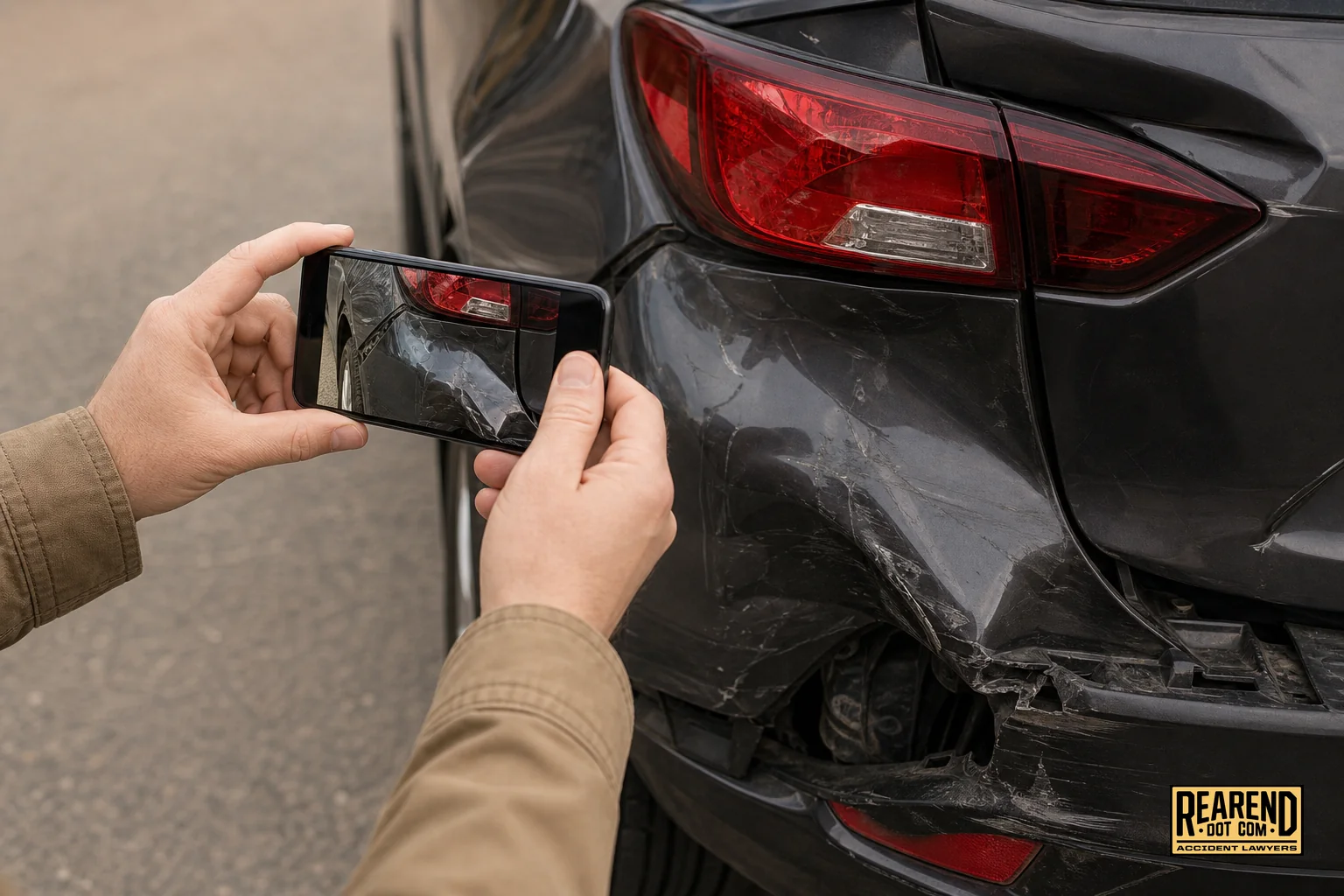
Filing a police report is worth doing even when the crash initially seems like property damage only. A report creates an official record of the date, location, and basic facts, which can matter later if symptoms surface and you need to connect them to this specific incident. Our rear-end accident checklist for the first 24 hours covers this step by step, including what information officers typically ask for.
Getting checked by a doctor, even a quick urgent care visit, within a day or two of the crash is generally worth the trip. A medical record created close to the incident date carries more weight than one created weeks later, and it gives you a documented baseline in case something develops.
3. How a Totaled Vehicle Affects Your Property Damage Claim
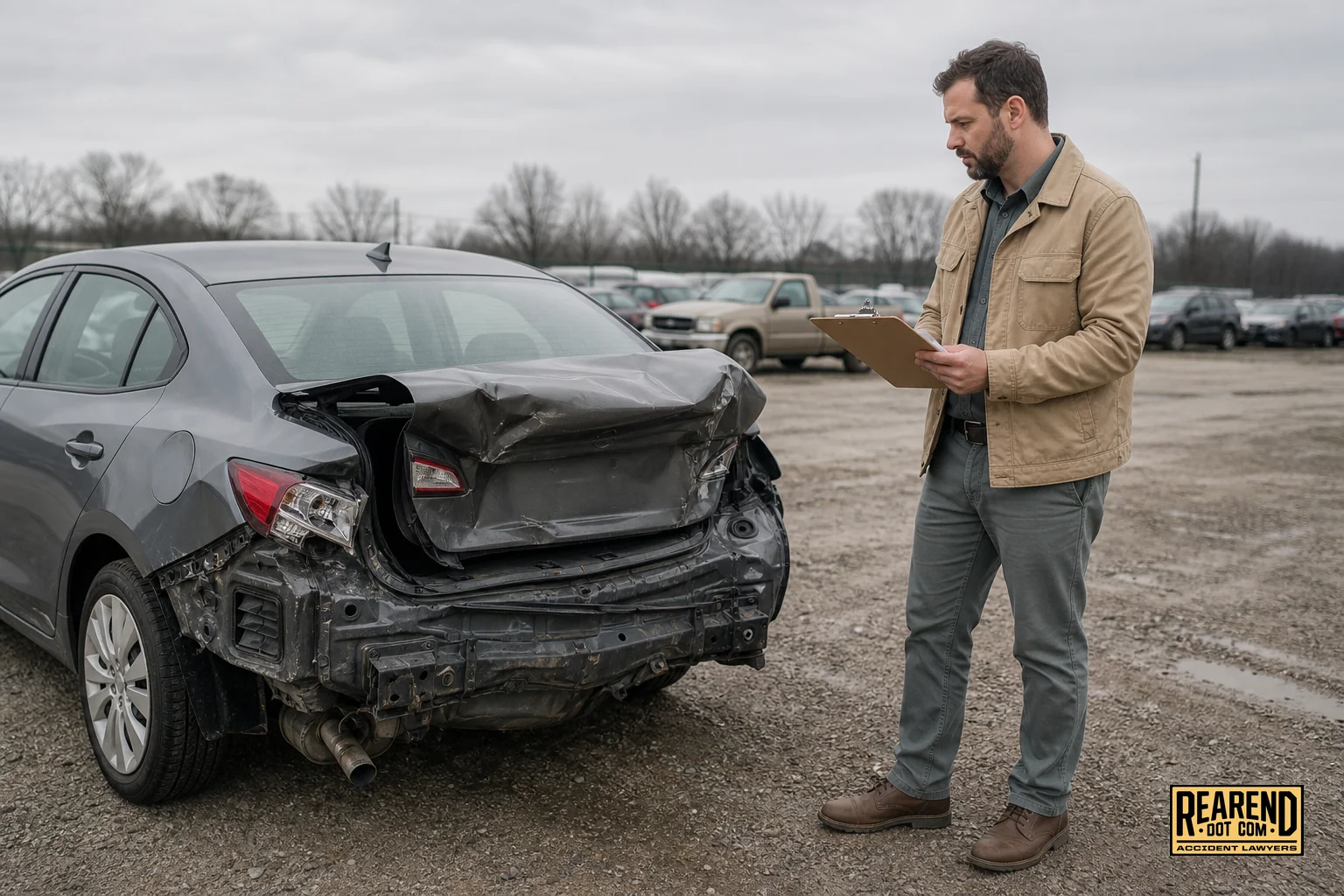
When an insurer declares your vehicle a total loss, they’ll typically offer a settlement based on the car’s actual cash value before the crash, factoring in mileage, condition, and comparable sales in your area. This process is separate from any injury claim, but the paperwork can sometimes arrive bundled together, which is where confusion starts.
California requires drivers to carry at least $30,000 per person and $60,000 per accident in liability coverage. That amount may cover a totaled economy car reasonably well, but it can fall short quickly once medical bills or lost wages get added to the picture. If the at-fault driver only carries the state minimum, the math can get tight fast. Our breakdown of whether California’s minimum coverage is enough after a rear-end crash goes into more depth on how these limits play out in real claims.
If you also need vehicle repair help for a car that wasn’t totaled, or want a comparison point for what your own vehicle might be worth, Find Trusted Local Auto Body Shops connects you with vetted repair options in your area.
4. When Property Damage and Injury Claims Intersect
A property damage settlement and a bodily injury claim are usually handled as separate tracks, even though they come from the same accident. The trouble starts when a claimant signs a full release, thinking it only covers the car, without realizing the language also waives future injury claims tied to the same crash.
This is precisely why the rear-end accident totaled car but no injuries reported scenario deserves a second look before anything gets signed. If pain shows up three days after you already accepted a check for your vehicle, you want to know whether that release affects your ability to pursue a separate injury claim. Reading the fine print, or having someone review it for you, before signing is generally a reasonable step.
California’s statute of limitations for most personal injury claims generally runs two years from the date of the crash, though property damage claims can carry different timelines. Knowing these windows can matter if symptoms take time to fully present themselves.
5. Rear-End Accident Legal Process in San Diego, Oceanside, and Beyond
The legal process after a rear-end crash follows a fairly similar pattern across California cities, though local court procedures and typical insurer response times can vary somewhat. If your crash happened in the San Diego area, our guide to the rear-end accident attorney San Diego same-day car rental process covers what to expect while your vehicle is being assessed or repaired.
For those closer to Oceanside, it helps to understand both the coverage landscape and how claims typically move through the local process, which our Oceanside minimum coverage guide and related legal process resources address in detail.
If you’re in Oakland and wondering whether representation makes sense given the no-fee model many rear-end accident attorneys use, our piece on Oakland rear-end accident attorney no-fee qualification explains how that arrangement typically works.
6. Questions to Ask Before You Sign a Property Damage Release
Before agreeing to any settlement offer for your totaled vehicle, it’s reasonable to ask a few direct questions. Does this release also cover bodily injury claims, or only the vehicle? What happens if I notice pain after signing? Is there a separate process for reopening a claim if symptoms develop later?
If you’re unsure how to vet the person or firm helping you with these questions, our resources on red flags when hiring a personal injury lawyer and what to say if an insurance adjuster calls you after an accident can help you avoid common missteps that make claims harder to pursue later.
An accident attorney who has handled rear-end cases can often review a proposed release quickly and flag anything that looks like it might limit a future injury claim. Getting that review before signing costs you little time and may prevent a bigger problem down the line.
Frequently Asked Questions
Can I still file a claim if I didn’t report any injuries at the scene?
Generally, yes. Many injury claims begin after symptoms appear days later, and a lack of injury reported on the initial police report does not automatically block a later claim, especially if you sought medical care and documented the timeline.
How long does a rear-end accident settlement take if injuries appear after the vehicle is already totaled?
Timelines vary by case complexity, but claims involving delayed injuries often take longer to resolve because your treatment needs to reach a stable point before a fair settlement value can be estimated. Some cases resolve in a few months; others involving ongoing treatment can take considerably longer.
Do I need a lawyer if my car was totaled but I currently feel fine?
It depends on your situation, but a free case evaluation can help you understand your options without any upfront commitment. Given how often symptoms surface later, many people find it useful to have a knowledgeable set of eyes on their documentation early, before any release gets signed.
What if the repair shop or adjuster disagrees with my total loss valuation?
You can generally request the data behind the valuation and compare it to similar vehicles for sale in your area. If the number still seems off, further review by someone familiar with total loss disputes may help.
Vehicle damage tells only part of the story after a rear-end crash. Your body’s story often takes a few extra days to write itself out, which is exactly why documentation early on can matter more than it seems at the time.
If your car was totaled in a rear-end crash and you’re now noticing symptoms that weren’t there at the scene, or you’re simply unsure what to sign or say next, Start My Claim to get a free review of what happened and where you stand. You can also review your claim in just a few clicks for free before agreeing to any settlement offer on your totaled vehicle. Taking that step now, while your documentation is fresh, can make a meaningful difference if delayed symptoms show up later.
Prior results do not guarantee a similar outcome. – Rearend.com
Related Articles


Need Legal Help After a Rear-End Accident?
Get a free consultation with our experienced legal team