
Rear-end accident with rental car involved insurance: A practical guide
When a rental car ends up in a rear-end crash, the insurance question rarely has a one-line answer. A rear-end accident with rental car involved insurance claim usually pulls in at least two policies, sometimes three: the driver’s personal auto coverage, the rental company’s liability coverage, and your own policy if you were the one behind the wheel of the rental. Sorting out who pays first, and how much, depends on who was driving what and where the crash happened.
Key Takeaways
- Fault still drives the claim: whoever caused the rear-end collision is generally responsible for damages, regardless of whether a rental car was involved.
- Personal auto policies usually extend to rental cars: if you carry liability, collision, or uninsured motorist coverage, it often follows you into a rental vehicle, though limits and exclusions vary by insurer.
- Rental companies rarely pay much out of pocket: many carry only state-minimum liability coverage unless the renter purchased supplemental protection, which can leave a gap on larger claims.
- California’s minimum liability limits are $30,000 per person and $60,000 per accident, and that ceiling matters a lot when a rental company or an underinsured renter is the at-fault party.
- Multiple insurers pointing fingers is common: claims involving a rental car often take longer to resolve because more than one carrier has to agree on liability before anyone pays.
At a Glance: Insurance Layers in a Rental Car Rear-End Crash
| Coverage Type | Who It Applies To | What It Typically Covers | When It Gets Used |
|---|---|---|---|
| At-fault driver’s personal auto liability | The individual who caused the crash | Property damage and injury to the other party | First, in most cases |
| Rental company liability coverage | The rental agency, sometimes vicariously | Damages if the renter has no or insufficient coverage | Secondary, often limited by state minimums |
| Renter’s personal auto policy | The renter, if driving the rental | Extends renter’s existing liability/collision limits | Frequently primary over the rental company’s policy |
| Uninsured/underinsured motorist coverage | The injured party | Gap coverage when at-fault driver’s limits fall short | After liability limits are exhausted |
| Credit card rental protections | The renter who paid with a qualifying card | Typically collision damage only, not liability | Supplemental, rarely primary for injury claims |
| Supplemental Liability Insurance (SLI) | The renter, if purchased at pickup | Adds liability protection beyond rental company minimums | Used when damages exceed base coverage |
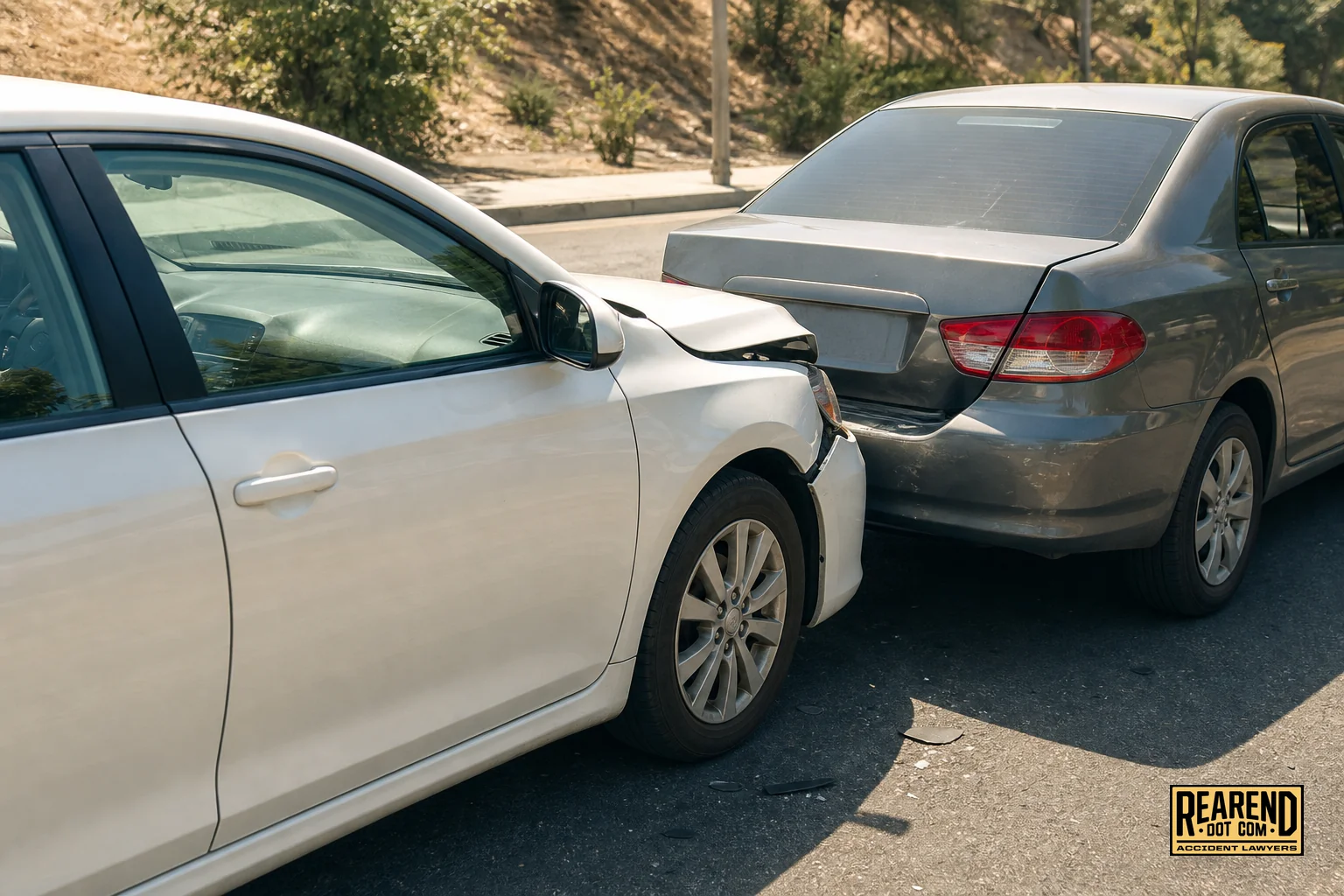
Who Pays When a Rental Car Rear-Ends You
If a rental car rear-ends you, the driver’s own auto insurance policy generally responds first, the same way it would in any other crash. Rental status alone doesn’t shift fault or change how liability works.
Here’s where it gets layered. If the driver carries little or no personal coverage, the rental company’s liability policy may kick in as a secondary source, but that policy is often limited to the state minimum. In California, that means $30,000 per person and $60,000 per accident unless the renter bought supplemental liability insurance at the counter.
That ceiling matters more than most people expect. A moderate rear-end injury claim, including medical bills, lost wages, and pain and suffering, can climb past $60,000 fairly quickly, especially with ongoing treatment. When that happens, you may need to look at your own uninsured or underinsured motorist coverage to close the gap, assuming you carry it.
Some renters also add coverage through a personal credit card, but those add-ons usually address damage to the rental vehicle itself, not liability to a third party. They rarely change what you, as the injured driver, can collect.
Who Pays When You’re Rear-Ended While Driving a Rental Car
If you were the one driving the rental when someone rear-ended you, your own personal auto insurance likely extends to the rental car the same way it would to your regular vehicle. Most standard policies treat a rental as a temporary substitute vehicle for coverage purposes.
The at-fault driver’s insurer still owes for your injuries and the damage to the rental, since fault doesn’t change based on which vehicle you happened to be driving. What often slows things down is the rental company inserting itself into the claim, particularly around vehicle damage and any collision damage waiver you may or may not have purchased.
You may find yourself explaining the same facts to three separate claims representatives: the at-fault driver’s insurer, your own carrier, and the rental agency’s claims department. Keeping documentation consistent across all three, photos, the police report, and your own notes, can help avoid contradictions that insurers sometimes use to delay payment.
How Rental Company Liability Coverage Actually Works
Federal law under the Graves Amendment generally shields rental companies from vicarious liability for a renter’s negligence in most states, including California, as long as the rental company itself wasn’t negligent (for example, by renting out a car with bad brakes). This means the rental agency’s own liability coverage often isn’t the primary source of payment; the renter’s negligence and their available coverage usually matter more.
Because of that shield, rental companies frequently maintain only the state’s minimum required liability coverage as a backstop, not a robust safety net. If the renter didn’t purchase supplemental liability insurance and doesn’t carry a strong personal auto policy, an injured party can end up facing a real coverage gap on a serious claim.
Will Insurance Pay for Injuries and Vehicle Damage in a Rear-End Case Involving a Rental Car?
Yes, generally, but which policy pays first depends on who was at fault and how the coverage layers stack. The at-fault party’s liability coverage typically pays first, followed by uninsured/underinsured motorist coverage or supplemental rental protections if the primary limits fall short of covering your damages.
Common Complications That Slow These Claims Down
Claims involving a rental vehicle tend to move slower than a typical two-car crash. A few recurring issues show up again and again:
- Multiple insurers disagreeing on who pays first: the rental company’s carrier, the renter’s personal insurer, and the at-fault driver’s insurer may each argue the other should take the lead.
- Graves Amendment disputes: rental companies sometimes cite this federal protection to deny any responsibility, even when their own coverage should reasonably apply as a backstop.
- Unclear coverage limits: renters often don’t know whether they purchased supplemental liability insurance or what their personal policy actually extends to a rental.
- Permissive use questions: if someone other than the listed renter was driving the rental car, insurers may dispute whether that person was an authorized driver at all.
How Do You Prove Fault in a Rear-End Accident Involving a Rental Car?
Proving fault works the same way it does in any rear-end crash: police reports, scene photos, dashcam footage, and witness statements establish who struck whom. The rental status of a vehicle doesn’t change the evidence needed, it just adds more parties who will review that evidence.
A closer look at how fault is typically established is covered in how fault is proven in a rear-end accident, which walks through the specific evidence insurers weigh most heavily.
Where Legal Support Helps Untangle the Coverage Maze
A rear-end crash with a rental car sitting somewhere in the mix rarely resolves through a single phone call. An attorney who focuses on rear-end cases can identify every policy that might apply, including ones a renter may not even realize they have, and push each insurer to clarify its position instead of letting the claim sit in limbo.
That kind of coordination matters because insurers have little incentive to volunteer information that speeds up your payout. Legal support can help you avoid signing a release with one carrier before you know whether another policy still owes you money.

Rearend.com offers a free case evaluation to review your specific claim details, at no upfront cost, and works on a no-fees-unless-you-win basis. If you’re trying to figure out whether your rental car crash claim is worth pursuing, you can also get an estimate of what your potential claim could be worth before deciding on next steps.
If your vehicle needs repair while the insurance questions get sorted out, rearend.com can also help you find trusted local auto body shops so that part of the process doesn’t stall your claim.
For readers weighing what legal help actually costs in a case like this, rear-end accident lawyer cost and fees breaks down how contingency arrangements typically work. And if you’re still deciding whether hiring an attorney makes sense at all, how to choose a rear-end accident attorney without getting burned covers questions worth asking before you sign anything.
Frequently Asked Questions
Does my personal auto policy cover me while driving a rental car?
In many cases, yes, if your policy includes liability, collision, or uninsured motorist coverage, those protections often extend to a rental vehicle used as a temporary substitute for your own car. Coverage details vary by insurer, so it’s worth confirming your specific policy terms before you rent.
What if the rental company denies any responsibility for the crash?
Rental companies frequently rely on the Graves Amendment to avoid vicarious liability for a renter’s negligence, and that defense often holds up. In that situation, the renter’s own insurance and the at-fault driver’s coverage usually become the primary sources of payment instead.
Can I still pursue a claim if I was rear-ended by a rental car with no visible injuries?
You generally can still file a claim even without visible injuries, since some injuries like whiplash or soft tissue damage don’t appear immediately. A closer breakdown of this situation is available in can I sue if I was rear-ended with no visible injuries.
How long does a rental car rear-end claim typically take?
These claims often take longer than a standard two-car crash because more insurers need to coordinate before anyone pays. Timelines vary widely depending on how quickly each carrier responds and whether liability is disputed.
If a rental car has complicated your rear-end accident claim, you don’t have to sort out three different insurers on your own. Start my claim today and let a team that focuses specifically on rear-end cases review the details, or review your claim in just a few clicks for free to see where you stand before deciding on next steps.
Related Articles


Need Legal Help After a Rear-End Accident?
Get a free consultation with our experienced legal team