
Free Case Evaluation for San Diego Rear-End Crashes
Submitting a free case evaluation through rearend.com for a San Diego rear-end crash generally takes a few minutes online, followed by a review of your details and a follow-up call in the days after submission. The rear-end accident attorney san diego case evaluation process is built to give you a clear next step without asking you to sign anything or pay a fee upfront.
Key Takeaways
- Online intake first: The questionnaire asks for crash date, location, injury details, and insurance information, and usually takes under ten minutes to complete.
- Matching, not assignment: Your case is reviewed with an eye toward crash type and injury severity, rather than being handed to whoever is next in a rotation.
- Follow-up call: A member of the legal team typically reaches out after submission to walk through your situation and answer questions.
- No fee unless you win: Representation is offered on a contingency basis, meaning payment is tied to a recovery rather than billed hourly.
- San Diego-specific context matters: Local traffic patterns, police report handling, and nearby repair shop options can shape how your claim moves forward.
Case Evaluation at a Glance
| Step | What Happens | Typical Timeframe |
|---|---|---|
| Online intake questionnaire | Crash details, injury description, insurance info submitted | 5-10 minutes |
| Initial case review | Legal team checks details against rear-end case criteria | Same day |
| Attorney matching | Case reviewed for fit with injury and crash type | Typically within a couple of days |
| Follow-up call | Attorney or team member discusses your situation | Typically within a couple of days of submission |
| Fee structure | No fee unless compensation is recovered | Applies for the life of the case |
| Repair shop referral (if needed) | Local body shop options provided | As soon as requested |
1. Start the Online Intake Questionnaire
The process opens with a short questionnaire on rearend.com. It asks where and when the crash happened, whether you saw a doctor, and what insurance is involved. None of this requires a police report in hand.
For San Diego crashes, the form asks for the intersection or freeway where the impact occurred, since traffic volume on corridors like I-805 and I-15 can affect how a claim gets evaluated. You’ll also note whether you were stopped, slowing, or merging, since position at impact often factors into fault.
Basic injury information matters too. Even if you haven’t seen a doctor yet, describe what you’re feeling, whether it’s neck stiffness, back pain, or nothing noticeable so far. If you’re unsure how urgent a doctor visit is, the first 72 hours after being rear-ended guide covers what to prioritize before and alongside submitting a claim.
Once submitted, the form routes directly to the legal team for review, no waiting on hold or navigating a phone tree.

2. What Details Actually Matter for Your San Diego Claim
Not every field on the intake form carries equal weight. Photos of vehicle damage, the other driver’s insurance information, and any witness names tend to move a case forward faster than a long written narrative.
San Diego’s mix of freeway merges and dense downtown intersections means rear-end crashes here often involve disputed following distance or sudden braking. If you have a police report number, include it, but a missing report generally doesn’t stop the evaluation from proceeding. For a broader look at what to expect once representation begins, see the Rear-End Accident Attorney in San Diego: What to Expect overview, which covers the stages after intake in more depth.
Medical documentation, even a single urgent care visit, strengthens how a case gets evaluated. Insurers frequently look for gaps between the crash date and treatment, so noting your first appointment date helps the reviewing attorney understand the timeline.
3. How Attorney Matching Works
Your submission is reviewed with attention to crash type, injury severity, and where you’re located, rather than being handled as a random queue assignment. Someone with a soft tissue injury from a low-speed impact may be handled differently than someone recovering from a more serious collision.
This matters because rear-end cases carry patterns that some attorneys might not track closely, things like how insurers typically respond to whiplash claims versus more visible property damage. If you’re comparing this process against a general lawyer, the how to choose a rear-end accident attorney guide breaks down what to look for beyond marketing language.

Does Matching Assign a Specific Attorney?
Matching connects you with an attorney suited to your case type, but it doesn’t promise a particular outcome or a specific person before the review is complete. The legal team confirms fit during the follow-up call, and you can ask questions before deciding whether to move forward.
4. The Follow-Up Call
Within a few days of submitting your evaluation, someone from the legal team typically calls to walk through your situation in more detail, aiming to understand what happened and what you’re dealing with physically and financially.
Expect questions about ongoing symptoms, missed work, and whether you’ve spoken with the other driver’s insurance company yet. This call differs from a conversation with an insurance adjuster in one key way: the person on the phone works to understand your side, not to minimize it. For a closer comparison of those two conversations, the rear-end accident lawyer vs insurance adjuster breakdown explains how each side approaches a claim differently.
Is the Case Evaluation Really Free?
Yes, the case evaluation itself carries no charge, and representation afterward is generally offered on a contingency basis, meaning payment comes from a recovery rather than an upfront bill. If there’s no recovery, there’s typically no attorney fee owed under this structure.
This matters for unrepresented victims who worry that hiring a lawyer means immediate out-of-pocket cost. It doesn’t work that way here. For a full breakdown of how contingency fees are structured and what percentage typically applies, visit the Rear-End Accident Lawyer Cost & Fees page before you decide whether representation makes sense for your situation.
How Does This Compare to Handling It Yourself or Calling Insurance First?
A free case evaluation generally moves faster and shifts less risk onto you than negotiating directly with an insurer or trying to sort out fault on your own. The table below compares the three common paths after a San Diego rear-end crash.
| Approach | Upfront Cost | Who Reviews Your Claim | Typical Speed |
|---|---|---|---|
| Free case evaluation (rearend.com) | None | Attorney matched to rear-end cases | Follow-up typically within a few days |
| Calling the insurance adjuster first | None, but risk of undervalued offer | Adjuster representing the insurer’s interests | Often days to weeks for a response |
| Handling the claim alone | None initially, potential hidden costs later | You, without legal training in claim valuation | Varies widely, often slower |
Can I Sue If I Was Rear-Ended?
You can generally pursue a claim or lawsuit if you were rear-ended, especially when injuries or damage resulted from another driver’s actions. Whether a case makes sense to file often depends on injury severity, available insurance coverage, and evidence of fault, which a case evaluation helps sort out early.
California requires drivers to carry minimum liability coverage of $30,000 per person and $60,000 per accident, which sets a baseline for what may be available depending on the at-fault driver’s policy. If you’re unsure whether your damages exceed available coverage, the case evaluation process is designed to help answer that question rather than leave you guessing. For a deeper look at proving liability, see how to prove fault in a rear-end accident.
What Happens After the Evaluation?
Once the follow-up call wraps up, the next steps generally include gathering additional documentation, such as medical records or repair estimates, and beginning communication with the at-fault driver’s insurer on your behalf. You’re kept in the loop rather than left wondering about status.
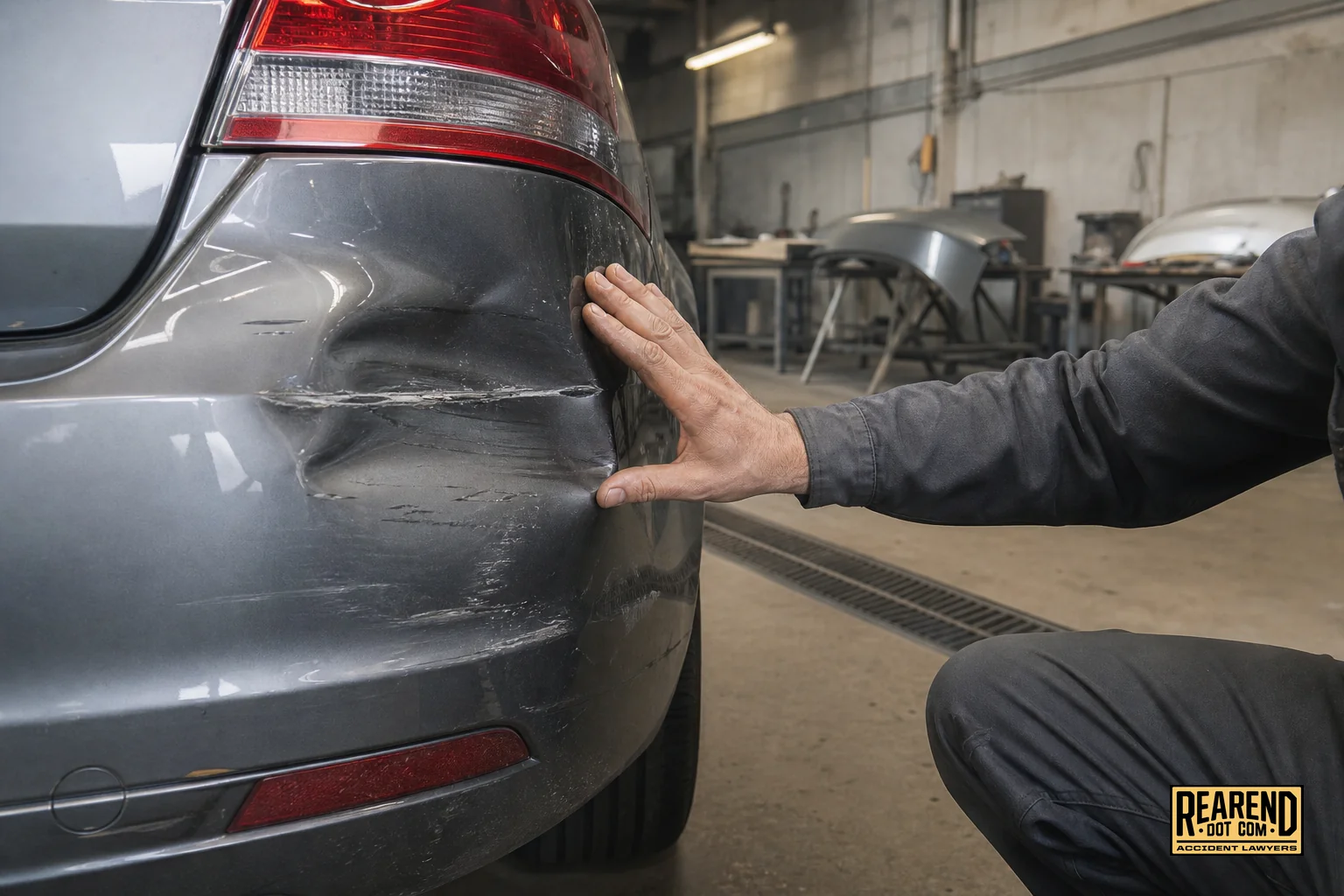
If your vehicle needs repair, you’re not required to use whichever shop the insurer suggests. You can compare options through Find Trusted Local Auto Body Shops to see reputable choices near you in San Diego.
How Much Does a Rear-End Accident Settlement Pay Out?
Settlement amounts vary widely depending on injury severity, medical costs, lost wages, and available insurance coverage, so there’s no fixed number that applies across cases. A case evaluation looks at your specific documentation to give a more grounded sense of what your claim might involve, rather than a generic estimate.
If you want a starting reference point before your follow-up call, you can calculate an estimate of what your potential claim could be worth based on the details you already have.
Frequently Asked Questions
How Long Does the Legal Process Take From Filing to Payment?
Timelines vary based on injury recovery, negotiation with the insurer, and whether the case settles or proceeds further. Simpler claims with clear liability sometimes resolve in a few months, while more complex cases take longer. The settlement timeline guide covers what typically speeds up or slows down a case.
What About Rear-End Collision Repair While the Claim Is Open?
Repairs can generally start once an estimate is documented, and you don’t have to wait for the entire legal claim to resolve before getting your car fixed. Keeping repair receipts and photos supports the property damage portion of your case regardless of how long the injury claim takes.
Do I Need a Police Report to Start the Evaluation?
A police report isn’t required to begin the case evaluation, though it helps if one exists. The intake questionnaire is built to capture the details available to you now, and additional documentation, including a police report, can be added once your attorney begins working on the file.
What If the Insurance Company Already Contacted Me?
You’re not required to have avoided insurer contact before submitting an evaluation. If an adjuster has already reached out, mention that during your intake so the reviewing team understands what’s already been discussed and what hasn’t been agreed to yet.
Waiting to figure out the legal process on your own often means dealing with an insurance adjuster who has already reviewed your claim before you have. If you were rear-ended anywhere in San Diego, Start My Claim to begin the free case evaluation and hear back from the legal team in the days that follow.
Prior results do not guarantee a similar outcome. — Rearend.com
Recommended Resources
Start My Claim Find Trusted Local Auto Body Shops Calculate an estimate of what your potential claim could be worth
Related Articles


Need Legal Help After a Rear-End Accident?
Get a free consultation with our experienced legal team