
Fresno Rear-End Attorney Fees vs Handling It Alone
A rear-end accident attorney in Fresno, CA who works on contingency charges nothing upfront. This attorney usually collects a fee only if your claim wins money for you. Handling the claim alone, or hiring an hourly general practice lawyer, can mean paying costs no matter how things turn out. It can also mean facing an insurer with no one to back you up. There is no such thing as a “public defender” for a rear-end injury claim. Public defenders handle criminal cases, not civil injury disputes.
Key Takeaways
-
No upfront cost with contingency: A contingency-based rear-end accident attorney usually covers the work up front. The lawyer only collects a fee from the settlement or verdict. That means you are not paying legal bills while your medical bills pile up.
-
Public defenders don’t handle this: Public defenders are appointed for criminal defendants who can’t afford a lawyer. They do not represent rear-end collision victims seeking money from an at-fault driver’s insurer.
-
Fee percentages often shift by stage: Many firms use a tiered contingency fee structure. Typically, the fee is around one-third of the settlement if the case is resolved before a lawsuit is filed, and increases if the case proceeds to litigation.
-
The math on a policy-minimum settlement: On California’s $30,000 minimum bodily injury payout, a one-third contingency fee is $30,000 ÷ 3 = $10,000. That leaves a net recovery of $20,000 before medical bills are negotiated and paid. Compare that against what you could realistically negotiate alone before deciding which route nets you more.
-
California’s minimum coverage can complicate self-negotiation: California requires a minimum of $30,000 in liability coverage per person and $60,000 per accident. While this may be sufficient in most situations, it can fall short quickly when serious injuries lead to significant medical bills.
At a Glance: Fresno Rear-End Claim Options Compared
| Option | Upfront Cost | Fee Structure | Negotiation Leverage | Best Fit For |
|---|---|---|---|---|
| Contingency-fee attorney | None | Percentage of recovery, often around one-third pre-lawsuit | High — insurers know a case may go to litigation | Injuries, disputed fault, uncooperative insurer |
| Hourly general practice lawyer | Retainer plus hourly billing | Paid regardless of outcome | Moderate, depends on lawyer’s experience with rear-end cases | Complex non-injury legal disputes |
| Self-representation | None to the claimant directly | No fee, but no advocate | Low — adjusters negotiate against your interests | Minor damage, no injuries, fault is 100% clear |
| Public defender | N/A | Not applicable to injury claims | N/A | Criminal defense only, not available for this |
What Does a Rear-End Accident Attorney Fresno CA Contingency Fee Actually Cover?
A contingency fee usually covers the attorney’s time. That means investigating the crash, negotiating with the insurance company, and filing a lawsuit if needed. The fee only comes out of your recovery. If there’s no settlement or verdict, the attorney typically collects nothing.
Attorney fees on a contingency basis typically depend on how far the case progresses. Most cases settle before a lawsuit is even filed, at which point the standard contingency rate is around one-third of the recovery. If the case moves into litigation, however, that rate can climb. Depositions, expert witnesses, and trial preparation all demand significantly more time and resources, costs that are reflected in a higher fee.
That percentage buys you more than paperwork. It buys you someone who focuses on rear-end cases specifically. This lawyer knows what an adjuster’s opening offer usually looks like. They can push back when a carrier tries to shift blame or downplay an injury. You can read more about how contingency-based rear-end attorney costs are typically structured before deciding.
Handling a Fresno Rear-End Claim on Your Own
Self-representation can work in one narrow case: minimal property damage, no injuries, and fault that isn’t in question. The moment any of those conditions change, going solo tends to work against you. Insurance companies negotiate claims for a living. Most claimants do this once, if ever.
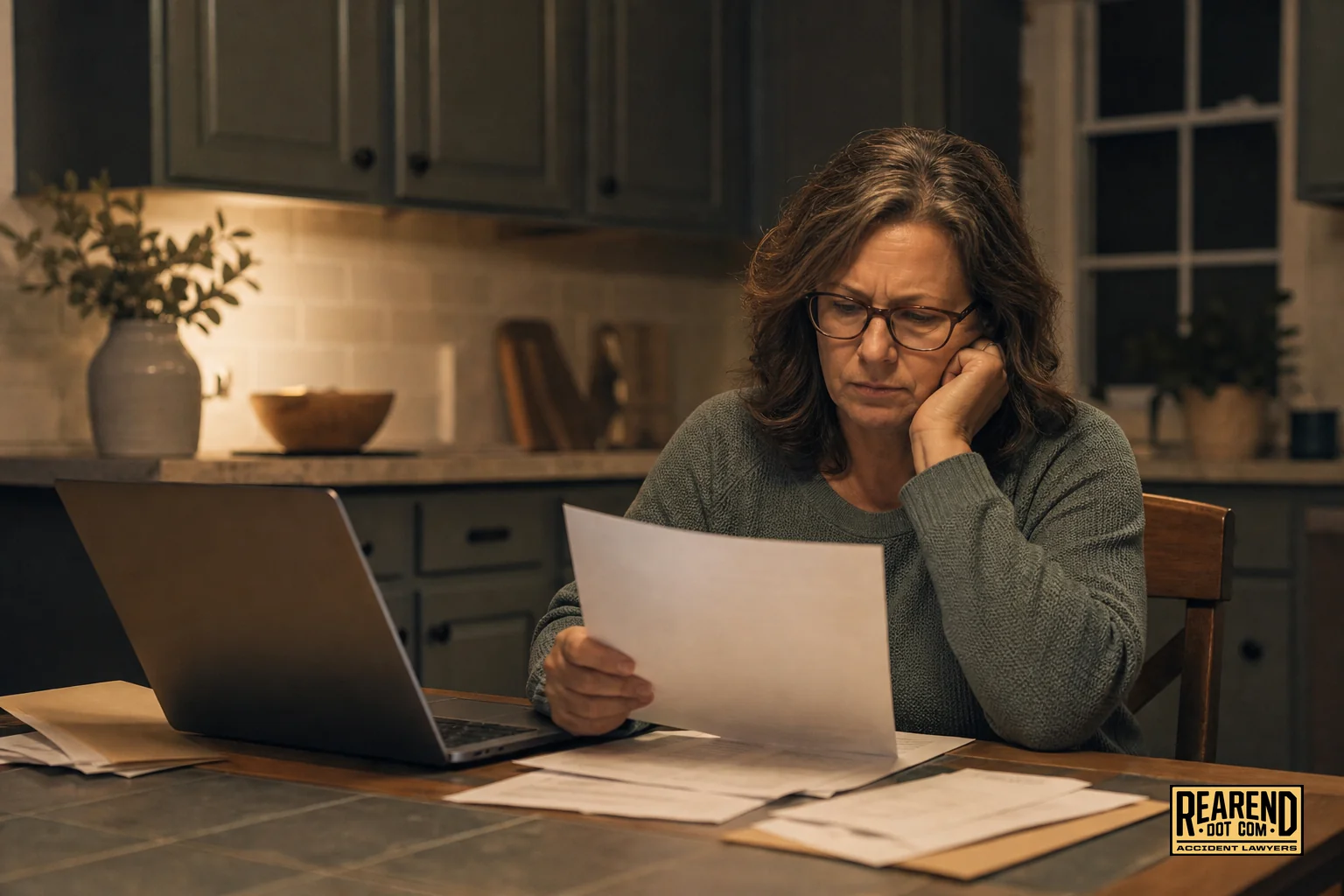
One overlooked risk is California’s own coverage minimums. State law requires liability coverage of only $30,000 per person and $60,000 per accident. If your medical bills come close to that ceiling, or go past it, and you’re negotiating alone, you may not know how to find extra coverage. For example, an underinsured motorist policy. You also may not know how to push an adjuster toward policy limits when the facts support it.
There’s also the matter of documentation. Adjusters look closely at recorded statements, gaps in treatment, and mismatches between the police report and medical records. One offhand comment on a recorded call can later be used to argue your injuries are less serious than they are. Some claims that look minor at first can grow more serious, as soft-tissue injuries, concussions, or back pain worsen over the following weeks.
Two disputes come up often in real rear-end claims. The first is comparative fault. Even in a rear-end crash, an insurer may argue the lead driver stopped suddenly or had a broken brake light, and try to shift a share of fault onto them to reduce the payout. The second is delayed-symptom disputes. If you didn’t see a doctor the same day, or waited a week because pain built up gradually, the adjuster may argue the treatment gap proves the injury wasn’t caused by the crash. Both arguments are easier to counter with documentation gathered early and with someone who has pushed back on these exact arguments before.
Is a Public Defender an Option for a Rear-End Accident Claim?
No. A public defender is a government-appointed criminal defense lawyer. This lawyer is assigned to defendants who cannot afford counsel in a criminal case. Public defenders do not represent people seeking civil compensation after a rear-end crash. If you were hurt in a rear-end collision, you need a different kind of lawyer. You need one who focuses on personal injury claims against the at-fault driver’s insurer, not criminal court.
This mix-up sometimes comes from the shared idea of “free” legal help. A contingency-fee rear-end accident attorney is free in one sense: you pay nothing upfront, and nothing at all if there’s no recovery. But the funding is entirely different from the public defender system. That system is paid through government budgets and reserved for criminal defendants.
Contingency Fee vs a General Practice Attorney Billing Hourly
An hourly general practice lawyer bills for time spent, win or lose. Legal costs can add up even if your claim ends in a modest settlement or no recovery at all. A contingency-fee rear-end attorney’s payment is tied directly to your outcome instead. That tends to line up their incentives with getting you the highest reasonable recovery.
Rather than guessing at hourly rates, ask each firm you’re considering these questions directly before signing anything:
- What is your hourly rate, and is it the same for phone calls, document review, and negotiation?
- Is a retainer required upfront, and how much?
- How often will I be billed, and what happens if my case doesn’t settle?
- How many rear-end or car accident cases has this firm handled in the past year?
You can also verify an attorney’s license status, standing, and any public discipline history through the State Bar of California’s attorney search tool. To use it: go to the State Bar’s website, search by the attorney’s name or bar number, and confirm the license is listed as “Active” with no disciplinary flags before you hire anyone.
General practice attorneys can be capable. But a lawyer who handles wills, business disputes, and the occasional car accident case may not know the specific tricks insurers use in rear-end claims. Things like soft-tissue injury minimization, delayed symptom disputes, or comparative fault arguments unique to a stopped-traffic collision. For a closer look at that distinction, see this breakdown comparing contingency fees to hourly billing for accident victims.
Will Hiring a Fresno Rear-End Attorney Actually Leave You With Less Money?
Run the numbers on a policy-minimum claim. California’s minimum bodily injury liability coverage is $30,000 per person. If a rear-end claim settles at that limit, a one-third contingency fee works out to $30,000 ÷ 3 = $10,000. That leaves you a net recovery of $20,000 before medical bills are paid.
Handling that same claim alone means no fee is deducted, so a $30,000 settlement stays $30,000. But the comparison only holds if you can actually negotiate the insurer up to that $30,000 ceiling on your own. It also depends on whether you can push past it toward an underinsured motorist claim if your bills exceed it. An attorney’s leverage in reaching or exceeding the policy limit, and in identifying additional coverage, is the variable that decides whether the $10,000 fee pays for itself.
Early offers from insurance carriers are often designed to close a claim fast and cheap. That’s before a claimant understands the full scope of their medical treatment or lost wages. An attorney familiar with rear-end cases is usually better placed to push back on that first offer rather than accept it.
How to Choose Between Going Solo and Hiring Help
The right choice usually comes down to three things: how serious your injuries are, whether fault is disputed, and how the insurance company has treated your claim so far.
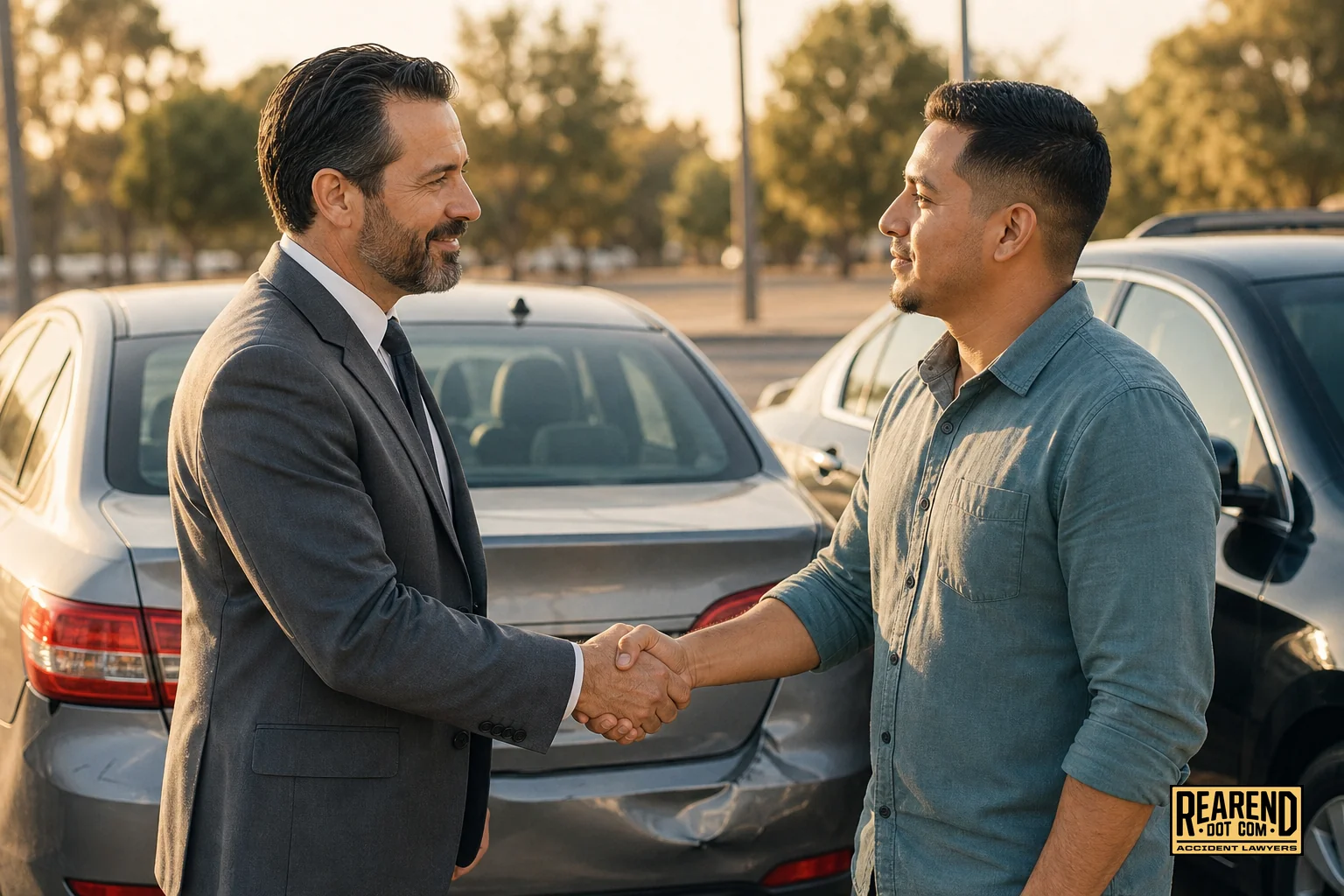
Consider hiring an attorney who focuses on rear-end cases if any of the following apply:
- You’ve seen a doctor, even once, for pain related to the crash
- The insurance company is slow to respond or has offered a settlement that feels low
- Fault is disputed, or multiple vehicles were involved
- You’re being asked to give a recorded statement and aren’t sure what to say
- Medical bills are approaching California’s minimum policy limits
You may reasonably handle a claim yourself only when property damage is minor, there are no injuries at all, and the at-fault driver’s insurer has clearly accepted responsibility with no dispute. Even then, it’s worth comparing notes with a free case evaluation before deciding. A quick review can reveal a factor you hadn’t thought of. For more on picking the right fit, review how to choose a rear-end accident attorney without getting burned.
How to Find and Vet a Fresno-Specific Attorney
Use this sequence rather than picking the first search result:
- Search for attorneys who specifically list rear-end or car accident cases in Fresno, not just general personal injury or general practice law.
- Look up each candidate through the State Bar of California’s attorney search tool. Confirm the license is “Active” and check for any public disciplinary record before contacting the firm.
- Ask directly whether the fee is contingency-based, and if so, request the fee tiers in writing, including how the percentage changes if a lawsuit is filed.
- Ask how many rear-end cases the firm has handled and whether they’ve dealt with comparative fault disputes or delayed-symptom disputes specifically.
- Confirm there’s no upfront cost and no bill if the case doesn’t result in a recovery, in writing, before signing an agreement.
- Get a free case evaluation from at least one attorney before deciding to handle the claim alone.
What to Do After Being Rear-Ended in Fresno
Start by documenting the scene: take photos of both vehicles, the road, and any visible injuries. Exchange insurance information. Avoid discussing fault at the scene. Fresno traffic and stop-and-go patterns on routes like Highway 99 mean liability isn’t always as clear as it first looks.
See a doctor promptly, even if you feel fine. Adrenaline can mask pain from whiplash or soft-tissue injuries for hours or days. Keep every medical record and receipt. Be careful about giving a recorded statement to any insurance adjuster, including your own, until you understand how it could be used. If you want a step-by-step walkthrough of the early hours after a crash, see what to do after being rear-ended in the first 72 hours.
Frequently Asked Questions
Does rear end collision repair get paid before or after my claim settles?
Rear-end collision repair is usually handled through the at-fault driver’s property damage coverage. It can often move forward separately from, and faster than, your injury claim. Many claimants get their vehicle repaired within weeks while the injury part of the claim is still being negotiated.
If you need help finding a shop, find trusted local auto body shops rather than relying only on the option the insurer suggests.
I was rear-ended. What should I do first?
Check for injuries and call for medical help if needed. Document the scene with photos before vehicles are moved, if it’s safe to do so. Report the crash, and consider a free case evaluation early. Some evidence, like skid marks or witness memory, fades quickly.
Does the contingency fee percentage change if my case goes to trial?
Yes, in many fee agreements. A contingency rate that starts around one-third for a pre-lawsuit settlement can rise once a lawsuit is filed or the case moves toward trial. That reflects the extra work involved. Always ask an attorney to explain the fee tiers in writing before you sign anything.
Deciding What’s Next for Your Fresno Claim
If you’re weighing your options after a Fresno rear-end collision, you can start your claim today for a free review of what happened. Or you can calculate an estimate of what your potential claim could be worth before deciding whether to negotiate alone. Either way, understanding your options costs nothing and could change how much you walk away with.
Prior results do not guarantee a similar outcome. – Rearend.com
Recommended Resources
Start My Claim Find Trusted Local Auto Body Shops Calculate an estimate of what your potential claim could be worth
Related Articles


Need Legal Help After a Rear-End Accident?
Get a free consultation with our experienced legal team