
What Happens If Insurance Denies Rear-End Claim? Your Legal Options Explained
The envelope arrives. You open it. The insurer has denied your rear-end accident claim and the letter is full of language designed to make that decision sound final. It isn’t. A denial from an insurance company is a business decision, not a legal judgment. Understanding what happens next, and acting quickly, can be the difference between walking away with nothing and recovering the compensation you’re owed.
This guide walks you through every concrete step available to you after a denial, from filing a formal appeal to understanding California’s bad faith insurance laws to knowing when bringing in an attorney who focuses on rear-end accident cases changes the outcome entirely.
A Denial Letter Is Not the Final Word
Insurance companies deny claims for many reasons — some legitimate, some not. What they count on is that most people will read the denial, feel defeated, and stop pushing. A significant share of denied claims are never appealed, even when the denial is legally questionable.
Here’s what you need to understand right away: the denial letter opens a process, it doesn’t close one. You have legal rights under California law, and those rights include the ability to appeal internally, escalate to state regulators, pursue a bad faith claim, and file a lawsuit. Each of those options has a timeline, so the moment you receive a denial is the moment to start moving.
Key takeaway: A denied rear-end claim is a starting point for your legal options, not the end of the road.
Why Insurance Companies Deny Rear-End Claims
Rear-end collisions are among the most common crash types in California, and insurers have developed well-worn playbooks for limiting payouts. Knowing their tactics helps you counter them.
Common Reasons for Denial
- Disputed liability: The insurer argues their driver wasn’t fully at fault, or claims you contributed to the crash through sudden braking or an unsafe lane change.
- Pre-existing conditions: The adjuster claims your injuries existed before the accident, not because of it.
- Late reporting: You didn’t report the accident or file the claim within the window specified in the policy.
- Policy exclusions: The insurer argues a specific exclusion in the at-fault driver’s policy applies to your situation.
- Insufficient documentation: The claim lacks medical records, a police report, or other evidence the insurer says it needs.
- Coverage lapse: The at-fault driver’s policy had lapsed at the time of the crash.
Legitimate Denials vs. Bad Faith Denials
Not every denial is improper. Sometimes a policy genuinely doesn’t cover a specific loss. But insurers also deny claims they know are valid, hoping the victim won’t fight back. That’s where California’s bad faith insurance laws come in, and we’ll cover those in detail below. The first step is figuring out exactly which category your denial falls into.
Step 1: Understand Exactly Why Your Claim Was Denied
Before you can challenge a denial, you need the denial in writing. California law requires insurers to provide a written explanation of any claim denial. If you received a verbal denial or a vague letter, request a formal written denial immediately.
Once you have it, read it carefully and identify the specific reason cited. Then pull out your insurance policy, or the at-fault driver’s policy, if you’re filing a third-party claim, and read the relevant sections word for word. Adjusters sometimes cite exclusions that don’t actually apply, or mischaracterize policy language. You won’t catch that unless you compare the denial reason against the actual policy text.
If the policy language is confusing, that’s normal. Insurance contracts are written to be difficult to parse. An attorney who handles rear-end accident cases regularly can read that language quickly and tell you whether the denial holds up.
Step 2: File a Formal Appeal With the Insurance Company
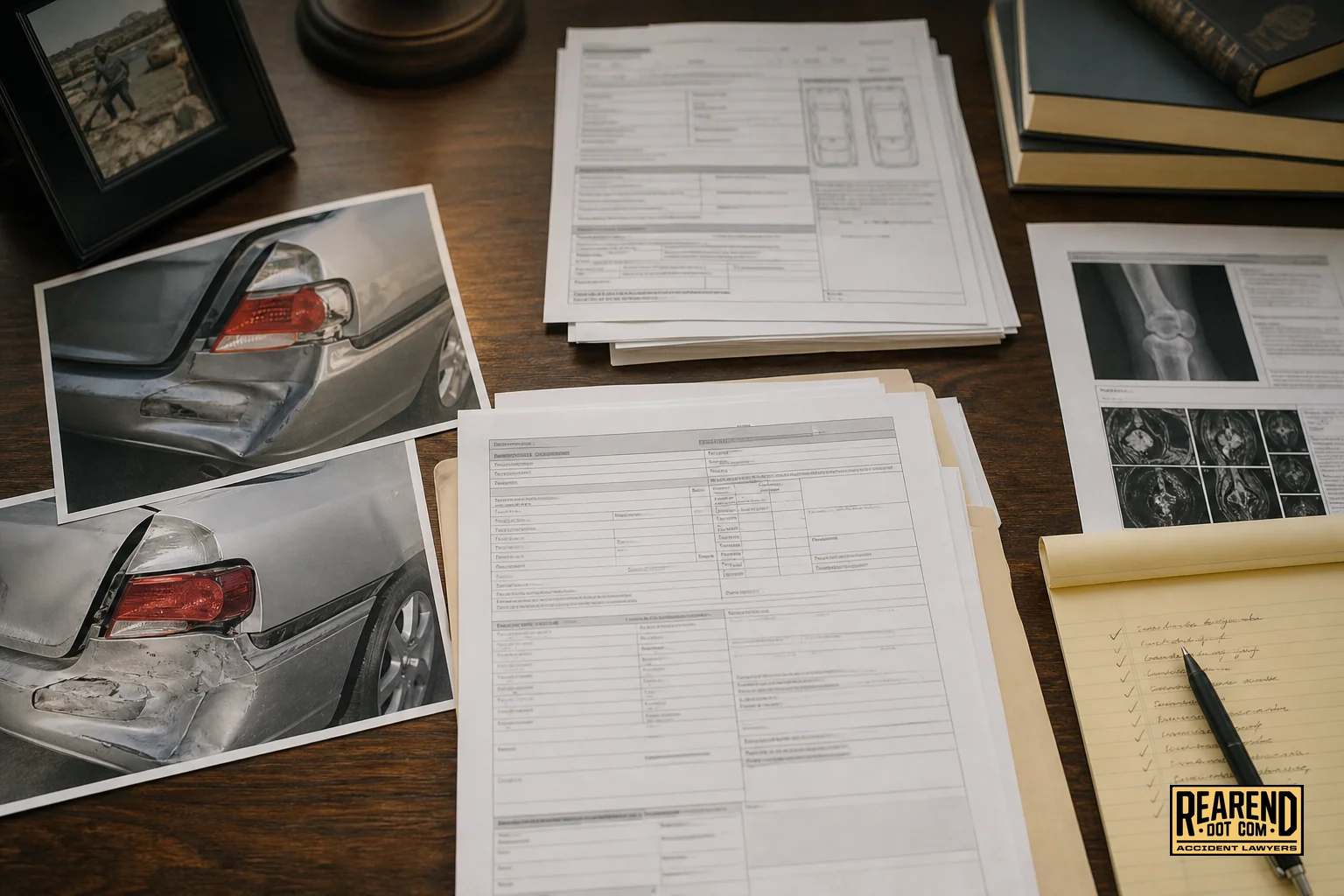
Most insurance companies have an internal appeals process. Filing a formal appeal creates a paper trail, puts the insurer on notice that you’re not accepting the denial, and sometimes resolves the dispute without further escalation.
What to Gather Before You Appeal
- The police report from the crash, this is often the single most important document for establishing fault in a rear-end collision
- Medical records and bills documenting your injuries and treatment from the date of the accident forward
- Photos and video of the damage to both vehicles, the accident scene, and any visible injuries
- Witness statements or contact information for anyone who saw the crash
- Your own written account of what happened, prepared as soon as possible after the crash
- Any communications with the insurer, including emails, letters, and notes from phone calls
Writing an Effective Appeal Letter
Your appeal letter should be factual, organized, and direct. State the denial reason the insurer cited, then explain specifically why that reason is incorrect or unsupported. Attach your supporting documents. Avoid emotional language, adjusters respond to evidence, not frustration.
Keep copies of everything you send. Send the appeal by certified mail or email with a read receipt so you have proof of delivery and the date it was received.
Watch the Deadlines
California’s statute of limitations for personal injury claims is generally two years from the date of the accident. That clock doesn’t pause while you’re appealing. If your appeal drags on, you could lose the right to file a lawsuit. Don’t let the appeals process run out the clock on your legal options. For a deeper look at how timelines affect your case, see how long a rear-end accident settlement takes from filing to payment.
Step 3: File a Complaint With the California Department of Insurance
If the internal appeal doesn’t resolve the denial, your next escalation point is the California Department of Insurance (CDI). The CDI regulates insurance companies operating in the state and has authority to investigate complaints about improper claim handling.
How to File a CDI Complaint
You can file a complaint online through the CDI’s consumer portal. You’ll need to provide your policy information, a description of the denial, and copies of relevant documents. The CDI will contact the insurer and request a response. In some cases, this alone prompts the insurer to reconsider.
What the CDI Can and Cannot Do
The CDI can investigate whether the insurer violated California’s Fair Claims Settlement Practices Regulations, which require insurers to handle claims promptly, fairly, and in good faith. If the CDI finds a violation, it can impose fines and require corrective action. What the CDI cannot do is force the insurer to pay your specific claim, that requires either a negotiated settlement or a court order. Think of a CDI complaint as a pressure tool, not a guaranteed resolution.
Step 4: Understand California’s Bad Faith Insurance Laws
California has some of the strongest bad faith insurance protections in the country. Under California Insurance Code Section 790.03 and the common law tort of bad faith, insurers have a legal duty to deal fairly with policyholders and claimants. When they don’t, they can face consequences that go well beyond the original claim amount.
What Counts as Bad Faith?
Bad faith isn’t just a denial you disagree with. It’s a pattern of conduct that shows the insurer prioritized its own financial interests over its legal obligations. Examples that courts have recognized include:
- Denying a claim without conducting a reasonable investigation
- Misrepresenting policy language to justify a denial
- Unreasonably delaying a response to a claim or appeal
- Offering a settlement so low it has no reasonable basis
- Failing to communicate the basis for a denial in writing
- Pressuring a claimant to accept a lowball offer by threatening litigation
What You Can Recover in a Bad Faith Claim
If an insurer is found to have acted in bad faith, you may be entitled to more than just your original claim amount. California courts have awarded compensatory damages (covering your actual losses), consequential damages (covering harm caused by the denial itself, such as unpaid medical bills), and in egregious cases, punitive damages designed to punish the insurer’s conduct.
A bad faith claim runs alongside your underlying injury claim, you don’t have to choose between them. But building a bad faith case requires documentation and legal strategy. This is where having an attorney in your corner makes a measurable difference.
Step 5: Consult an Attorney Who Focuses on Rear-End Accident Cases
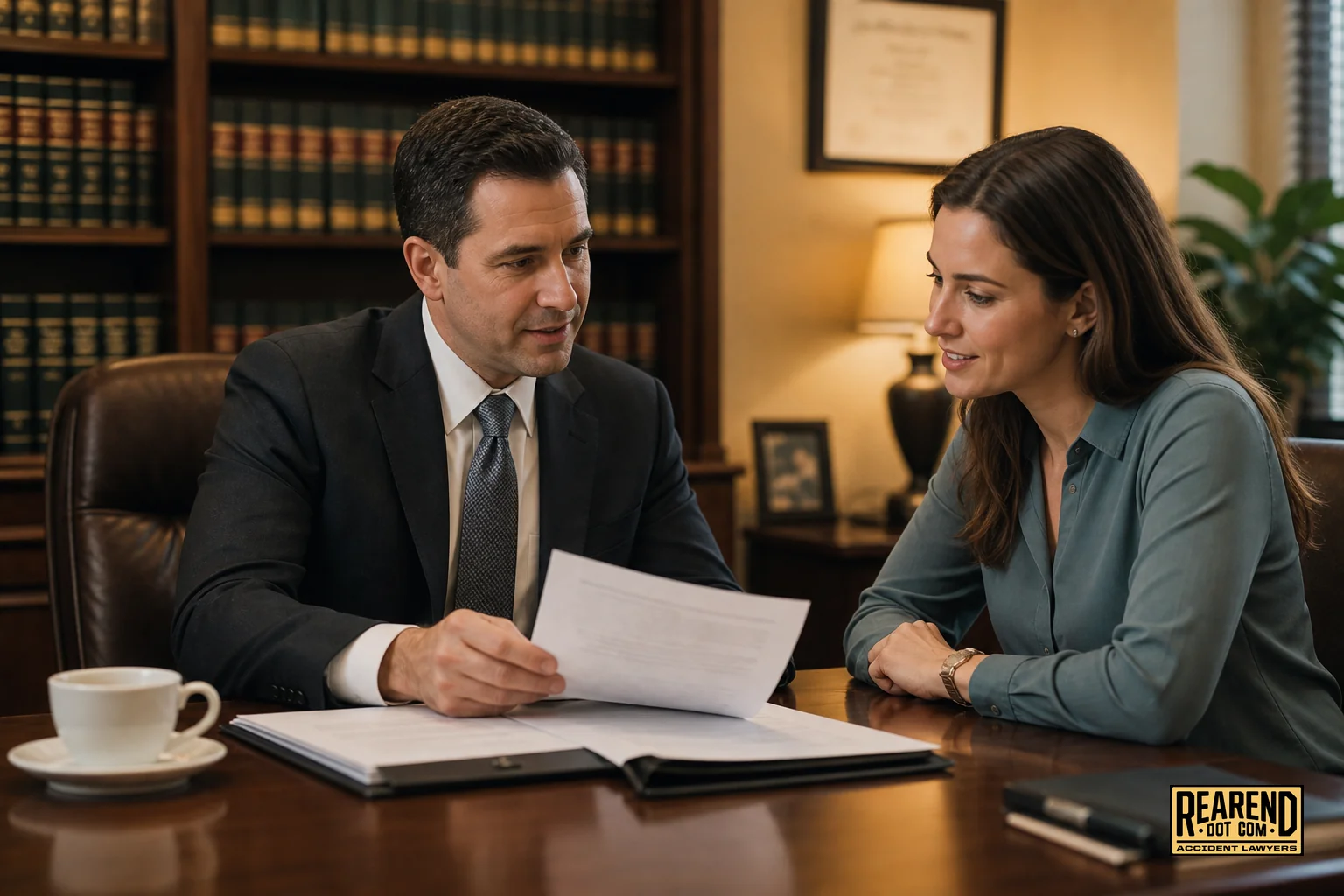
Many people hesitate to call an attorney after a denial because they assume legal representation is expensive. For rear-end accident victims, that assumption is usually wrong. Attorneys who handle these cases typically work on a contingency fee basis, meaning you pay nothing upfront, and the attorney’s fee comes out of the settlement or verdict if you win. If you don’t recover, you don’t owe a fee.
For a full breakdown of how that fee structure works, see how much a rear-end accident lawyer costs on a contingency basis.
What an Attorney Can Do That You Can’t Do Alone
An attorney who regularly handles rear-end collision cases brings tools and leverage that individual claimants simply don’t have:
- Demand letters that carry legal weight and signal willingness to litigate
- Access to accident reconstruction experts who can counter disputed liability arguments
- Medical expert connections to document the full extent of your injuries, including delayed-onset conditions like whiplash
- Knowledge of insurer tactics, an experienced attorney has seen the same denial playbooks before and knows how to counter them
- Ability to file a bad faith claim alongside your injury claim, which changes the insurer’s risk calculation significantly
- Litigation capability, the credible threat of a lawsuit often moves insurers toward fair settlements
The Rearend.com Approach
At Rearend.com, the intake process is built for people in exactly this situation, victims who’ve received a denial and aren’t sure what to do next. The free case evaluation is fast, there’s no obligation, and a member of the legal team follows up within 24 hours. You can review your claim in just a few clicks for free and find out whether your denial is worth challenging, and how.
When choosing who to work with, it’s worth knowing what to look for and what to avoid. Our guide on red flags when hiring a personal injury lawyer after a rear-end crash covers the warning signs that should make you walk away from a consultation.
Step 6: File a Lawsuit If Necessary
When appeals fail and the insurer refuses to negotiate in good faith, filing a lawsuit is the next step. For many victims, the word “lawsuit” sounds intimidating, but it’s often the most effective tool available, and most cases settle before they ever reach a courtroom.
California’s Statute of Limitations
In California, you generally have two years from the date of the accident to file a personal injury lawsuit. Missing that deadline almost always means losing your right to sue, regardless of how strong your case is. If you’re close to that window, consult an attorney immediately, do not wait.
There are limited exceptions that can extend the deadline, such as cases involving government entities or minors, but those exceptions are narrow. Don’t assume they apply to your situation without legal advice.
What the Lawsuit Process Looks Like
Filing a lawsuit doesn’t mean you’ll be in a courtroom in six months. The litigation process typically includes:
- Filing the complaint, your attorney files a formal legal complaint against the at-fault driver and, in some cases, the insurer
- Discovery, both sides exchange evidence, take depositions, and build their cases
- Mediation or settlement negotiations, the majority of rear-end accident cases settle during this phase
- Trial, if no settlement is reached, the case goes before a judge or jury
The filing of a lawsuit changes the insurer’s calculus. Legal costs, the risk of a jury verdict, and the potential for a bad faith finding all create pressure to settle fairly. That’s why many cases that seemed stuck after a denial resolve once an attorney files suit.
For victims in San Diego, Los Angeles, Oakland, and other California cities, the process follows the same general framework, though local court timelines and specific procedural rules can vary. If you’re in San Diego, our guide on what to expect from a rear-end accident attorney in San Diego covers the local landscape in detail.
Coverage Limits and What They Mean for Your Case
One practical factor in any lawsuit is the at-fault driver’s coverage. California requires minimum liability coverage of $30,000 per person and $60,000 per accident. If your damages exceed those limits, which is common in cases involving serious injuries, your attorney may pursue additional avenues, including your own underinsured motorist coverage. Understanding the full picture of available coverage is part of what a thorough case evaluation reveals.
Frequently Asked Questions About Denied Rear-End Claims
Can I still get paid if the other driver’s insurance denies my claim?
Yes. A denial from the at-fault driver’s insurer doesn’t end your options. You can appeal the denial, file a complaint with the California Department of Insurance, pursue a bad faith claim, or file a lawsuit directly against the at-fault driver. You may also have coverage through your own policy, including uninsured/underinsured motorist coverage, that applies.
What if my own insurance also denies the claim?
If you’re filing under your own policy (for example, using your uninsured motorist coverage because the at-fault driver had no insurance), a denial from your own insurer is also challengeable. The same appeal and bad faith framework applies. Your insurer owes you the same duty of good faith it owes any claimant.
How long do I have to appeal a denied claim in California?
The internal appeal deadline varies by insurer and policy, check your denial letter and policy documents for the specific window. More importantly, California’s two-year statute of limitations for personal injury lawsuits runs from the accident date, not the denial date. Don’t let the appeal process consume so much time that you lose your right to sue.
Does hiring an attorney really make a difference after a denial?
For most victims, yes, significantly. Attorneys who handle rear-end accident cases regularly know how to counter the specific arguments insurers use to justify denials. They can build a stronger evidentiary record, send demand letters that carry legal weight, and file suit if necessary. The contingency fee model means you don’t pay unless you recover, which removes the financial barrier. For more on what factors affect your potential recovery, see rear-end accident settlement amount factors that victims rarely know about.
What if the at-fault driver had minimum coverage or no insurance at all?
This is more common than most people expect. California’s minimum liability limits ($30,000 per person) can be exhausted quickly in cases involving hospitalization, surgery, or long-term treatment. If the at-fault driver was uninsured or underinsured, your own policy’s uninsured/underinsured motorist (UM/UIM) coverage may apply. An attorney can help you identify every available source of recovery, not just the most obvious one.
What if I’m in Oakland, Los Angeles, or another California city, does location matter?
California’s insurance laws and personal injury statutes apply statewide, so the core framework is the same whether you’re in San Diego, Los Angeles, Oakland, or San Jose. Local court procedures and timelines can vary, and having an attorney familiar with the local legal landscape helps. Rearend.com serves clients across California, including in all of these cities. If you’re in Oakland and want to know whether your denied claim is worth pursuing, our free rear-end accident case evaluation in Oakland is a good starting point.
Take the Next Step, Don’t Let a Denial Stand Unchallenged
A denied rear-end claim feels like a door slamming shut. But for most victims, it’s actually the moment the real legal process begins. You have appeal rights, regulatory protections, bad faith remedies, and the option to take the at-fault driver to court. What you don’t have is unlimited time, California’s statute of limitations is firm, and every day you wait is a day closer to losing options that can’t be recovered.
If your claim has been denied and you’re not sure what to do next, the clearest first step is a free case evaluation. At Rearend.com, there’s no cost, no obligation, and no fee unless compensation is recovered. Start my claim today and find out exactly where you stand, before the window closes.
Disclaimer: The information provided on Rearend.com is for general informational purposes only and does not constitute legal advice.
Related Articles


Need Legal Help After a Rear-End Accident?
Get a free consultation with our experienced legal team