
Fresno Rear-End Claim Denied? What to Do Next
A denied rear-end accident claim in Fresno usually comes down to one of a handful of reasons: disputed fault, gaps in medical treatment, a pre-existing condition argument, or a policy limits dispute. The good news is that a denial letter is a starting point, not the end of your rear-end accident claim process in Fresno, CA when facing insurance denial, and there are concrete steps you can take right away.
Key Takeaways
- California requires specifics: Insurers must cite the policy language or legal standard behind a denial, per California claims handling requirements, so the letter itself is your first piece of evidence.
- Gaps in treatment hurt claims: A delay of even a few weeks in seeing a doctor after a rear-end crash gives adjusters an opening to argue your injury wasn’t caused by the collision.
- Minimum coverage may not be enough: California’s minimum liability limits are $30,000 per person and $60,000 per accident, which is often too low to cover serious injuries.
- You generally have two years: Under California Code of Civil Procedure Section 335.1, you typically have two years from the crash date to file a lawsuit against the at-fault driver.
- A denial is not always final: Some Fresno claims are delayed rather than denied outright, and knowing the difference changes what you should do next.
At a Glance: Fresno Rear-End Claim Denial Facts
| Factor | What Fresno Claimants Should Know |
|---|---|
| Common denial reasons | Disputed liability, treatment gaps, pre-existing conditions, late reporting |
| Minimum CA liability coverage | $30,000 per person / $60,000 per accident |
| Statute of limitations | Generally 2 years from the crash date (CCP § 335.1) |
| Police report turnaround | Can take several weeks for CHP or Fresno PD reports to finalize |
| Denial letter requirement | Must state specific reasons citing policy or legal standard |
| Delay vs. denial | A “pending investigation” letter is different from a formal denial |
| Free case evaluation | Available through rearend.com’s online intake, generally followed up within 24 hours |
Why Do Fresno Insurers Deny Rear-End Claims?
Insurers deny rear-end accident claims in Fresno, CA most often over disputed liability, gaps in medical care, or claims that a prior injury explains your symptoms. None of these reasons are automatically the final word.
Rear-end collisions are usually straightforward on the question of fault, since the following driver is generally expected to keep a safe distance. That doesn’t stop some adjusters from raising road conditions, sudden braking, or multi-car pileups as reasons to shift blame.
Gaps in treatment are another frequent trigger. If you waited a couple weeks to see a doctor after your crash on Highway 99 or Blackstone Avenue, an adjuster may argue the delay proves your injury wasn’t serious, or wasn’t caused by the collision at all.
Pre-existing conditions come up constantly in rear-end cases because whiplash and back pain can overlap with old injuries. An insurer might request years of medical records looking for anything to point to as an alternative cause, a tactic covered in more depth by insurance industry claims-handling analysis.
1. Read the Denial Letter Line by Line
Start by identifying exactly which policy provision or legal standard the insurer cited, since California generally requires that specificity in denial letters.
Look for the difference between a liability denial (“we found our insured was not at fault”) and a damages denial (“we don’t believe your injuries relate to this crash”). Each type calls for a different response.
If the letter cites a police report, request a copy for yourself. CHP and Fresno PD reports on injury or multi-vehicle crashes can take several weeks to finalize, and errors in an early or preliminary version sometimes get carried into the adjuster’s decision.
2. Gather Fresno-Specific Evidence
Rear-end crashes on stretches like the 99, Shaw Avenue, or Blackstone Avenue often involve heavy commuter or agricultural traffic, and that context can matter to your claim.
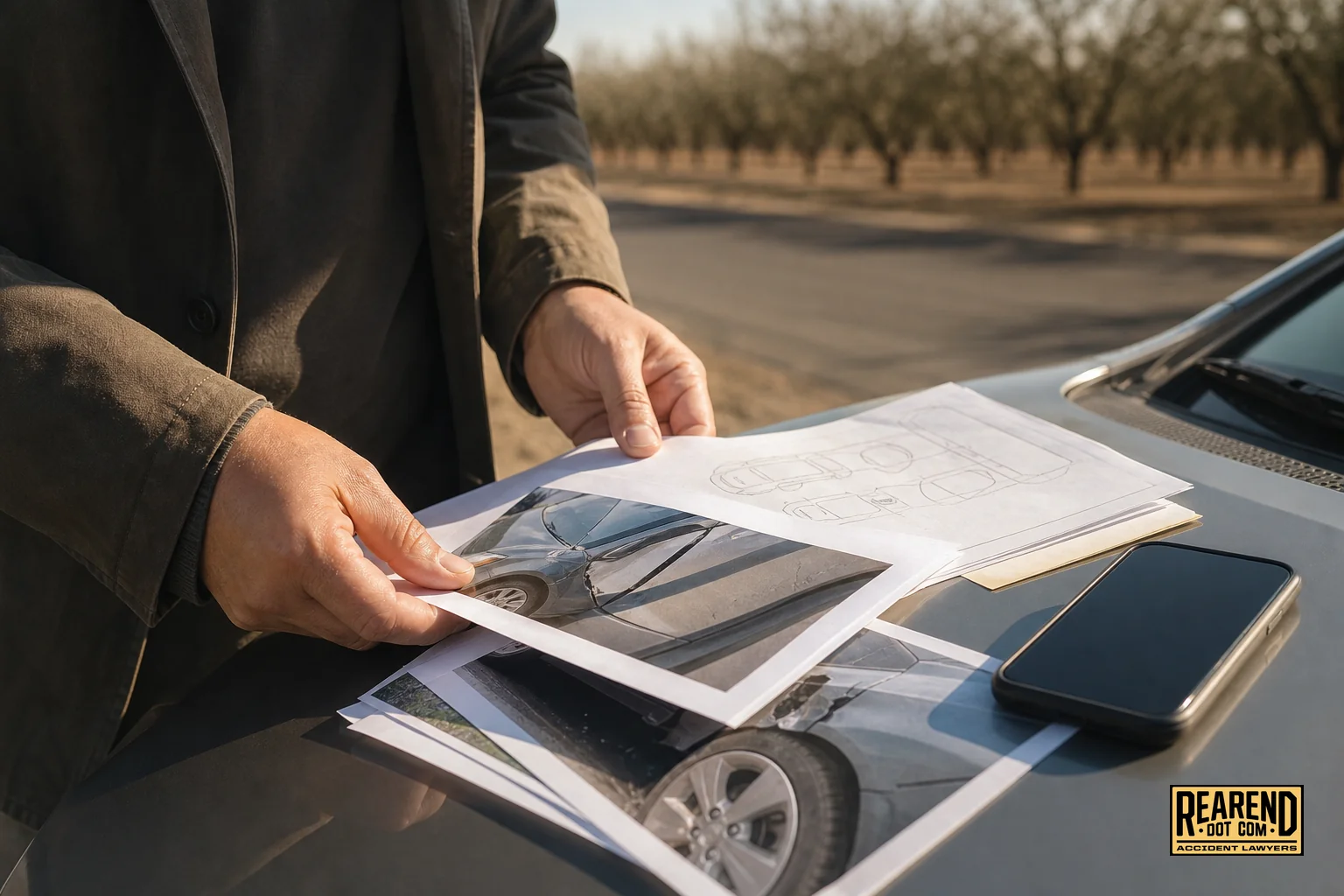
Pull together dashcam or nearby business surveillance footage if it exists, photos of vehicle damage from multiple angles, and any witness contact information. If your case involves a farm truck, delivery vehicle, or rideshare driver, the underlying insurance policy can differ significantly from a standard personal auto policy, so identify exactly whose coverage applies.
Medical documentation matters just as much as scene evidence. Continuous, well-documented treatment closes the door on the “gap in care” argument that Fresno adjusters commonly raise.
3. Check the Insurer’s Policy Limits
Sometimes a claim isn’t wrongly denied so much as capped, because the at-fault driver only carries California’s minimum liability coverage.
That minimum sits at $30,000 per person and $60,000 per accident. For a rear-end crash with real medical bills, lost wages, and ongoing treatment, those numbers run out fast. When damages exceed policy limits, your own underinsured motorist coverage may come into play, which is a separate claim with its own process.
Understanding which factors drive settlement value in the first place can help you judge whether a denial or lowball offer reflects the real strength of your case. Our rear-end accident settlement amount factors guide breaks down what actually moves the number.
4. Respond in Writing and Request Reconsideration
Send a written rebuttal that addresses the exact reason cited in the denial, backed by the specific documents that counter it.
If the denial claims disputed liability, attach the police report, photos, or witness statements that support your version of events. If it’s a treatment-gap argument, provide a timeline explaining any delay, such as trying home remedies first or not recognizing whiplash symptoms right away.
Set a deadline for a response and keep a copy of everything you send. A documented paper trail matters if the claim later needs to escalate.
5. Know When to Escalate: Lawsuit or Attorney Involvement
Escalation generally becomes worth considering when a written rebuttal gets ignored, when the insurer sticks to a denial without new justification, or when the statute of limitations is approaching. Under California Code of Civil Procedure Section 335.1, you generally have two years from the crash date to file a personal injury lawsuit against the at-fault driver.

A free case evaluation can help you sort out whether your claim is worth pursuing further, especially if you’re unsure whether the denial has merit or is a negotiating tactic. Rearend.com’s online intake generally leads to a follow-up call within 24 hours to walk through your options.
If you’d like a rough sense of your case’s potential value before deciding whether to escalate, you can calculate an estimate of what your potential claim could be worth.
For a broader look at your legal options beyond Fresno specifics, our detailed breakdown of what happens if insurance denies a rear-end claim covers the general paths available statewide.
What If the Denial Is Just a Delay, Not a Final Denial?
A delay letter citing “pending investigation” is not the same as a formal denial, and treating it that way too early can waste time you don’t need to lose.
Fresno claims sometimes stall because of the weeks-long wait for finalized CHP or police reports, backlogged adjuster caseloads, or requests for additional medical records. If your claim has been sitting for an extended period without a clear answer, following up in writing and asking for a specific timeline can move things along, or at least create a record for later.
If repeated follow-ups produce no movement, that pattern itself becomes useful evidence that the delay has crossed into a de facto denial.
Frequently Asked Questions
What should I do if I was rear-ended?
Move to safety, call for medical evaluation even if you feel fine, document the scene with photos, exchange information, and file a police report. Getting checked out within a day or two also protects your health and your claim.
Does insurance cover rear-end collision repair?
The at-fault driver’s liability coverage generally pays for rear-end collision repair, though disputes over fault, low policy limits, or an adjuster undervaluing repair costs can complicate that. Our guide on how long a rear-end settlement takes from filing to payment covers typical timelines.
How long do I have to appeal a denied claim in Fresno?
There’s no single fixed appeal deadline under California law, but you generally have two years from the crash date to file a lawsuit under CCP Section 335.1, so it’s wise to act well before that window closes.
If your Fresno rear-end claim was denied or has been stuck in limbo, you don’t have to sort through the denial letter alone. Start my claim through a free case evaluation to find out whether the denial holds up, and if repairs are part of your dispute, you can also find trusted local auto body shops to get an independent repair estimate while you sort out the insurance side.
Recommended Resources
Start My Claim Find Trusted Local Auto Body Shops Calculate an estimate of what your potential claim could be worth
Related Articles


Need Legal Help After a Rear-End Accident?
Get a free consultation with our experienced legal team