
What Does “No Win, No Fee” Actually Mean?
A driver in San Diego gets rear-ended on the I-15 during rush hour. Her neck hurts, her bumper is dented, and an insurance adjuster has already left a voicemail. A friend tells her to “just get a lawyer.” She hesitates, not because she doubts she needs help, but because she’s not sure she can afford one. Then she hears the phrase “no win, no fee” and wonders if it’s too good to be true.
It’s a fair question. If you’ve been rear-ended anywhere from Los Angeles to Oakland to San Jose, the financial worry is often just as stressful as the injury itself. This guide breaks down what does no win no fee actually mean in plain language, how the fee is calculated, what generally happens if a case doesn’t succeed, and what to ask before you sign anything.
What “No Win, No Fee” Really Means for Accident Victims
“No win, no fee” describes a contingency fee arrangement. Instead of paying an attorney by the hour or upfront, the attorney’s fee is generally taken as a percentage of whatever compensation you recover through a settlement or court award. If there’s no recovery, the attorney typically doesn’t collect a fee for their work on the case.
This is the standard fee model for personal injury claims across the country, including rear-end collision cases in San Diego, Los Angeles, Oakland, San Jose, Riverside, Oceanside, and Fresno. It exists because most accident victims are already dealing with medical bills, lost wages, and vehicle repairs. Asking them to also pay a retainer or hourly legal fee upfront would shut a lot of people out of the legal system entirely.
The arrangement is typically formalized in a written contingency fee agreement, sometimes called a retainer agreement, signed before an attorney begins working on your claim. That document should spell out the percentage the attorney takes, when that percentage might change, and what costs, if any, you could be responsible for. Reading it carefully, and asking questions before signing, matters more than most people realize.
1. How the Contingency Fee Is Actually Calculated
The contingency fee is usually expressed as a percentage of the total settlement or verdict, not a flat rate and not an hourly charge. That percentage is agreed upon in writing before the attorney starts working your case. It’s one of the first things to clarify, since it directly affects what you’ll take home if your claim resolves successfully.
Several factors can influence how that percentage is structured:
- Pre-litigation settlements. Many rear-end accident claims settle before a lawsuit is ever filed, often through negotiation with the at-fault driver’s insurance company.
- Cases that go into litigation. If a claim doesn’t resolve through negotiation and a lawsuit becomes necessary, some agreements specify a higher percentage at that stage, reflecting the added time, court filings, and preparation involved.
- Case complexity. A straightforward rear-end claim with clear liability may be handled differently than a disputed case involving multiple parties or serious injuries.
The core idea stays consistent: the fee is tied to results, not hours logged. Ask your attorney to walk through the exact percentage, in writing, and how (or if) it could change depending on how your case progresses. If you want a deeper breakdown of typical percentages and cost structures, this guide on rear-end accident lawyer cost and fees covers it in more detail.
2. What Happens If Your Case Doesn’t Succeed
This is often the part people misunderstand most. Under a genuine contingency fee arrangement, if there’s no settlement or court award, the attorney generally does not collect a fee for their legal work. That’s the general idea behind the model: the attorney’s payment depends on getting you a result.
It’s worth being precise about what this covers and what it doesn’t. “No win, no fee” refers to the attorney’s fee for legal services. It is not a promise that every case will result in compensation, and no honest attorney can promise a specific outcome before reviewing the facts of your claim. Every rear-end collision is different, and factors like fault, injury severity, and available insurance coverage all play a role in what a case may be worth. Prior results do not guarantee a similar outcome in your case.
Before signing any agreement, ask directly: “If we don’t recover anything, will I owe your firm money for your time?” A trustworthy attorney should be able to answer that clearly and in writing. If the answer is vague, that’s worth paying attention to. For a broader list of things to watch for, see this breakdown of red flags when hiring a personal injury lawyer after a rear-end crash.
3. Why This Model Exists (and Who It Helps Most)
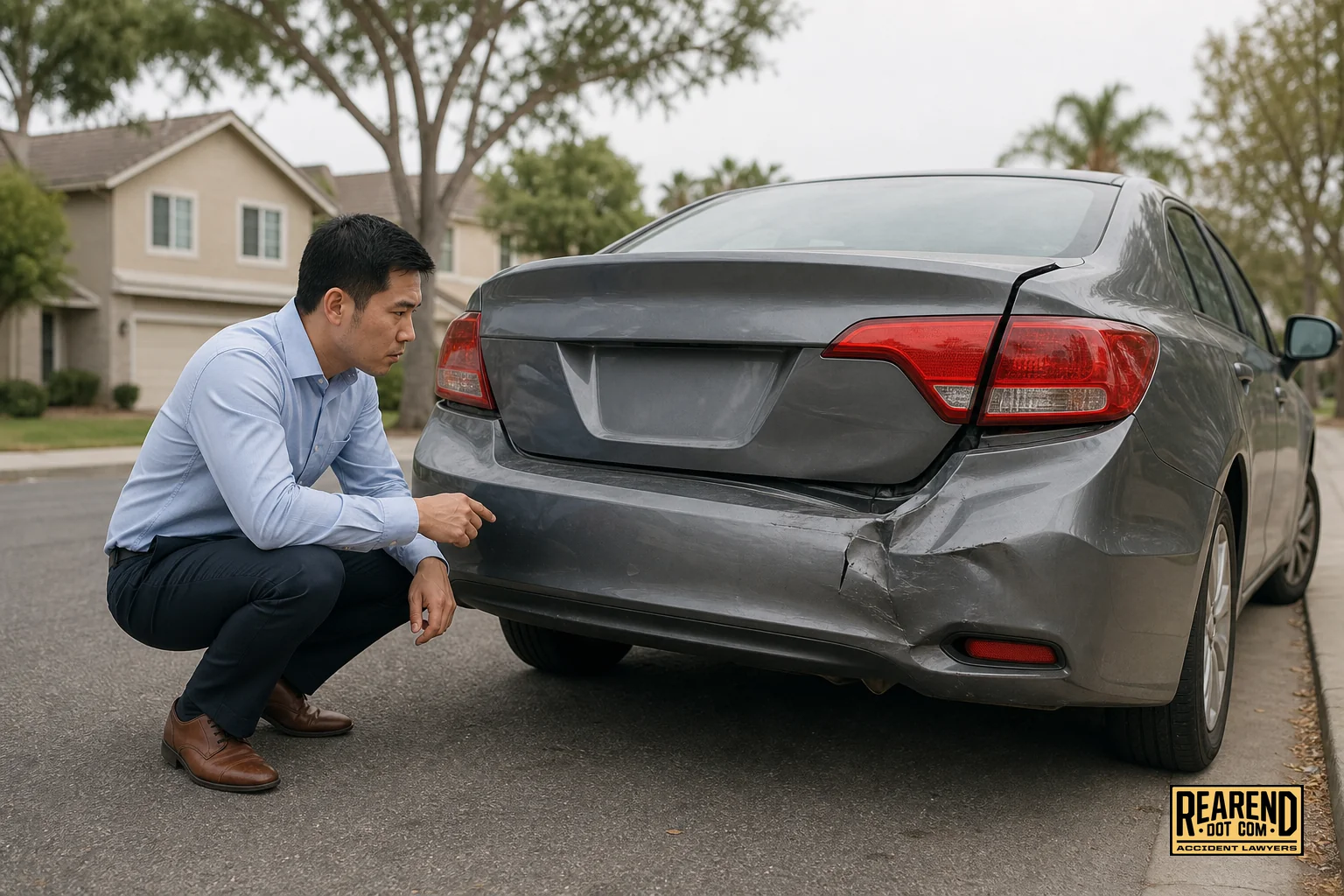
Contingency fees exist to remove a specific barrier: the fear that hiring a lawyer will cost more money you don’t currently have. For someone who was just rear-ended, that fear is understandable. Medical bills start arriving before any settlement check does, and many victims put off getting legal help simply because they assume it’s out of reach financially.
This model matters even more given how thin some insurance coverage can be. California law sets minimum required liability coverage amounts for drivers; check with the California Department of Insurance or a licensed attorney for the current, exact figures, since minimums can change and requirements vary by policy. In many cases, if you’re seriously injured by an at-fault driver carrying only the state minimum coverage, the available insurance money may not come close to covering medical treatment, lost income, and ongoing care. Navigating that gap, and identifying other potential sources of compensation, is exactly the kind of work a contingency-fee attorney is positioned to help with, without asking for money upfront.
The people who benefit most from this arrangement are usually:
- Accident victims who are unrepresented and worried about affording legal help
- Claimants already facing mounting medical bills and lost wages
- People unsure whether their case is even worth pursuing, since a free case evaluation can answer that question before any commitment is made
- Drivers dealing with an insurance adjuster who’s pushing for a quick, low settlement
If you’re wondering whether your situation even qualifies for a claim in the first place, especially if your injuries aren’t obvious yet, this article on whether you can sue if you were rear-ended with no visible injuries is a useful next read.
4. Contingency Fees vs. Paying Out of Pocket
It helps to see the contingency model next to the alternatives side by side. Here’s how the three common approaches to paying for legal help after a rear-end accident generally compare.
| Fee Structure | Upfront Cost | Who Bears the Financial Risk | When Attorney Gets Paid | Typical Use Case |
|---|---|---|---|---|
| Contingency fee (“no win, no fee”) | Generally none | Attorney | Only from the settlement or verdict, if there is one | Most rear-end collision personal injury claims |
| Hourly billing | Retainer plus ongoing invoices | Client | Regularly, regardless of outcome | Less common for injury claims, more typical in other legal matters |
| Self-representation (no attorney) | None to an attorney, but time and effort costs are high | Client | Not applicable | Very minor claims with clear, undisputed liability and minimal injury |
Hourly billing puts financial risk on the client from day one, win or lose. Self-representation avoids attorney fees but leaves the victim to negotiate directly with a trained insurance adjuster, often without knowing what similar rear-end claims typically settle for. If you want to understand how an adjuster’s incentives differ from your own, this comparison of a rear-end accident lawyer vs insurance adjuster in Los Angeles lays out who is actually working in your interest.
Contingency fee arrangements are the standard for a reason: they let injured people access legal representation without a financial barrier at the exact moment they’re least able to absorb new costs.
5. Questions to Ask Before You Sign a Contingency Agreement

A contingency fee agreement is a contract, and it’s worth treating it like one. Before you sign anything, consider asking:
- What percentage of my recovery is your fee, exactly? Get the number in writing, not just a verbal estimate.
- Does the percentage change if the case goes into litigation? Some agreements adjust the fee if a lawsuit becomes necessary.
- What happens if we don’t recover anything? Confirm, in writing, whether you’d owe attorney fees in that scenario.
- How often will I get updates on my case? Slow or inconsistent communication is one of the more common complaints victims have about larger firms.
- Have you handled rear-end collision cases before? It’s reasonable to ask about an attorney’s experience with rear-end cases and how many similar claims they’ve handled, rather than looking for a “specialized” label that doesn’t formally exist in this area of law.
- Who will actually be working on my file? At some firms, your case gets passed to a paralegal or junior associate you’ve never spoken with.
- Can I cancel the agreement if I’m not satisfied? Understand your options before you’re locked into a relationship that isn’t working.
These questions aren’t confrontational, they’re standard due diligence. A trustworthy attorney expects them and answers directly. For a longer list built specifically around this decision, see how to choose a rear-end accident attorney without getting burned.
6. Local Considerations Across California and Beyond
The contingency fee model works largely the same way across the country, but the practical experience of a rear-end claim can look different depending on where you are. Insurance companies, court backlogs, and even typical repair timelines vary by region.
In San Diego, for example, victims often deal with adjusters who move quickly to get a recorded statement before medical treatment is even complete. Understanding the local claim process can help you avoid early mistakes, covered in this guide to the rear-end accident attorney process in San Diego.
In San Jose, claim timelines can be affected by court scheduling and how quickly medical records are finalized, a topic explored in this piece on what slows down a rear-end settlement in San Jose. And regardless of whether you’re in Oceanside, Riverside, Oakland, Fresno, or elsewhere, the underlying question of how long the process might take is one of the most common concerns victims raise, addressed in how long a rear-end accident settlement takes from filing to payment.
Whatever city you’re in, the financial worry that keeps people from calling a lawyer in the first place is the same one the contingency fee model was built to solve.
Frequently Asked Questions About No Win, No Fee Representation
Does “no win, no fee” mean the entire process is free?
Not quite. It generally means the attorney’s own fee depends on recovering compensation for you. Some agreements address other case-related costs separately, so it’s worth asking your attorney to explain exactly what the arrangement does and doesn’t cover before you sign.
Can the fee percentage change in the middle of my case?
It’s possible, depending on the specific agreement. Some contracts include a different percentage if a case moves from negotiation into a filed lawsuit. This should be spelled out clearly in writing from the start, not introduced as a surprise later.
What if I already gave a statement to the insurance adjuster?
It happens often, and it doesn’t necessarily disqualify you from getting help. An attorney can review what was said and help manage communication with the adjuster going forward. It’s generally a good idea to pause further statements until you’ve had a free case evaluation.
Is a free case evaluation the same as signing a contract?
No. A free case evaluation is typically a conversation to review the facts of your accident and help you understand your options. It doesn’t commit you to representation. You can review your claim in just a few clicks for free before deciding anything.
Do I need a “specialized” rear-end accident attorney?
There’s no formal legal specialization specific to rear-end collisions. What matters more is finding an attorney who has experience handling rear-end accident cases and has worked on numerous claims like yours, so they understand the common patterns insurance companies use in these situations.
Getting Legal Help Without the Financial Guesswork
The financial fear that keeps many rear-end accident victims from calling a lawyer is real, but it doesn’t have to be the reason you go through a claim alone. A contingency fee arrangement means the conversation about cost happens upfront, in writing, before you owe anything. The goal is to reduce the uncertainty, not add to it.
If you were recently rear-ended and you’re still weighing whether to get legal help, start by understanding what your claim might actually involve. You can Start My Claim today to get a free, no-obligation review of your situation. And if your vehicle needs repairs while your claim moves forward, you can also Find Trusted Local Auto Body Shops to help get your car back on the road. Understanding your options costs nothing, and that’s exactly how it should work after an accident that wasn’t your fault.
Related Articles

Need Legal Help After a Rear-End Accident?
Get a free consultation with our experienced legal team