
Attorney vs Public Adjuster After a San Diego Crash?
A woman stopped at a red light on the I-8 near Mission Valley gets hit from behind. Her bumper is crushed, her neck aches, and by that evening she’s already Googling two very different kinds of help: a lawyer, and something called a “public adjuster.” She isn’t sure what the difference is, or whether she needs one, both, or neither. That confusion is common, and it matters, because picking the wrong path can cost real money and time.
If you’re comparing a rear-end accident attorney vs public adjuster in San Diego, the short answer is that these two professionals generally solve different problems. One focuses on your property damage claim with your own insurer. The other can handle the full scope of a collision claim, including injuries, liability disputes, and negotiations with the at-fault driver’s insurance company. Understanding that distinction before you make a call could save you weeks of frustration.
What a Public Adjuster Actually Does
A public adjuster is a licensed professional who represents policyholders, not insurance companies, when filing a first-party property claim. Think of situations like a house fire, storm damage, or a burst pipe. The adjuster inspects the damage, documents losses, and negotiates with your own insurer to try to get a fair payout for the property claim itself.
In the context of a car accident, a public adjuster’s role is usually narrow. They may help estimate vehicle damage or dispute a property-damage valuation with your own auto insurer. What they generally do not do is negotiate bodily injury claims, deal with the at-fault driver’s insurance company on liability, or represent you in a lawsuit. Their license and training are built around property valuation, not personal injury law.
That distinction trips people up. Someone rear-ended on Friars Road might hire a public adjuster hoping it covers “the whole claim,” only to learn weeks later that their medical bills, lost wages, and pain-and-suffering claim were never part of the adjuster’s scope. Public adjusters also typically charge a percentage of whatever the property claim recovers, which is worth knowing before you sign anything.
What a Rear-End Accident Attorney Does Differently
A rear-end accident attorney typically handles the claim as a whole. That includes vehicle damage, but it also covers medical expenses, missed work, and the physical pain that can follow a collision. An attorney who focuses on rear-end cases has usually seen the tactics insurance companies use after this specific type of crash, from disputing soft-tissue injuries to arguing that pain “should have resolved by now.”
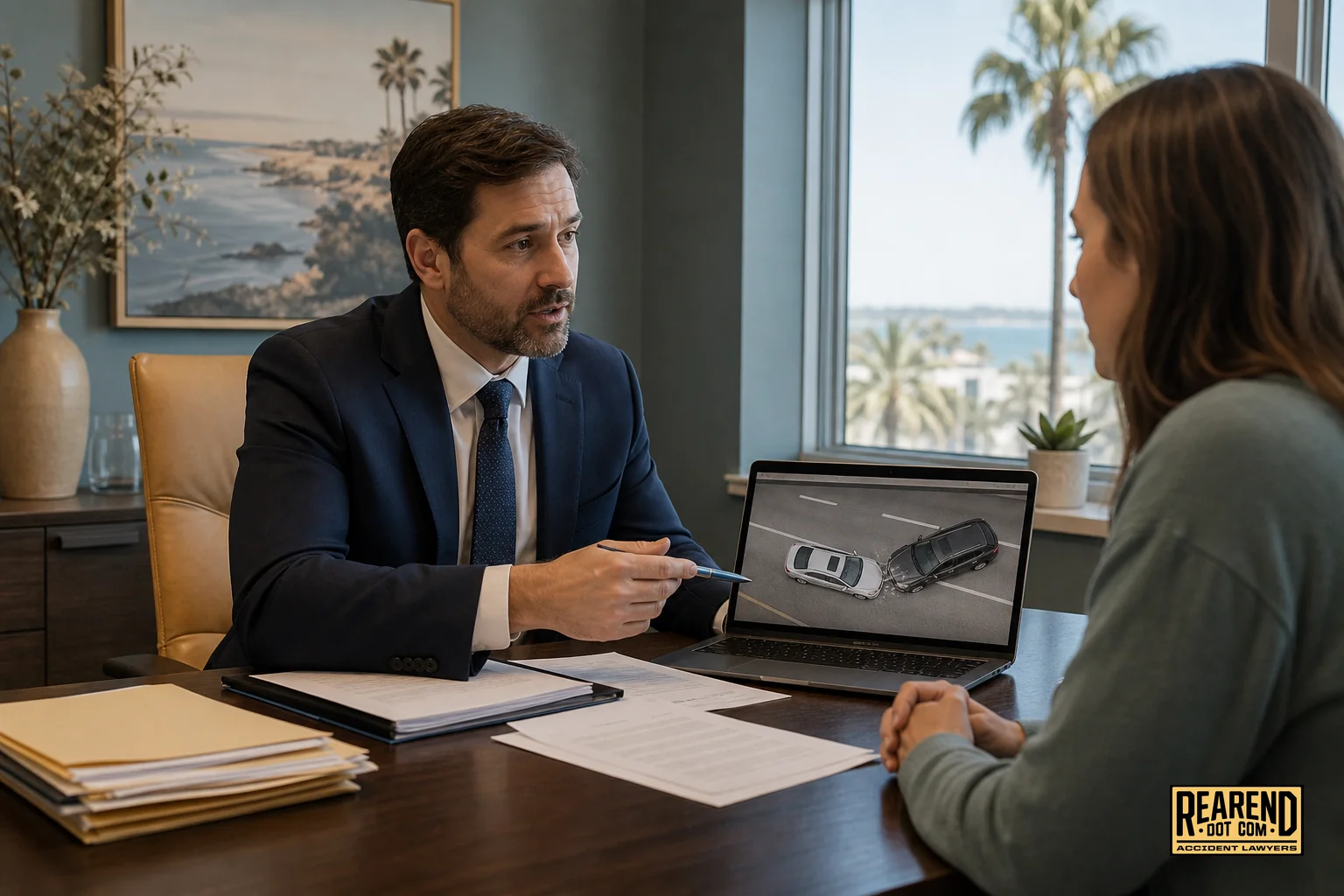
Unlike a public adjuster, an attorney can negotiate directly with the at-fault driver’s insurance company, not just your own. That matters because in most rear-end cases, the driver who struck you is presumed at fault, and their insurer is who ultimately pays for your medical bills, car repairs, and other losses. An attorney can also push back when an insurer disputes liability, misses deadlines, or offers a settlement that doesn’t come close to covering your actual costs.
Attorneys can also take a case to litigation if a fair settlement isn’t on the table, something a public adjuster is not licensed to do. That doesn’t mean every case ends up in court. Most rear-end claims settle before a lawsuit is filed. But having a lawyer who could file suit often changes how seriously an insurance company negotiates. If you want a clearer picture of what working with counsel looks like day to day, this overview of what to expect from a San Diego rear-end accident attorney walks through the process step by step.
Rear-End Accident Attorney vs Public Adjuster San Diego: Side-by-Side Comparison
Because these two roles get confused so often, it helps to see them laid out side by side. The table below compares how a public adjuster and a rear-end accident attorney typically handle a San Diego collision claim.
| Factor | Public Adjuster | Rear-End Accident Attorney |
|---|---|---|
| Primary focus | Property damage valuation, usually first-party claims | Full claim, including injuries, liability, and property damage |
| Who they negotiate with | Your own insurance company | The at-fault driver’s insurance company (and yours, when relevant) |
| Handles bodily injury claims | Generally no | Yes, including medical bills, lost wages, and pain and suffering |
| Can dispute liability | Generally no | Yes |
| Can file a lawsuit | No, not licensed to litigate | Yes, if a fair settlement can’t be reached |
| Typical fee structure | Percentage of the property claim payout | Often contingency-based, no fee unless compensation is recovered |
| Best suited for | Property-only disputes with your own insurer | Crashes involving injury, disputed fault, or a lowball offer |
Looking at it this way, the two roles rarely compete for the same job. A public adjuster might help if your own insurer is lowballing your vehicle’s diminished value. An attorney is generally the better fit when injuries, medical bills, or a disputed liability decision are part of the picture, which describes the majority of rear-end accident cases.
How Fees Typically Work for Each Option
Cost is often the deciding factor for people trying to figure out who to call first. Public adjusters typically charge a percentage of whatever the property claim recovers. That fee comes out of your pocket regardless of whether your injury claim, if you have one, gets resolved at all, because that claim usually sits outside their scope entirely.
Many rear-end accident attorneys, including those matched through rearend.com, work on a contingency fee basis. In plain terms, that means the attorney doesn’t collect a fee unless your case results in a settlement or award. If there’s no recovery, there’s typically no attorney fee owed. This structure is part of why people who couldn’t otherwise afford legal help end up better positioned to fight a lowball offer. For a full breakdown of how contingency arrangements are usually structured, see how rear-end accident lawyer costs work on a contingency basis and this related piece on rear-end accident lawyer cost and fees.
Before signing anything with any professional, whether an adjuster or an attorney, ask for the fee structure in writing and ask what happens if the claim doesn’t resolve favorably. Reputable representation should be able to answer that question clearly and without pressure.
When a Public Adjuster’s Scope Falls Short for Rear-End Crash Victims
Rear-end collisions frequently cause soft tissue injuries such as whiplash, along with disc issues, concussions, or aggravation of prior conditions. These injuries don’t always show up on the day of the crash. Symptoms can build over days or weeks, and treatment can stretch on for months. None of that falls within a public adjuster’s licensed scope of work.
There’s also the issue of policy limits. California requires minimum liability coverage of $30,000 per person and $60,000 per accident. For a crash that involves emergency care, imaging, physical therapy, and time away from work, that minimum can get used up quickly. A public adjuster generally has no role in arguing that a claim exceeds available coverage, exploring underinsured motorist options, or identifying additional avenues for compensation. An attorney can evaluate those angles as part of building the claim.
If your insurer denies part of a claim or disputes fault, a public adjuster typically cannot escalate that fight through litigation. An attorney can. That’s often the moment when victims realize they need someone who can do more than document a loss, they need someone who can advocate through a dispute, a denial, or a drawn-out negotiation. If you’re unsure whether your case still has room to push further, a free case evaluation can help clarify whether your claim is worth pursuing more aggressively.
San Diego-Specific Considerations for Rear-End Claims
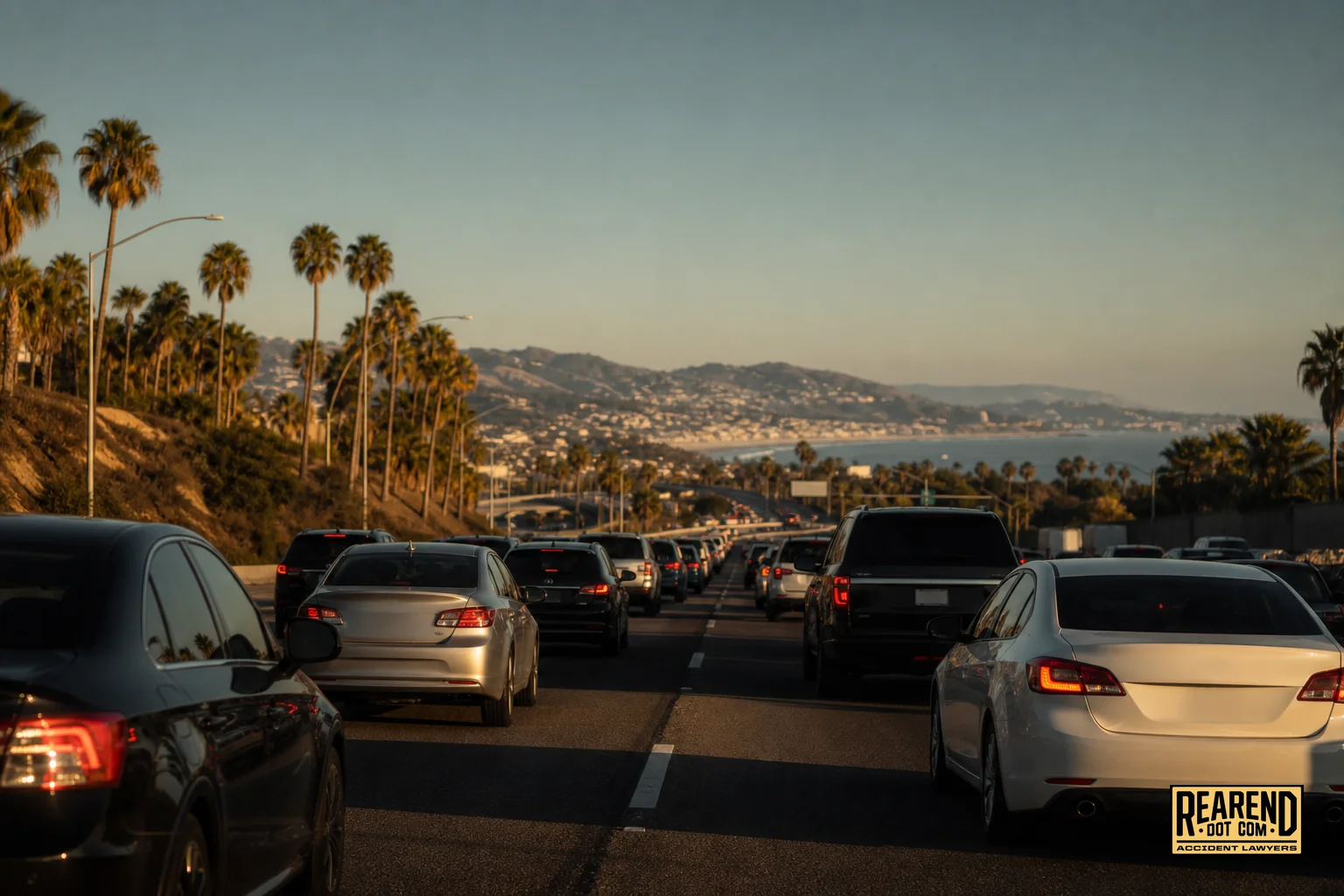
San Diego’s traffic corridors, including the I-5, I-8, and 805, see a steady stream of stop-and-go congestion, especially near Mission Valley, Kearny Mesa, and the merge points downtown. That kind of traffic pattern is exactly where rear-end collisions tend to happen most often: sudden braking, distracted drivers, and short following distances.
California follows a comparative negligence rule, meaning fault can sometimes be split between drivers, and any shared fault could reduce a settlement. This is another area where a public adjuster’s scope simply doesn’t extend, since disputing or clarifying fault percentages is a legal question, not a property valuation question. An attorney familiar with how local insurers and adjusters in the San Diego area tend to handle rear-end claims can help make sure a comparative fault argument doesn’t unfairly shrink your payout.
San Diego claimants also deal with practical logistics: finding a reliable body shop, coordinating medical appointments, and managing calls from insurance representatives who may reach out within days of the crash. Attorneys who focus on rear-end cases often help coordinate these pieces, including connecting victims with trusted local auto body shops so vehicle repairs don’t become a separate, disconnected headache on top of the injury claim.
How to Decide Which Path Fits Your Situation
Before deciding who to call, it helps to ask a few honest questions about your own situation:
- Did you sustain any injury, even a minor one? If yes, a public adjuster’s scope likely won’t cover that part of your claim.
- Is the dispute only about your vehicle’s value? If your only issue is a disagreement with your own insurer over repair costs or diminished value, a public adjuster may be relevant to that narrow piece.
- Has the at-fault driver’s insurer denied or disputed your claim? That typically calls for legal representation, since a public adjuster cannot litigate or dispute liability findings.
- Are you unsure how much your claim might be worth? An attorney can often evaluate this at no upfront cost, which reduces the risk of guessing wrong.
Many San Diego rear-end victims end up needing both a body shop referral and legal support, since vehicle repair and injury recovery tend to happen on parallel tracks. If you’re vetting attorneys or adjusters, watch for pressure to sign quickly, vague answers about fees, or promises that sound too certain about your outcome. For a deeper look at what to watch out for, this guide on red flags when hiring a personal injury lawyer after a rear-end crash is worth reading before you commit to anyone. You can also review this checklist for choosing a rear-end accident attorney without getting burned.
Frequently Asked Questions
Can a public adjuster help with my rear-end injury claim?
Generally, no. Public adjusters are licensed to handle property damage valuation, typically for first-party claims with your own insurer. Bodily injury negotiation, liability disputes, and litigation usually fall outside their scope of work.
How much does a rear-end accident attorney cost in San Diego?
Many attorneys who handle rear-end cases, including those matched through rearend.com, work on contingency, meaning there’s generally no fee unless your case results in compensation. For a detailed breakdown, see this explanation of how rear-end accident lawyer costs work on a contingency basis.
Can I sue if I was rear-ended in San Diego?
In many cases, yes, particularly if the at-fault driver’s insurer denies your claim, disputes liability, or offers a settlement that doesn’t reasonably cover your damages. Whether a lawsuit makes sense depends on the specifics of your case. This piece on whether you can sue if you were rear-ended with no visible injuries covers some of the nuances involved.
How long does a rear-end accident settlement take?
Timelines vary widely depending on the severity of injuries, whether liability is disputed, and how quickly medical treatment concludes. Some claims resolve in a few months, others take longer, especially if litigation becomes necessary. For a fuller picture, see how long a rear-end accident settlement typically takes from filing to payment.
What if my case involves both property damage and an injury?
This is common after a rear-end collision. In these situations, an attorney is usually better positioned to handle the claim as a whole, since a public adjuster’s role typically doesn’t extend to the injury portion at all.
If you’ve been rear-ended in San Diego and you’re trying to figure out whether a public adjuster, an attorney, or both make sense for your situation, you don’t have to sort it out alone. A free, no-obligation case evaluation can help clarify what your claim may involve and whether legal representation could help you push back on a low offer. Start my claim today, or review your claim in just a few clicks for free to get a clearer picture of your next step. If vehicle repairs are part of your concern too, you can also find trusted local auto body shops to keep that part of the process moving while your claim is reviewed.
Disclaimer: The information provided on Rearend.com is for general informational purposes only and does not constitute legal advice.
Related Articles


Need Legal Help After a Rear-End Accident?
Get a free consultation with our experienced legal team