
Can I Sue If I Was Rear-Ended With No Visible Injuries?
Your neck felt stiff the morning after the crash. You brushed it off. The other driver’s bumper hit yours, and you told the officer at the scene that you were fine. Now, four days later, you can barely turn your head, and an insurance adjuster has already called twice asking you to sign something.
This scenario plays out thousands of times every year across California, from the freeways of San Diego to the surface streets of Oakland. And the question victims keep asking is the same: can I sue if I was rear-ended when I didn’t have any visible injuries at the scene? The short answer is yes, and the longer answer is that waiting to find out could cost you the right to do so.
Feeling Fine After a Crash Doesn’t Mean You’re in the Clear
Walking away from a rear-end collision without a scratch feels like good news. And in many ways, it is. But “no visible injuries” is not the same as “no injuries.” The human body is remarkably good at hiding trauma in the hours immediately following a crash, and insurance companies know this better than anyone.
Adjusters are trained to reach out fast, often within 24 hours of an accident. Their goal is to get you on record saying you feel fine before your symptoms have had a chance to develop. Once you’ve made that statement, or worse, accepted a settlement, your legal options narrow dramatically.
The absence of a broken bone or a bleeding wound does not eliminate your right to file a personal injury claim. What matters legally is whether another driver’s negligence caused your accident, and whether that accident caused you harm, even harm that takes a few days to surface.
The legal right to sue is based on negligence and causation, not on how bad you looked at the scene.
If you were rear-ended and you’re now experiencing pain, stiffness, headaches, or any other symptoms, your case deserves a serious look, regardless of what you told the officer that day.
Why Injuries From Rear-End Collisions Often Show Up Days Later

The most common injury in rear-end crashes is whiplash, and whiplash is notorious for delayed onset. When your car is struck from behind, your head snaps forward and backward in a fraction of a second. The muscles, tendons, and ligaments in your neck absorb that force. But the inflammation and pain that follow often don’t peak until 24 to 72 hours after the collision.
Common Delayed-Onset Injuries After a Rear-End Crash
- Whiplash and soft tissue injuries: Neck stiffness, shoulder pain, and reduced range of motion that worsen over the first few days
- Herniated or bulging discs: Spinal discs compressed during impact can press on nerves, causing radiating pain, numbness, or tingling that develops gradually
- Concussion and mild traumatic brain injury (TBI): Headaches, cognitive fog, difficulty concentrating, and mood changes can appear subtly and be mistaken for stress
- Shoulder and back injuries: Rotator cuff tears and lumbar strain often don’t announce themselves until the adrenaline wears off
- Psychological trauma: Anxiety, sleep disruption, and post-traumatic stress symptoms can emerge days or weeks after the event
Adrenaline is a powerful pain suppressor. In the immediate aftermath of a collision, your body floods with stress hormones that temporarily mask discomfort. This is a survival mechanism, not a sign that you’re uninjured. Doctors and personal injury attorneys both urge crash victims to seek a medical evaluation within 24 to 48 hours, even when they feel okay, precisely because of this delay.
Getting checked out also creates a medical record that connects your symptoms to the accident. That documentation becomes critical evidence if you later decide to pursue a claim.
Yes, You Can Sue, Here’s What the Law Actually Says
California personal injury law is built on the concept of negligence. To bring a successful claim, you generally need to show four things: the other driver owed you a duty of care, they breached that duty, their breach caused the accident, and the accident caused you harm.
Rear-end collisions carry a strong presumption of fault against the following driver under California law. The driver who hits you from behind is almost always considered negligent, they were either following too closely, distracted, or failed to stop in time. That presumption doesn’t disappear because your injuries weren’t visible at the scene.
What You Can Recover Compensation For
Even in cases with no dramatic visible injuries, a successful rear-end accident claim can include compensation for:
- Medical expenses, emergency visits, imaging, physical therapy, chiropractic care, and future treatment
- Lost wages if your injuries kept you from working
- Pain and suffering, including the physical discomfort and emotional distress caused by the accident
- Property damage to your vehicle
- Loss of enjoyment of life if your injuries affect daily activities
Rearend.com serves victims across California, including San Diego, Los Angeles, Oakland, San Jose, and Riverside, and the legal framework for these claims is consistent statewide. Whether you were rear-ended on the I-5 in San Diego or on the 580 in Oakland, your right to pursue compensation for delayed injuries is the same.
For a deeper look at what factors shape how much a claim is worth, see Rear-End Accident Settlement Amount Factors That Victims Rarely Know About.
California’s Statute of Limitations: Don’t Wait Too Long
Here’s where urgency matters. California law gives most personal injury victims two years from the date of the accident to file a lawsuit, under California Code of Civil Procedure § 335.1. Miss that deadline, and you lose your right to sue, regardless of how strong your case might be.
Important Exceptions to the Two-Year Rule
-
Minors: If the victim was under 18 at the time of the accident, the statute of limitations generally doesn’t begin until they turn 18.
-
Government vehicles: If a government-owned vehicle was involved, you may need to file a government tort claim within just six months of the accident, a much shorter window.
Two years sounds like a long time. It isn’t. Evidence degrades quickly. Surveillance footage gets overwritten. Witnesses move or forget details. The at-fault driver’s insurance company is building its defense from day one. The sooner you consult an attorney, the more leverage you have.
If you’re unsure whether your situation falls under any of these exceptions, the safest move is to get a free case evaluation now rather than assume you have more time than you do.
What Evidence Supports a Claim When Damage Looks Minor
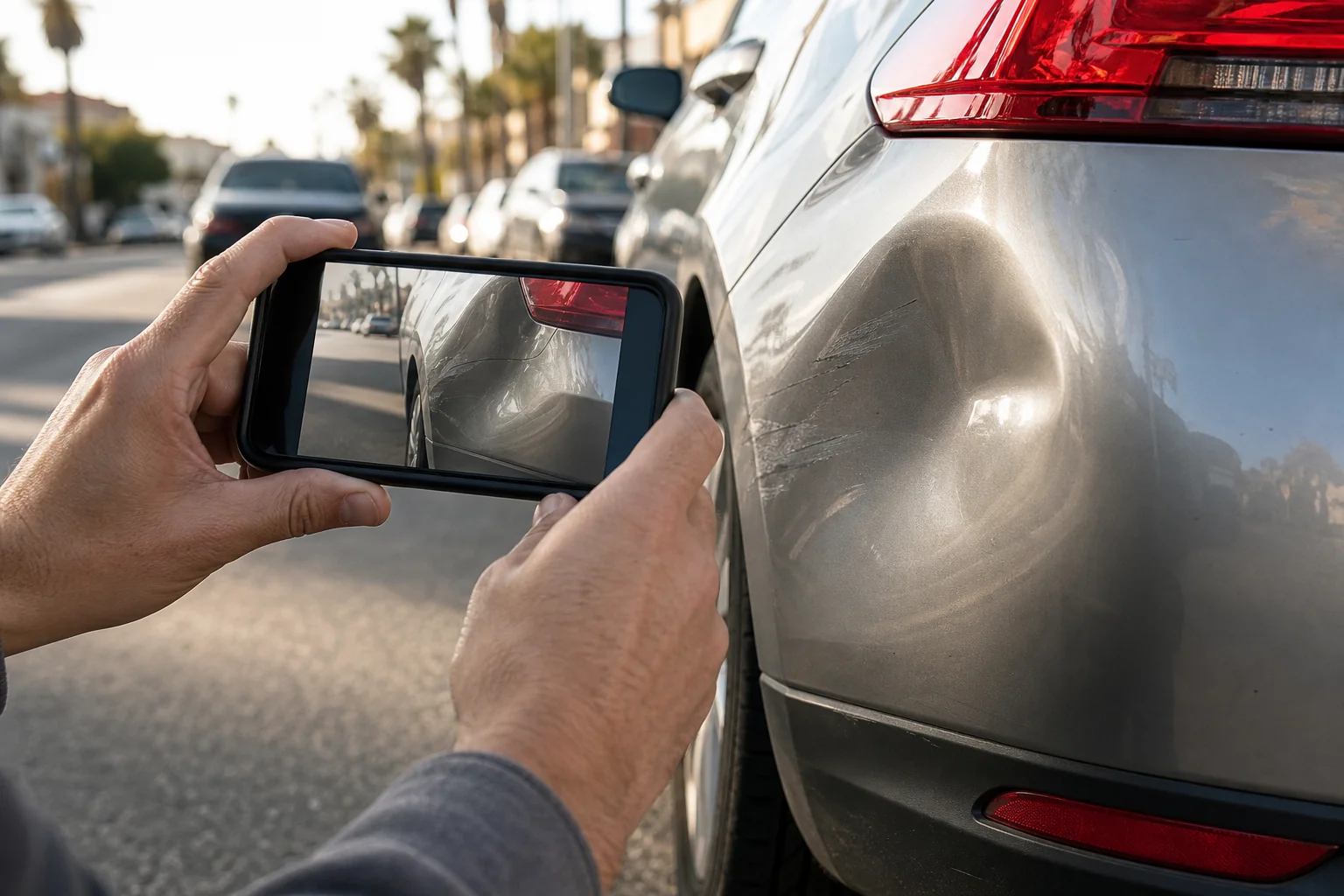
One of the most common misconceptions about rear-end accident claims is that minor vehicle damage means a minor, or nonexistent, injury claim. That’s not how it works. Low-speed impacts can generate significant forces on the human body, particularly the neck and spine. Studies in biomechanics have documented whiplash injuries occurring at speeds as low as 5 to 10 mph.
What matters is building a record that connects the accident to your injuries. Here’s what strengthens a claim even when the damage looks minor:
Key Evidence to Gather After a Rear-End Collision
- Police report: Always request a copy. It establishes the basic facts of the accident and often includes the officer’s assessment of fault.
- Medical records: Even a same-day urgent care visit matters. It creates a contemporaneous record linking your symptoms to the crash. Don’t skip this step because you feel okay.
- Photos of vehicle damage: Even minor dents and scratches document the impact. Photograph all angles of both vehicles.
- Witness statements: Names and contact information from anyone who saw the crash can be invaluable later.
- Dashcam footage: If you or a nearby driver had a dashcam running, that footage can be decisive.
- A symptom journal: Starting the day after the accident, write down every symptom you experience, when it started, how severe it is, and how it affects your daily life. This contemporaneous record carries real weight.
An experienced rear-end accident attorney knows how to gather, preserve, and present this evidence in a way that counters the insurance company’s narrative. If you haven’t taken these steps yet, it’s not too late, but don’t delay.
For a step-by-step guide on what to do immediately after a crash, read What to Do After Being Rear-Ended in the First 72 Hours.
How Insurance Companies Use “No Visible Injury” Against You

Insurance adjusters are not on your side. Their job is to resolve your claim for as little money as possible, and “no visible injuries at the scene” is one of their most reliable tools for doing exactly that.
Common Tactics Adjusters Use in Low-Injury Cases
- The early call: Reaching out within hours of the accident, before your symptoms develop, to get a recorded statement that you’re “feeling fine”
- Disputing causation: Arguing that your neck pain or headaches are from a pre-existing condition, not the accident
- Minimizing vehicle damage: Using photos of your car to argue the impact couldn’t have caused real injury
- The quick settlement offer: Presenting a check for a few hundred or a few thousand dollars before you know the full extent of your injuries, and asking you to sign a release that bars any future claims
Accepting a settlement before you’ve been fully evaluated by a doctor, and before you understand what your injuries may cost to treat, is one of the most common and costly mistakes rear-end accident victims make. Once you sign that release, there’s no going back, even if you later discover a herniated disc or need surgery.
The difference between what an adjuster offers and what an attorney can recover can be substantial. That gap is even wider in cases where the insurance company has already gotten a recorded statement from you. See how this dynamic plays out in detail: Rear-End Accident Lawyer vs Insurance Adjuster Los Angeles: Who Works for You?
What a Rear-End Accident Claim Could Be Worth Without Visible Injuries
Soft tissue injuries and whiplash claims are sometimes dismissed as minor. They shouldn’t be. Whiplash treatment can include weeks of physical therapy, chiropractic care, pain management, and in some cases, injections or surgery. The total cost of treatment for what initially seemed like a “minor” neck strain can run into tens of thousands of dollars.
Settlement value in a rear-end accident case, even one with no dramatic visible injuries, depends on several factors:
- The nature and severity of your injuries, including delayed-onset conditions
- The total cost of medical treatment, including future care
- Whether your injuries caused you to miss work
- The impact on your daily life and activities
- The strength of the evidence connecting the accident to your injuries
- The at-fault driver’s insurance policy limits
Rearend.com operates on a no-fees-unless-you-win model. That means there’s no financial risk in finding out what your case is actually worth. You don’t pay anything unless compensation is recovered on your behalf. For a full breakdown of how attorney fees work in these cases, see How Much Does a Rear-End Accident Lawyer Cost on a Contingency Basis?
Frequently Asked Questions
Can I sue if I was rear-ended and felt fine at the scene?
Yes. Your legal right to file a personal injury claim is based on the other driver’s negligence and whether the accident caused you harm, not on whether you felt pain immediately. Delayed-onset injuries like whiplash, herniated discs, and concussions are common after rear-end collisions and are fully compensable under California law.
How long do I have to file a lawsuit in California after a rear-end accident?
In most cases, California’s statute of limitations gives you two years from the date of the accident to file a personal injury lawsuit (CCP § 335.1). Exceptions exist for minors and government vehicle accidents. Consulting an attorney early protects your options.
What if the damage to my car was minor, does that hurt my injury claim?
Not necessarily. Minor vehicle damage does not mean minor injury. Biomechanical research has documented significant soft tissue injuries occurring at low impact speeds. An experienced attorney can help counter the insurance company’s argument that minimal car damage means no real injury.
Do I need a lawyer if I have no visible injuries?
Having an attorney is especially important in cases with no visible injuries, because insurance companies are more likely to dispute or minimize these claims. An attorney knows how to document delayed-onset injuries, counter adjuster tactics, and build a case that reflects the true value of your damages.
What if I already gave a statement to the insurance company?
Don’t panic, but do act quickly. Depending on what you said and when, an attorney may still be able to build a strong case. The key is not to give any additional statements or sign any releases before speaking with legal counsel. Contact Rearend.com for a free evaluation of where your claim stands.
How much does it cost to hire a rear-end accident attorney?
Rearend.com works on a contingency basis, you pay no attorney fees unless compensation is recovered for you. There’s no upfront cost and no financial risk to getting a professional evaluation of your case. For more detail on how this works, read Rear-End Accident Lawyer Cost & Fees.
Take the Next Step Before Your Window Closes
If you were rear-ended and walked away feeling okay, you may still have a real, compensable injury claim, one that an insurance company is already working to minimize. Delayed symptoms are not a sign of weakness or exaggeration. They’re a documented medical reality that California law recognizes and protects.
The biggest mistake victims make is assuming they have no case because they have no visible injuries. The second biggest mistake is waiting too long to find out. Every day that passes, evidence fades and your legal options narrow.
Rearend.com offers a free, no-obligation case evaluation for rear-end collision victims across California. There’s no fee unless compensation is recovered. Review your claim in just a few clicks for free, and find out what your case is actually worth before the insurance company decides for you.
You don’t have to navigate this alone. Start My Claim today and get the answers you deserve.
Disclaimer: The information provided on Rearend.com is for general informational purposes only and does not constitute legal advice.
Related Articles


Need Legal Help After a Rear-End Accident?
Get a free consultation with our experienced legal team