
What to Know About a Thanksgiving Traffic Accident Claim Before You Travel
A Thanksgiving traffic accident claim starts with your health: get checked by a medical provider even if the pain feels minor, photograph the scene, write down names and plate numbers, and think carefully before giving a recorded statement to an insurer. Holiday congestion raises the chance of a rear-end crash, and a free, no-obligation review at rearend.com has no cost to start.
Key Takeaways
- Medical care first: See an urgent care clinic, an emergency room or your own doctor the same day or soon after, because adrenaline and delayed symptoms can hide injuries after a rear-end crash.
- Scene records: Photograph the vehicles, plates, road and surroundings, then collect contact details and the police report number before holiday crowds drive away.
- Insurer calls: You can take time before agreeing to a recorded statement. Share basic facts and hold off on guesses about your injuries or who caused the crash.
- Free review: rearend.com offers a free case review, and clients pay nothing up front. We get paid only if we recover compensation on your behalf.
Thanksgiving Traffic Accident Claim: Quick Facts
| Step | Timing | What to do |
|---|---|---|
| Safety and 911 | First minutes | Move to a safe spot if you can and call 911 if anyone is hurt |
| Medical evaluation | Same day or the next day | Tell the provider you were rear-ended and describe each symptom |
| Scene records | At the scene | Take photos, collect plates, witness contacts and the police report number |
| Insurer calls | First days | Give basic facts and pause before a recorded statement |
| Symptom and expense log | Following weeks | Write daily notes and keep bills, receipts and missed-work records |
| Free case review | Once you are safe and checked | Complete the online intake; our legal team contacts you within 24 hours |
| Filing deadlines | Vary by state and type of case | Ask early which deadline applies to your situation |
With Thanksgiving approaching, millions of people across the United States will load the car and head for family dinners. In California, that means packed stretches of freeway around San Diego, Los Angeles, Oakland and San Jose. Most trips end safely. This guide covers what to do if yours does not.
Why Does Thanksgiving Traffic Raise Rear-End Crash Risk?
Thanksgiving traffic raises rear-end crash risk because more drivers share the road at once, speeds swing between highway pace and sudden stops, and many drivers are tired, distracted or unfamiliar with the route. A driver who looks away for a moment can close the gap before braking.
Holiday travel packs commuters, long-distance families and last-minute shoppers onto the same roads. Traffic often moves at highway speed, then compresses without warning near interchanges, exits and construction zones. A rear-end crash tends to happen in that moment when the lead car brakes and the car behind reacts late.
Several other factors stack on top of congestion. Drivers check navigation apps, soothe restless kids or reach for a phone. Early darkness after the clocks change shortens the time to see brake lights. Rain, fog and glare add to the problem on some routes.
Passengers face the same risk as drivers. A grandparent in the back seat, a teenager in the front or a child in a car seat can each be hurt in a collision that looks minor from outside the car. That is why the first step after a crash is a medical check for everyone who was in the vehicle.
What Should You Do First After a Holiday Rear-End Crash?
Move to a safe spot if you can, call 911 if anyone is hurt, and accept a medical evaluation before you worry about paperwork. Your health comes first, and early medical records give your traffic accident claim a clear starting point tied to the day of the crash.
Turn on your hazard lights and, if the cars are drivable and the road is busy, move to the shoulder or the nearest safe lot. Stay buckled or step well away from moving lanes. Do not stand between vehicles on a freeway. Traffic around a crash scene on a holiday weekend moves fast and often distracted.
Call 911 when anyone reports pain, dizziness, confusion or trouble moving. Even when nobody seems hurt, a police report helps document the crash, and responders can check people on the spot. Ask for the report number and the agency name before you leave.
Why Get Checked Even If the Pain Seems Minor?
Adrenaline and shock can hide pain for hours or days, so soreness that feels minor at the scene can turn into neck pain, headaches or back stiffness later. A prompt exam finds problems early and creates a record that connects your symptoms to the crash.
Rear-end impacts snap the head forward and back, which is how whiplash and related neck and shoulder strain develop. Headaches, dizziness, trouble concentrating and numbness in the arms can show up the next day or later. Seat belt bruising and back pain follow a similar pattern.
Travelers often delay care because they want to reach the destination, avoid a hospital on a holiday or keep the weekend intact. We understand that pull. The risk is that waiting leaves a gap in your records, and an insurer may point to that gap when it questions your injuries.
Tell the provider you were in a rear-end crash and describe each symptom, even the small ones. Follow the treatment plan, and keep your appointments. If you are far from home, urgent care clinics and emergency rooms stay open over the holiday, and you can follow up with your regular doctor when you return.
How Do You Document the Scene on a Crowded Holiday Road?
Take wide and close photos of the vehicles, license plates, road, signs and lighting, then collect names, phone numbers and insurance details from the other driver and witnesses. Ask the responding officer for the police report number before you leave, because holiday crowds scatter fast.

Start with safety, then use your phone. Photograph the position of each car before anyone moves, the damage from several angles, the plates, skid marks, debris, traffic signs and the weather. A short video that walks around the scene adds context that single photos miss.
Next, gather people. Get the other driver’s name, phone number, insurance company, policy number and plate number. Photograph the insurance card and driver’s license if the driver allows it. Ask nearby drivers who stopped for their names and numbers, and note which direction they were traveling.
Write a few notes while details are fresh: the time, the road, how fast traffic was moving, where you were looking, and what you heard or felt on impact. Check for dash cam footage in your car and the other driver’s. Note nearby businesses with cameras, since some systems overwrite video within days.
Keep your words at the scene simple. Exchange information, describe what happened in plain facts, and skip apologies or guesses about fault. Adrenaline can make people say things they later wish they had phrased differently. If you feel unsure about an injury, say so and let responders examine you.
Should You Give a Recorded Statement to an Insurer Over the Holiday Weekend?
You can often decline a recorded statement from the other driver’s insurer while you get medical care and your bearings. Share basic facts like your name, contact details and where the crash happened, and hold off on describing injuries or fault until you understand your symptoms.
Insurance adjusters work quickly, and they sometimes call within a day or two. A friendly tone and a request to “just get your side on tape” can make a recorded statement feel routine. It is not routine. Your words become part of the claim file, and a casual “I’m fine” on day one can surface later when symptoms grow.
On a holiday weekend, you may be on the road, staying with relatives or waiting on a rental. That pressure makes quick answers tempting. You can say that you are still getting checked and will call back after you have had time to treat and review your options. Then write down the adjuster’s name, company, phone number and claim number.
Your own insurer is different from the other driver’s insurer, and your policy may ask you to cooperate with the claim. Read your policy and ask what is required before you agree to anything. For a closer look at this decision, read our guide on whether to give a recorded statement after a crash.
Be careful with early settlement offers, too. A fast check can look attractive during a busy week, yet your treatment may not be finished and your full medical costs may not be known. Taking time before you sign gives you room to understand what you are accepting.
How Do Fault Rules and Filing Deadlines Work When You Crash Away From Home?
Fault rules vary by state, and personal injury filing deadlines vary by state and type of case. If you crash away from home, ask promptly which state’s rules apply to your situation so a deadline does not pass while you recover and travel back.
Holiday travel often crosses state lines. A California driver heading to Arizona or Nevada, or a visitor driving into California, may face different rules for fault, insurance and time limits than they expect. We do not state a single deadline here because the right one depends on where the crash happened and the kind of claim.
In many rear-end crashes, the driver in back faces questions about following distance and attention. Fault is not automatic in every case, though. Sudden stops, multi-car chain reactions and conflicting accounts can complicate the picture. For the evidence that matters, see our explainer on how fault is proved in a rear-end accident.
The practical point is timing. Early photos, witness details and medical records are easier to collect in the first days than months later. A prompt review with a legal team can also clarify which deadline applies to you, so you can plan around it.
What Records Should You Keep in the Weeks After the Crash?
Keep medical records and bills, a short daily symptom log, proof of missed work, receipts for related costs, photos, the police report number and your messages with insurers. Collect them in one folder, paper or digital, so your records show how the crash affected your health and routine.
A symptom log does not need to be long. Each day, write where it hurts, how bad it feels on a simple scale, what you could not do and whether you took medication. Short, consistent entries often show more than a memory pieced together months later.
Save each appointment summary, prescription receipt, imaging report and referral. If you miss work or cancel travel plans because of pain, note the dates and ask your employer for a simple record of the time you lost. Keep mileage and parking receipts for medical visits as well.
Stay careful with social media. A cheerful holiday photo may not show how much pain you were in, and insurers sometimes look for posts that seem to conflict with an injury. Posting less while your claim is open protects your account of what happened.
When Should You Start a Free Case Evaluation?
Start a free case evaluation once you are safe and have seen a medical provider, ideally within the first days after the crash. Early review helps you understand your options before insurers press for statements or quick settlement talks, and at rearend.com the review has no cost.
Here is how it works at rearend.com. You complete a short online intake in a few clicks, and our legal team contacts you within 24 hours to discuss your case. We focus on rear-end accident cases, so the conversation centers on what happened in your crash and what steps make sense next.
The review is free and carries no obligation. Personal injury cases are handled on a contingency fee basis, which means you pay nothing up front, there are no hourly fees, and you do not pay unless we recover compensation on your behalf. For a deeper look at what follows your submission, see what happens after you submit a rear-end accident claim.
Submitting a contact form does not create an attorney-client relationship. That relationship begins only through a formal, signed engagement agreement. Until you sign one, you can ask questions, compare options and decide at your own pace.
If you want a rough sense of how claims are valued, you can calculate an estimate of what your potential claim could be worth. Treat any estimate as a starting point for questions. It does not predict how your claim will turn out, because injuries, evidence and coverage differ in each case.
A Short Pre-Trip Plan for Thanksgiving Drivers
A few minutes of preparation before you leave makes a stressful moment easier to handle. Think of it as packing for the road in the same way you pack snacks and chargers. None of it prevents a crash, but it helps you act clearly if one happens.
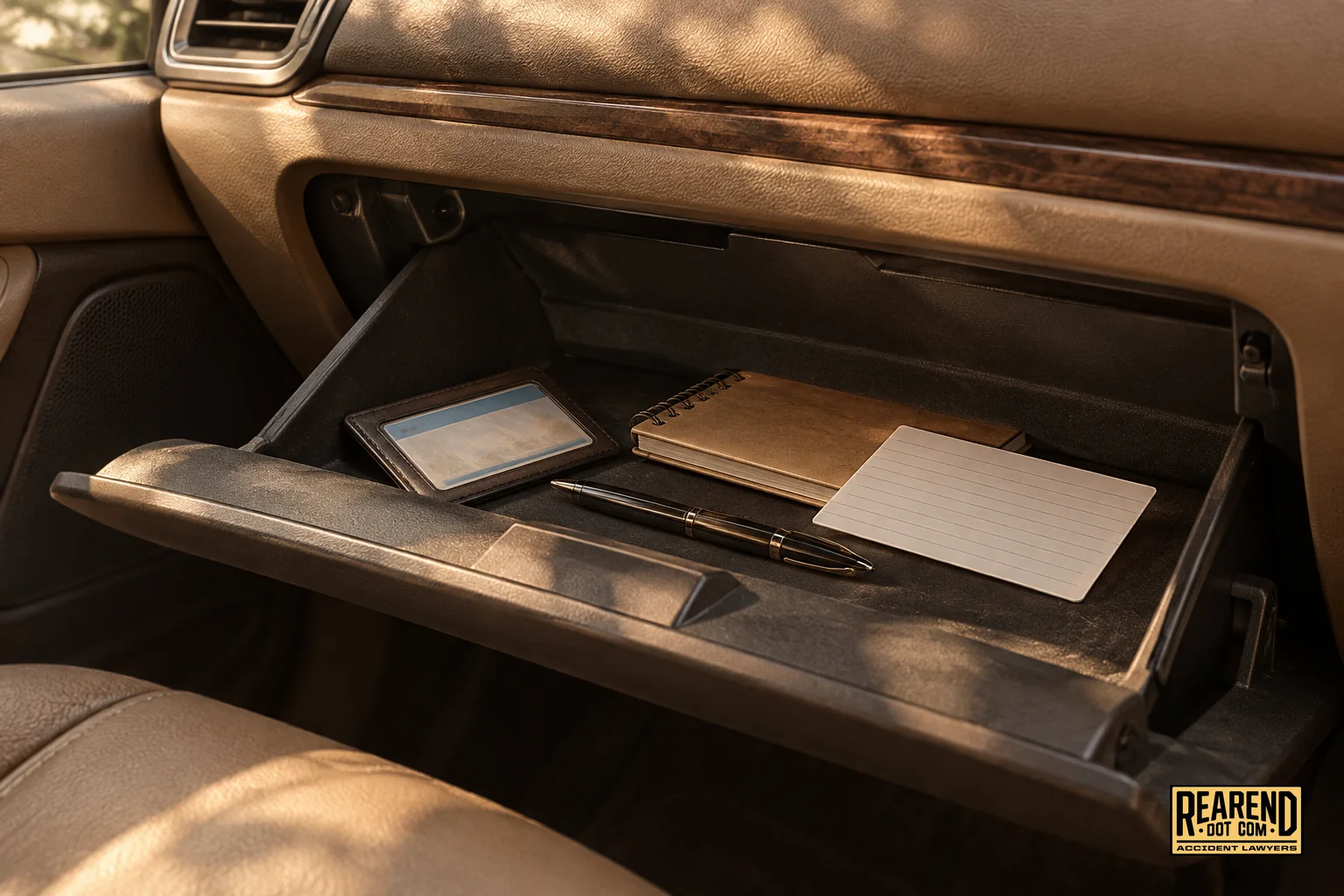
Put a current insurance card, a pen and a small notebook in the glove compartment, along with a card listing your emergency contacts and any medical conditions or medications. Photograph your registration and insurance card on your phone as a backup.
Charge your phone before you leave and keep a cable in the car. Mount the phone safely so you can use the camera without fumbling. Check that your passengers know where their seat belts and car seats should sit and that children are secured properly.
Decide ahead of time who you will call after a crash. Many drivers assume they will remember the steps, but shock scrambles memory. A short list in the glove compartment covers the basics: check on passengers, call 911 if needed, take photos, collect contact details, get checked by a doctor and pause before any recorded statement.
Finally, share your route and timing with a relative at your destination. If something happens, that person can help with calls, rides and rest while you focus on getting medical care.
Thanksgiving Traffic Accident Claim FAQs
Can I file a traffic accident claim if I did not feel hurt at the scene?
Yes. Many people notice symptoms hours or days after a crash. See a medical provider promptly, tell them about the collision and keep your records. Starting a claim after symptoms appear is common, though filing deadlines vary by state and type of case, so avoid waiting too long to ask.
Does submitting a form create an attorney-client relationship?
No. Submitting a contact form does not create an attorney-client relationship. That relationship begins through a formal, signed engagement agreement. Until you sign, you can ask questions about the process and decide at your own pace whether to move forward with representation.
What does a free case evaluation cost at rearend.com?
A case review at rearend.com is free and carries no obligation. We handle personal injury cases on a contingency fee basis, there are no hourly fees, and you do not pay unless we recover compensation on your behalf. Clients pay nothing up front.
Can results from other cases predict how my claim will go?
No. Past results, case studies and settlement amounts do not guarantee or predict a future outcome. Each claim depends on its own facts, injuries, evidence and available coverage, so a review of your situation gives more useful direction than another person’s numbers.
Start Your Claim Review Before the Holiday Rush Fades
A rear-end crash on a holiday trip can leave you hurt, far from home and facing calls from insurers you did not expect. Get checked, document what you can, keep your records together and take your time with recorded statements. Those steps protect your health and your traffic accident claim.
When you are ready, start your claim review at rearend.com. The intake takes a few minutes, it is free, and our legal team follows up within 24 hours. You can also call (505) REAR-END. Safe travels, and take care of yourself first.
Recommended Resources
Start My Claim Find Trusted Local Auto Body Shops Calculate an estimate of what your potential claim could be worth
Related Articles


Need Legal Help After a Rear-End Accident?
Get a free consultation with our experienced legal team