
7 Common Mistakes After a Car Accident Injury That Hurt Your Claim
The most common mistakes after a car accident injury are waiting to see a doctor, telling people you feel fine, speaking with an adjuster before you prepare, skipping records, signing broad medical forms, accepting a fast settlement offer, and missing the filing deadline. Each one can weaken a claim after a rear-end crash, and each has a practical fix you can start today.
Key Takeaways
- Medical care comes first: a prompt evaluation protects your health and creates a clear link between the crash and your symptoms.
- Short, factual statements help: “I’m not sure yet, I’m getting checked” is safer than “I’m fine,” and you can decline a recorded statement until you are ready.
- Records build the claim: photos, bills, pay stubs and a daily symptom note give you proof that memory alone cannot.
- Time matters: filing deadlines vary by state and type of case, so an early review beats a late scramble.
- Help is free to start: rearend.com offers a free, no-obligation case review, and you pay nothing unless compensation is recovered on your behalf.
Common Mistakes After a Car Accident Injury at a Glance
| Mistake | Why it hurts your claim | What to do instead |
|---|---|---|
| 1. Waiting to see a doctor | A gap in care gives an insurer room to argue the injury came from something else | Get evaluated at an emergency room, urgent care clinic or your primary doctor right away |
| 2. Telling people you feel fine | Adrenaline hides pain, and “I’m fine” can end up in a report or recording | Say you are unsure and getting checked; stick to facts |
| 3. Talking to the adjuster unprepared | Casual answers in a recorded call can be used to question your injuries | Share basic facts, ask for requests in writing, and prepare before any statement |
| 4. Skipping records and symptom notes | Without proof, pain and lost work are hard to show | Keep photos, bills, pay stubs and a daily symptom journal |
| 5. Signing broad medical authorizations | Wide access lets an insurer dig through unrelated history | Read the form, ask what it covers, and share records tied to crash injuries |
| 6. Accepting a quick settlement offer | A signed release can close the claim before your treatment picture is clear | Wait until you know your treatment course, bills and missed work |
| 7. Missing the filing deadline | A late claim may be barred, and evidence fades with time | Ask what deadline applies in your state and start a review early |
Why Early Choices Matter After a Rear-End Crash
Early choices matter because a rear-end crash injury often shows up days after impact, and the first weeks create the record an insurer reviews later. Medical visits, what you tell people, and what you sign shape how a claim reads. Small missteps in that window can make real injuries look minor.
Whiplash, back strain, headaches and concussion symptoms can build slowly. You might step out of the car feeling shaken but steady, then wake up two mornings later unable to turn your head. That delay is normal for many people, yet an insurer may read it as a sign that the crash was not the cause.
Drivers in San Diego, Los Angeles, Oakland and San Jose face the same pattern. Dense stop-and-go traffic produces plenty of rear-end impacts, and the claims that follow tend to turn on paper: medical notes, dates, photos and statements. What you do in the first days feeds that paper trail.
The seven mistakes below come up often for people who have not yet hired an attorney. Each comes with a practical alternative. None of this replaces medical advice or legal advice for your situation, but it gives you a clear place to start.
1. Waiting to See a Doctor
Many people leave a crash sore and rattled, decide to rest, and plan to see a doctor if the pain gets worse. The plan feels reasonable. It also creates a gap between the collision and your first medical record, and that gap is one of the easiest things for an insurer to question.
When a first visit happens weeks later, an adjuster may suggest the injury was minor, came from another event, or healed on its own. You then spend time explaining the gap instead of showing the harm. Not seeking treatment for injuries is one of the missteps we see rear-end clients make in their first week.
What to do instead
- Get evaluated the same day or the next day, even if the pain feels mild. Options include an emergency room, an urgent care clinic or your primary care doctor.
- Call 911 or go to the emergency room right away for severe pain, numbness, confusion, repeated vomiting, loss of consciousness or trouble breathing.
- Describe every symptom, including stiffness, headaches, dizziness, tingling and trouble sleeping. A symptom you skip may not appear in your chart.
- Keep your follow-up appointments and follow the treatment plan. Stopping early leaves another gap.
If you want a closer look at timing, our guide on how soon after an accident you should see a doctor walks through what different symptoms can mean and when to act.
2. Telling People You Feel Fine
“I’m okay” is a reflex. Right after a collision, adrenaline dulls pain, and most drivers say they are fine to the other driver, the officer and the tow operator. Those words can land in a police report or an insurer’s notes and later get quoted back to you.
Pain frequently arrives hours or days later. A note that says “driver stated no pain at scene” does not prove you were uninjured, but it gives an adjuster something to point to. You can avoid that by choosing your words with care.
What to do instead
- Say, “I’m not sure yet. I’m going to get checked.” That statement is honest and leaves room for symptoms to appear.
- Tell the responding officer about any pain, soreness or dizziness you notice, even if it seems small.
- Exchange names, phone numbers, plate numbers and insurance details, and then stop. Skip guesses about speed, distance or who was at fault.
- Leave apologies out of the conversation. A polite “are you hurt?” is fine, but “I’m so sorry” can be read as an admission.
Fault rules vary by state, and insurers sometimes try to assign partial blame even in a rear-end crash. Staying with plain facts at the scene keeps your options open while the details get sorted out.
3. Talking to the Adjuster Unprepared
An adjuster from the at-fault driver’s insurer may call within a day or two. The tone is usually friendly. The adjuster’s job is to evaluate the claim for the insurance company, and a recorded statement gives the company your own words to use.
The trouble starts with easy questions. “How are you feeling today?” invites a quick “fine,” especially if you took a pain pill that morning. Questions about speed, what you were doing before the crash, or prior aches can lead you to answer from memory and guess. Going into that call unprepared is a common way to weaken a claim.
What to do instead
- Share basic facts such as your name, the date and the location. You can decline a recorded statement for now.
- Ask the adjuster to send requests in writing so you can read them at your own pace.
- Keep a call log with the adjuster’s name, number, date and what was discussed.
- Write down your own account of the crash and your symptoms before any longer conversation.
- Check your own policy. Your insurer may expect you to report the crash promptly and cooperate with its process, as Texas Department of Insurance guidance on reporting a wreck also advises.
Our practical guide to what happens when an insurance adjuster calls after an accident covers sample questions and ways to respond. Once you have a signed agreement with an attorney, that attorney can handle adjuster communication for you.
4. Skipping Records and Symptom Notes
A claim for pain, missed work and medical care rests on proof. Memory fades fast, and weeks into treatment, few people recall which day the headaches began or how many shifts they missed. Skipping records leaves you telling your story without anything to back it up.
What to do instead
- Photograph the vehicles, the road, visible bruises and seat belt marks as soon as you can. Add more photos as bruising changes.
- Save the names and numbers of witnesses and the officer’s report number.
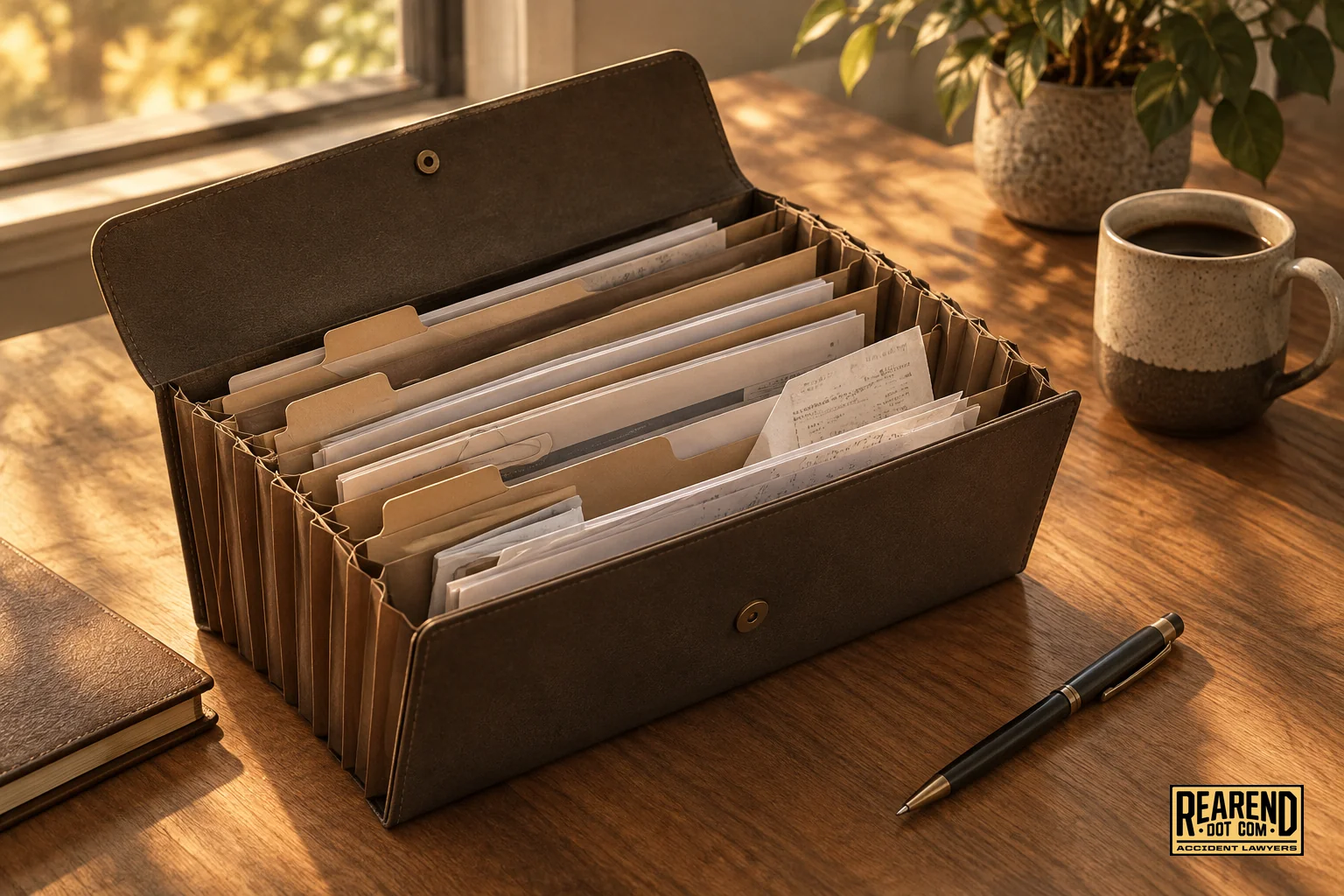
- Collect medical bills, discharge papers, prescriptions and therapy summaries in one folder.
- Ask your employer for a short letter confirming missed shifts, and keep your pay stubs.
- Write a few lines each day about your pain level, sleep, mood and tasks that are hard, such as lifting groceries or driving.
- Track mileage to appointments and out-of-pocket costs such as braces and ice packs.
Social media deserves a mention here. A cheerful photo from a family dinner can be read out of context, and a post about “feeling better” can be quoted against a claim that is still developing. Pausing posts about your activities and the crash is a simple precaution.
5. Signing Broad Medical Authorizations or Forms
Insurers often send forms soon after a claim opens. Some ask for permission to see your complete medical history, not just records tied to the crash. Signing without reading can hand an adjuster years of unrelated records to search for anything that suggests your pain existed before.
The D.C. Department of Insurance consumer checklist warns against signing an authorization that lets the insurer look at your entire medical history.
Prior conditions do not automatically block a claim, but a wide authorization lets an insurer build that argument without your input. The scope and time period of a form matter. A narrow authorization limited to the crash injuries and a defined period is a very different document from an open-ended one.
What to do instead
- Read each form before signing, including the fine print about scope and how long it lasts.
- Ask the adjuster in writing what the form covers and why each category of records is needed.
- Offer records that relate to your crash injuries and treatment, such as bills and visit notes.
- Be honest with your doctors about earlier neck or back problems. A history you disclose is easier to explain than one an insurer finds on its own.
- Consider asking an attorney to review a form before you sign it.
6. Accepting a Quick Settlement Offer
A fast offer can feel like relief, especially when bills are stacking up and work hours are slipping. Early offers tend to arrive before your treatment path is clear. At that point, nobody knows whether your neck pain will clear in a month or need months of therapy.
Settlement paperwork usually includes a release. Once you sign, the claim for that crash generally ends, even if new symptoms or bills show up later. You cannot go back for more because treatment took longer than you hoped.
What to do instead
- Ask for any offer in writing and take time to read it.
- Hold off on signing a release until you know your diagnosis, the treatment you need and how much work you missed.
- Add up your medical bills, lost income and out-of-pocket costs so you can see what an offer would cover.
- Talk with an attorney before you accept or counter. A review at rearend.com costs nothing to start.
If you want a rough, educational starting point, you can calculate an estimate of what your potential claim could be worth. Treat the result as a conversation starter, not a prediction. Insurers weigh your medical records, fault, coverage and many other details, and no online tool sees those the way a claim review does.
7. Missing the Filing Deadline
Every state sets time limits for filing an injury claim or lawsuit, and the limits differ by state and by type of case. The National Association of Insurance Commissioners notes that insurance rules are set state by state, so check your own state’s deadline. Some people wait until treatment ends before they talk to anyone, then find the clock has run further than they expected.
Waiting also costs you evidence. Business cameras overwrite footage, witnesses move or forget details, and skid marks wash away. A claim started in the first weeks has fresher material to work with than one started months later.

Here is a hypothetical timeline. Suppose a driver is rear-ended, feels fine, and skips care. Three weeks later neck pain sends the driver to a doctor. Meanwhile, a quick offer arrives and the driver signs a release.
The insurer can point to the three-week gap, and the release closes the claim before later therapy bills appear. Had the driver been checked the next day and waited on the release, the records would link the crash to the treatment, and later bills could be part of the claim.
What to do instead
- Write down the date of the crash and put a reminder on your calendar to check your deadline.
- Ask a legal team which deadline applies in your state and to your type of case, since rules differ.
- Start a free case review early, even if you are still treating and unsure about your next step.
- Learn what the process looks like in advance. Our overview of what happens after you submit a rear-end accident claim lays out the stages.
Starting a review does not lock you into a lawsuit. It gives you information about your options while evidence is still fresh and the calendar still works in your favor.
How the Free Case Review at rearend.com Works
You submit your information through a short online questionnaire, which takes minutes, and rearend.com matches you with an attorney. The review is free and carries no obligation. Our legal team contacts you within 24 hours to discuss your case. You pay nothing unless compensation is recovered on your behalf.
rearend.com focuses on rear-end accident cases, so the people reviewing your situation spend their time on collisions like yours rather than on a broad mix of injury matters. That focus is a description of what we do, not a claim about results in any single case.
What the review covers
The intake asks about how the crash happened, your injuries and your treatment so far. The review looks at where your claim stands and what steps might make sense next. Keep your photos, medical paperwork and any adjuster messages handy, since they make the conversation more productive.
How fees work
Personal injury cases at rearend.com are handled on a contingency fee basis. There is no upfront cost, no hourly fee, and no fee unless we win. You do not pay a dime unless we recover compensation on your behalf.
What the review does not do
Submitting a contact form does not create an attorney-client relationship. That happens through a formal, signed engagement agreement. Reported case results and testimonials do not guarantee or predict the outcome of any future case, since each claim depends on its own facts.
Frequently Asked Questions
Should I see a doctor if I feel fine after a rear-end crash?
Yes, a medical evaluation is a smart step even when you feel fine. Pain from whiplash, back strain or a concussion often appears hours or days later. A prompt visit protects your health and creates a dated record that connects your symptoms to the crash.
Does filling out the contact form make me a client?
No. Submitting a contact form does not create an attorney-client relationship. A relationship begins through a formal, signed engagement agreement. Until then, you can review your options, ask questions and decide at your own pace whether to move forward.
What if I already made one of these mistakes?
Many people make at least one of these missteps before they seek help, and a mistake does not automatically end a claim. Start now: see a doctor, begin saving records, pause any recorded statements, and request a free case review so someone can look at your specific situation.
Do I pay anything to start a claim review?
No. The case review is free and has no obligation, and there is no upfront cost. Representation is handled on a contingency basis, which means you pay nothing unless compensation is recovered on your behalf. There are no hourly fees.
Start Your Claim Review
If you were hurt in a rear-end crash, your next few choices can shape how your claim reads later. See a doctor, keep your records, and hold off on recorded statements and releases until you know where you stand.
When you are ready for a second set of eyes, start your claim review at rearend.com. It takes a few minutes, it is free, and our legal team follows up within 24 hours to talk through what happened and what your options look like.
Recommended Resources
Start My Claim Find Trusted Local Auto Body Shops Calculate an estimate of what your potential claim could be worth
Related Articles


Need Legal Help After a Rear-End Accident?
Get a free consultation with our experienced legal team