
What Happens During a Free Case Evaluation Call?
A free case evaluation call generally starts with a short online questionnaire about your rear-end crash, moves into a document review by a legal team member, and typically ends with a phone conversation that covers your accident details, your injuries, and whether pursuing a claim makes sense.
Key Takeaways
- No cost, no obligation: A free case evaluation call does not require you to hire an attorney or pay anything to have your situation reviewed.
- Follow-up varies: Many firms, including rearend.com, follow up on online submissions, though exact timing can vary by case.
- Attorney matching is location-based: You’re generally connected with someone familiar with rear-end cases in your area, whether that’s San Diego, Los Angeles, Oakland, San Jose, Riverside, Oceanside, or Fresno.
- The call is short: These calls are generally focused on the basics of your case.
- You get real information, not a sales pitch: Expect a plain explanation of your options, not a promise about what your case is worth.
At a Glance: The Free Case Evaluation Process
The steps below outline what typically happens between submitting your information and hearing back about your rear-end accident claim.
| Step | What Happens | Typical Timing |
|---|---|---|
| 1. Online submission | Short questionnaire about the crash, injuries, and insurance details | 5-10 minutes |
| 2. Internal review | Legal team checks the report, photos, and any medical notes provided | 24-48 hours |
| 3. Attorney matching | You’re connected with someone familiar with rear-end cases in your area | 24-48 hours |
| 4. The call | Discussion of accident details, injuries, and insurance contact | 15-30 minutes |
| 5. Next steps explained | Whether the claim looks worth pursuing and how fees would work | End of call |
| Cost to you | No charge for the evaluation itself | N/A |
1. Submitting Your Information Online
The process usually begins with a short online form asking about your crash: when and where it happened, whether you were rear-ended while stopped or moving, and whether you’ve seen a doctor yet. You’ll also be asked for basic insurance details, like whether the other driver’s information was exchanged at the scene.
This step isn’t meant to be exhaustive. Many people submit their information within minutes of finishing a doctor visit or even from their phone at the scene. If you want a closer look at exactly what a regional intake questionnaire covers, the San Diego intake questionnaire breakdown walks through each field in detail.
2. What the Legal Team Reviews Before the Call
Once your submission comes in, someone on the legal team looks over what you’ve provided, typically within 24-48 hours. That review generally includes the crash description, any photos you attached, and whatever medical information you’ve shared so far.
The goal at this stage is to get a general read on whether your situation looks like the kind of rear-end claim the firm typically handles. That is not the same as making a final decision about your case’s value, which happens later, often after more documentation comes in.
A few things can disqualify a case at this internal review stage. These include: a crash that happened outside the statute of limitations for the relevant state, an incident that took place outside the USA, a lack of any documented injury or medical treatment at all, or a fact pattern where the submitting person was clearly the rear driver rather than the one rear-ended. When one of these issues shows up, the legal team will generally let you know rather than schedule a call that won’t lead anywhere.
3. How Attorney Matching Works
You’re generally matched with an attorney who has handled rear-end cases in your specific area, rather than assigned at random. Because traffic patterns, local courts, and insurance practices vary by region, someone familiar with the Riverside freeway corridor may not be the right fit for a claim involving an Oakland bike lane collision.
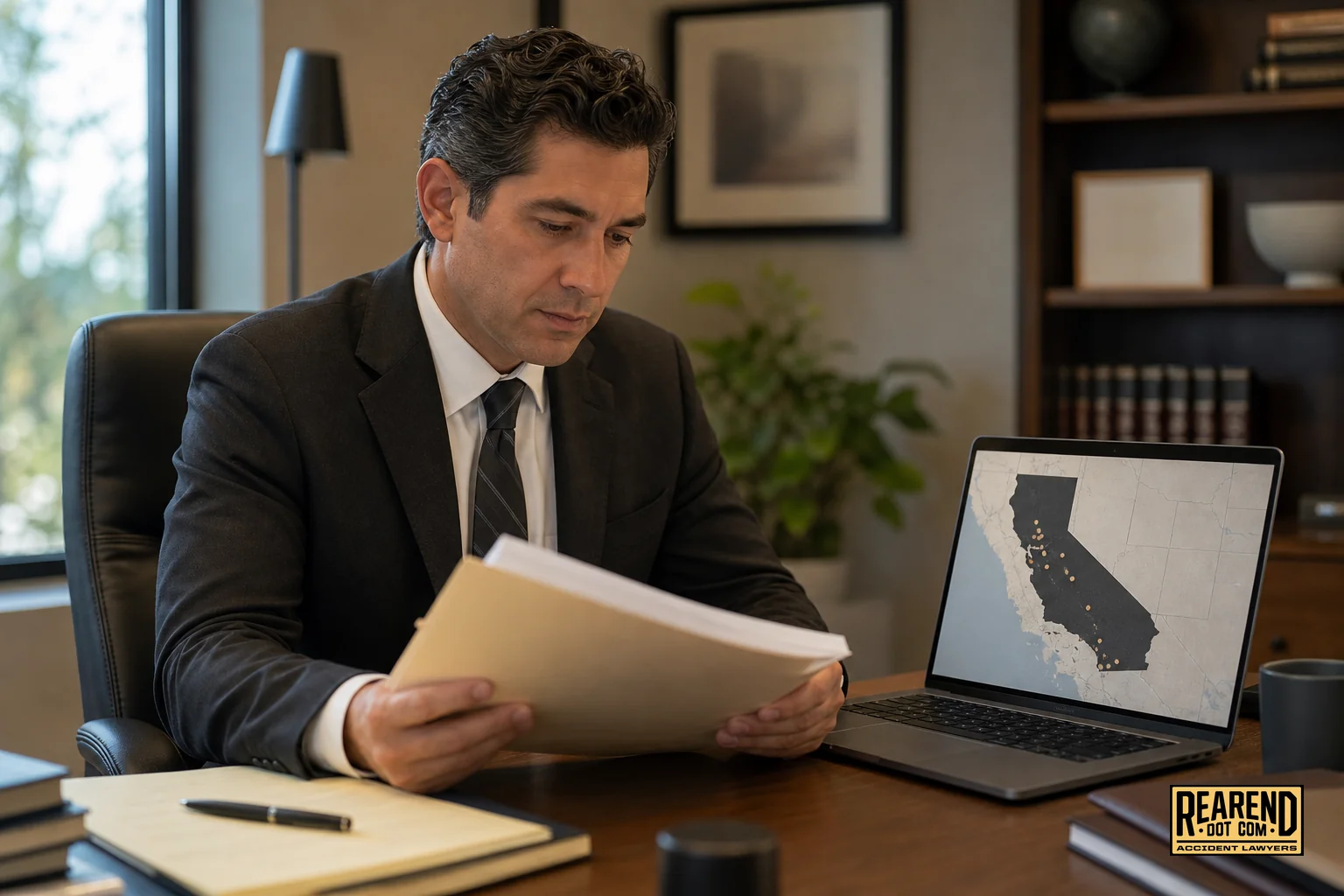
Rearend.com serves victims across San Diego, Los Angeles, Oakland, San Jose, Riverside, Oceanside, and Fresno, among other California communities. That regional focus is part of how matching is organized.
If you’re comparing your options before you commit to a call, how to choose a rear-end accident attorney without getting burned covers what separates a good match from a bad one.
4. What Questions Get Asked on the Call
Expect the conversation to cover the basics: how the crash happened, what injuries you’ve noticed, what medical care you’ve received so far, and whether you’ve already spoken with an insurance adjuster. You may also be asked about prior accidents or existing conditions, since insurers sometimes raise those issues later.
This mirrors how free consultations work across the personal injury field generally. The attorney listens to your account and explains, in plain language, what your options might look like once the medical picture is clearer.
How long does it take to hear back after submitting a claim?
Rearend.com follows up on submissions, whether by phone or email, to confirm details and outline what happens next. That follow-up is intended to help keep your claim moving instead of sitting untouched while evidence and memories fade. For a deeper look at what that follow-up typically covers, see the San Diego follow-up explainer.
5. What You’ll Learn From the Call
By the end of the call, you should have a general sense of whether pursuing your claim looks worthwhile, along with a plain explanation of how contingency fees work. Under that structure, the firm’s fee is a percentage of whatever amount you recover. For example, if your case settles for a given amount, the firm’s fee is calculated as that percentage of the settlement, and you generally pay nothing upfront and nothing at all if there is no recovery.
You’ll also hear about next steps if the firm can take your case: what documents to gather, how the claim process typically unfolds, and roughly what to expect regarding timing. None of this amounts to a guarantee of a particular outcome or dollar figure. If you want a rough sense of the numbers involved before your call, you can calculate an estimate of what your potential claim could be worth ahead of time.
Is a free case evaluation the same as hiring a lawyer?
No. A free case evaluation is an information-gathering conversation with no obligation attached, while hiring a lawyer means formally retaining representation, usually by signing an agreement. You can complete an evaluation and decide not to move forward, and that carries no cost or commitment either way.
What to Have Ready Before Your Call
You don’t need a complete file to get value from the call, but having a few basics on hand can make the conversation more productive:
- The police report number, if one was filed
- The other driver’s insurance information, if you have it
- Photos of the vehicles and the scene
- Names of any medical providers you’ve seen since the crash
- Any letters or calls you’ve already gotten from an insurance adjuster

Missing a piece or two isn’t a dealbreaker. Attorneys who focus on rear-end cases are used to working with incomplete files early on and filling gaps as the claim develops. If you were rear-ended recently and haven’t gathered documentation yet, what to do after being rear-ended in the first 72 hours lays out a practical checklist.
Frequently Asked Questions
Does the case evaluation cost anything?
No, a free case evaluation call carries no charge or obligation. You can use it to understand your options even if you decide not to pursue a claim afterward.
What if I already spoke with the insurance adjuster?
That’s fine to mention on the call. The attorney can review what you said and explain what it might mean for your claim moving forward. If you’re unsure how an adjuster’s role differs from your own attorney’s, rear-end accident lawyer vs insurance adjuster: who works for you breaks down that distinction.
What if I’m not sure I even have a case?
Bring what you know to the call. The attorney can help you sort out whether pursuing a claim makes sense given your specific situation, including cases with minor visible damage or no immediate injury symptoms.
Will I be pressured to sign something on the call?
A reasonable evaluation call should feel like a conversation, not a sales pitch. You’re generally free to take time to think it over, ask questions about fees, and decide later whether to move forward. If a firm pressures you to sign immediately, that’s worth treating as a caution sign, and red flags when hiring a personal injury lawyer after a rear-end crash covers other warning signs to watch for.
If you were rear-ended and aren’t sure where to start, submitting your information costs nothing and generally takes just a few minutes. You can start my claim today to get matched with someone who can walk through your specific situation, or if you’re still dealing with vehicle repairs alongside your claim, you can find trusted local auto body shops to help get your car back on the road while your case moves forward.
Prior results do not guarantee a similar outcome. — Rearend.com
Recommended Resources
Start My Claim Find Trusted Local Auto Body Shops Calculate an estimate of what your potential claim could be worth
Related Articles


Need Legal Help After a Rear-End Accident?
Get a free consultation with our experienced legal team