
Rear-end accident attorney riverside ca diminished value claim: A practical guide
A rear-end accident attorney riverside ca diminished value claim case starts with one simple fact: even a perfectly repaired car is often worth less than it was before the crash. That gap in value is called diminished value, and California law generally allows you to pursue it as a separate claim against the at-fault driver’s insurer, apart from any medical or injury settlement.
Key Takeaways
- Repair quality doesn’t erase the loss: A body shop can match paint and realign a frame perfectly, and your car’s resale value may still drop because it now carries an accident history.
- It’s a separate claim: Diminished value is generally pursued apart from medical bills or lost wages, often through a third-party claim against the at-fault driver’s liability coverage.
- California’s minimum limits are thin: The state requires liability coverage of only $30,000 per person and $60,000 per accident, which can affect how much room exists for a diminished value payout.
- Timing and documentation drive the outcome: Pre-repair photos, a vehicle history report, and an independent appraisal generally matter more than what the insurer’s own adjuster initially offers.
- Most owner-occupied claims qualify: If you were not at fault and your vehicle was repaired rather than totaled, you likely have grounds to at least request an evaluation.
At a Glance: Diminished Value Claims in Riverside
| Claim Element | Typical Detail |
|---|---|
| Claim type | Third-party claim against at-fault driver’s insurer |
| Separate from | Medical/injury claim and repair cost reimbursement |
| Common basis | Inherent diminished value (accident history lowers resale price) |
| Documentation needed | Pre-accident value, repair invoice, vehicle history report, independent appraisal |
| California minimum liability limits | $30,000 per person / $60,000 per accident |
| Who typically qualifies | Not-at-fault owners whose vehicle was repaired, not totaled |
| Best time to start | After repairs are complete, before accepting a final settlement |
What Is a Diminished Value Claim After a Rear-End Crash?
Diminished value is the difference between what your car was worth right before the crash and what it’s worth after it’s been repaired. Buyers and dealerships tend to pay less for a vehicle once a CARFAX or AutoCheck report shows an accident, regardless of how clean the repair work looks.
There are generally three types insurers and appraisers recognize: inherent diminished value (the resale stigma that remains after any accident, even a flawless repair), repair-related diminished value (loss tied to substandard parts or workmanship), and immediate diminished value (the difference in value right after the crash, before repairs). Most Riverside claims against an at-fault driver’s insurer center on the inherent type, since it applies whether or not the shop did excellent work.
This is worth separating clearly from your bodily injury claim. A rear-end accident settlement amount usually reflects medical costs, lost wages, and pain and suffering. Diminished value is a property damage issue and can be pursued on its own track.
1. Confirm You Have a Valid Diminished Value Case
Not every collision supports a diminished value claim. To qualify, you generally need to have been involved in an auto accident where your vehicle sustained property damage, had the vehicle repaired rather than written off as a total loss, and be able to demonstrate that the car held real market value prior to the crash.
Newer vehicles with lower mileage tend to see steeper diminished value percentages, since buyers shopping in that price range are pickier about accident history. An older vehicle with high mileage may see a smaller dollar impact, though it can still be worth documenting. If you’re unsure where your case stands, a free evaluation can help clarify whether pursuing this claim makes sense for your specific vehicle and situation.
2. Get Your Vehicle Repaired Through a Trusted Shop
Ironically, getting quality repair work done is one of the better things you can do for a diminished value claim, even though it won’t eliminate the loss. Poor bodywork gives the insurer an excuse to argue the value drop was caused by bad repairs rather than the accident itself, which can complicate your claim.
A shop that documents its work with detailed invoices, OEM part receipts, and before-and-after photos gives your case a stronger paper trail. Coordinating repairs through a shop familiar with insurance-related documentation, rather than picking the cheapest option, tends to pay off later.
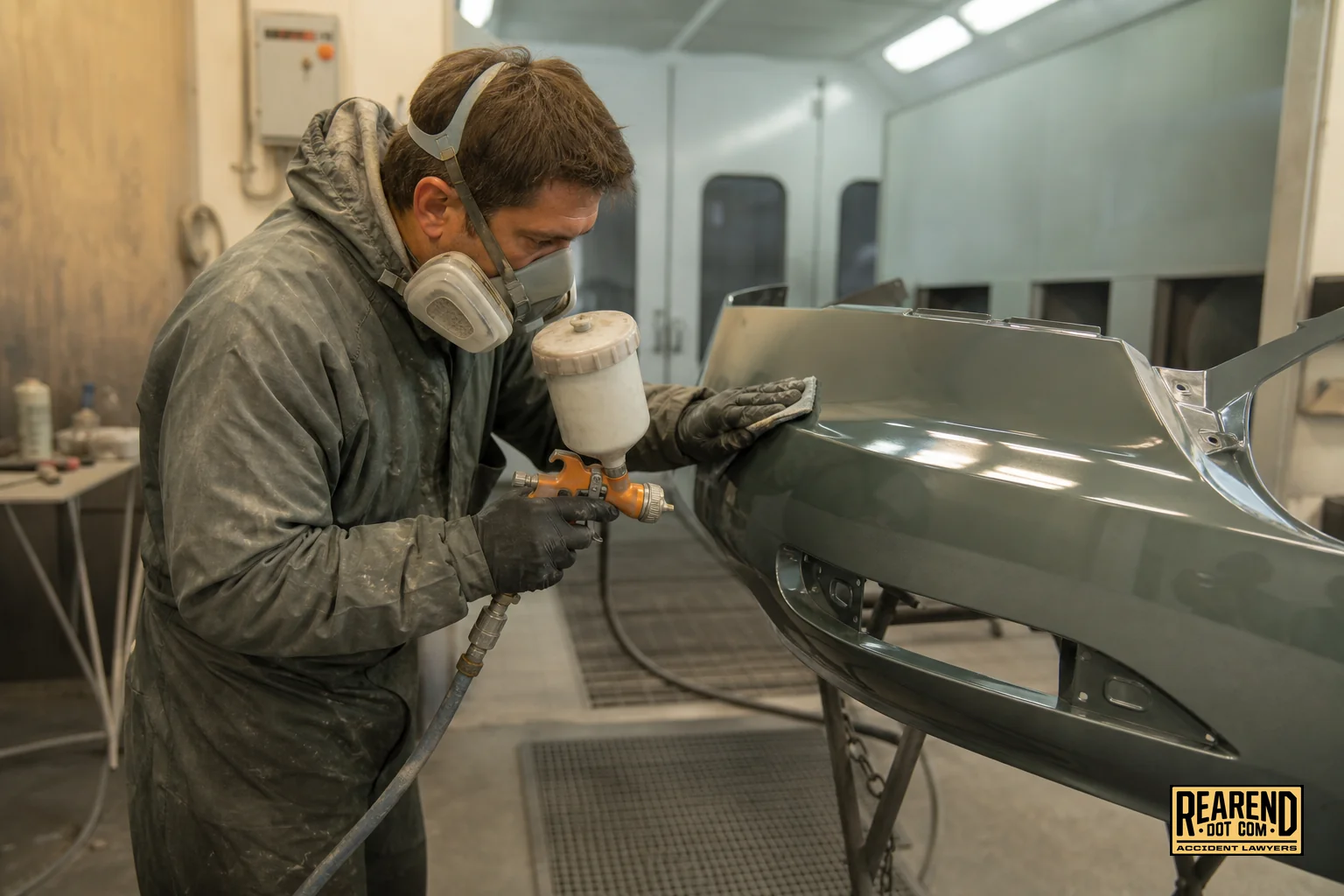
If you haven’t started repairs yet, you can find trusted local auto body shops before committing to any single estimate.
3. Gather Evidence Before and After Repair
Your diminished value claim needs a “before” and an “after” picture, figuratively and literally. Photograph the vehicle’s condition immediately following the crash, save the original repair estimate, and keep every invoice from the shop.
Once repairs wrap up, pull a vehicle history report showing the accident is now permanently attached to the car’s record. That report, combined with your pre-accident mileage and condition, forms the backbone of most successful claims.
- Pre-crash photos or maintenance records showing the car’s condition
- Police report and insurance claim number from the crash
- Itemized repair invoice and parts used
- Vehicle history report generated after the repair is logged
4. Get an Independent Diminished Value Appraisal
Insurance companies sometimes use a formula (often based on a 10% cap adjusted downward by mileage and damage severity) that tends to produce a lower number than an independent appraiser would reach. Getting your own appraisal generally gives you a stronger negotiating position.
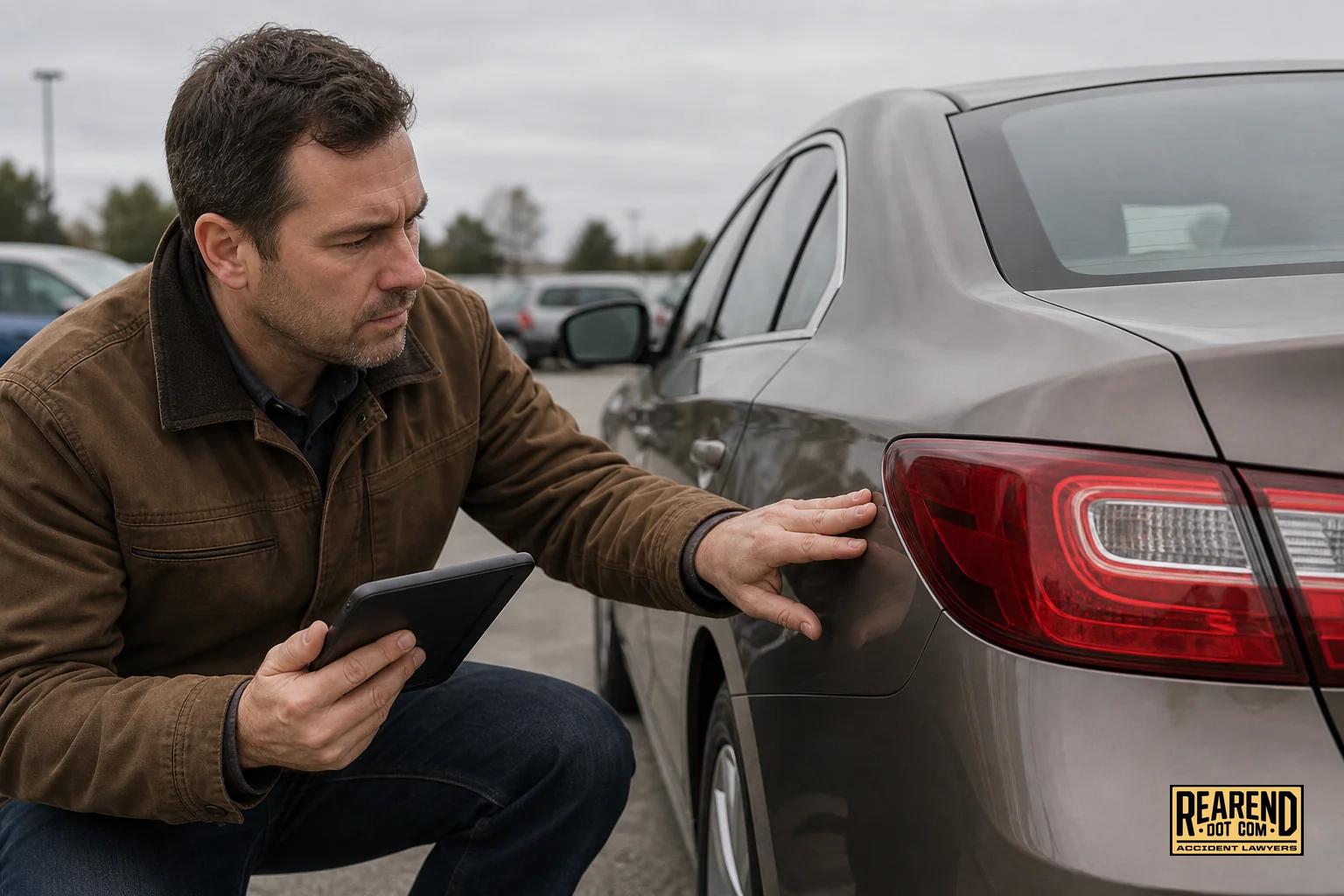
An independent appraiser typically inspects the repair quality, checks comparable sale prices for similar vehicles without accident history, and applies a damage severity multiplier.
5. File the Diminished Value Claim Separately From Your Injury Claim
Diminished value is generally filed as a third-party property damage claim against the at-fault driver’s liability insurer, not your own policy. Because California only requires liability coverage of $30,000 per person and $60,000 per accident, it helps to understand where diminished value fits relative to any medical costs already competing for that same coverage.
Bundling everything into one lump settlement without separating line items can leave money on the table. A rear-end accident attorney Riverside CA handling both the injury and property damage sides can help make sure the diminished value portion isn’t quietly absorbed into a single check.
How Does Diminished Value Interact With Riverside’s Legal Process?
Diminished value claims in Riverside typically move on a separate timeline from your injury case, since property damage often resolves faster once repairs are complete and appraised. The property claim can close out well before the medical side of your case finishes.
Riverside’s local claim process for rear-end crashes generally follows the standard California steps: report the crash, get the vehicle assessed, negotiate with the insurer, and escalate to litigation if needed. If you want the full step-by-step breakdown of the local process itself, the Rear-End Accident Claim Process Riverside CA guide walks through it in more detail.
Common Mistakes Riverside Victims Make With Diminished Value Claims
The most frequent error is treating the repair estimate as the final word on compensation. Repair cost and diminished value are two different numbers, and settling for just the repair bill closes the door on the second one.
Another common mistake is not knowing the claim can be pursued at all. Many drivers assume that once the car looks fine, the financial story is over. A third issue is waiting too long. California generally applies a three-year statute of limitations to property damage claims arising from an auto accident, so delaying can eventually forfeit the right to recover.
If you’re evaluating whether your current attorney or adjuster is handling this correctly, it may help to review the red flags when hiring a personal injury lawyer before signing anything further or accepting a final number.
How Does Rear-End Collision Repair Affect Your Diminished Value Claim?
Rear-end collision repair quality affects how strongly an insurer can dispute your diminished value claim, but it doesn’t eliminate the value loss itself. Even a shop that restores the car to pre-accident condition can’t erase the accident from its permanent history record.
Buyers and dealers pull vehicle history reports before making offers, and a documented rear-end collision repair, however well executed, tends to lower what they’re willing to pay. That’s the core reason diminished value exists as its own claim category, separate from whether the bodywork looks flawless in person.
FAQ
Can I sue for diminished value after a rear-end accident in Riverside?
Yes, you can generally pursue a diminished value claim against the at-fault driver’s insurer in Riverside, provided you were not at fault and the vehicle was repaired rather than totaled. Documentation of pre-accident value and repair quality generally strengthens the case.
How much is a diminished value claim worth?
The value depends on the vehicle’s age, mileage, and the severity of the damage, and it’s usually calculated as a percentage of the car’s pre-accident value. An independent appraisal generally gives a more accurate figure than an insurer’s initial offer.
Do I need a lawyer for a diminished value claim?
You’re not required to hire one, but insurers often start with a lower figure than an independent appraisal supports, and an attorney familiar with these claims can help push back on that number. Reviewing your options for choosing a rear-end accident attorney can help you decide if representation makes sense for your situation.
If your car has been repaired after a rear-end crash in Riverside and no one has mentioned diminished value, that conversation is worth having before any settlement is finalized. Start my claim to get a free review of both your injury and property damage options, or review your claim in just a few clicks for free to see where you stand.
Related Articles


Need Legal Help After a Rear-End Accident?
Get a free consultation with our experienced legal team