
Rear-End Accident Attorney in Oceanside, CA: What to Expect
Your phone rings twenty minutes after the tow truck leaves. It’s the other driver’s insurance company, and the adjuster wants a “quick statement” about what happened on Mission Avenue. You haven’t even seen a doctor yet. If you’re searching for a rear-end accident attorney in Oceanside, CA free consultation, this moment is probably why. You want to know what a free case evaluation actually involves before you say a word to anyone else.
This guide walks through what happens during that first call, what to bring, how the no-fees-unless-you-win model works, and what a lawyer who focuses on rear-end cases can do that most people can’t do alone. Nothing here promises a specific outcome. Every crash and every claim is different, and results depend on the specific facts of your case.
What Happens the Moment You Call for a Free Consultation
A free consultation is exactly what it sounds like: a conversation, not a commitment. When you reach out to a firm like RearEnd.com, an intake team typically asks a short series of questions online or by phone. They want to know where and when the crash happened, whether police responded, whether you’ve seen a doctor, and what the other driver’s insurance situation looks like.
You are not signing anything during this call. There’s no obligation to hire the firm afterward, and there’s no cost attached to having the conversation. That matters because many Oceanside residents put off calling a lawyer out of fear it will cost money just to ask questions. It generally doesn’t, at least not with firms that advertise a free case evaluation, and you should confirm that upfront with anyone you speak with.
Most reputable firms follow up quickly, often within 24 hours of a submitted claim form. That speed matters because insurance adjusters move fast too, sometimes calling accident victims before they’ve even had a chance to see a doctor. Getting your facts organized early, before you talk to the other side, can make a meaningful difference later.
If you want to see what this looks like in practice, you can review your claim in just a few clicks for free and get a sense of what information the process asks for before you ever pick up the phone.
1. Gather Your Documents Before the Call
A free consultation goes faster, and tends to be more useful, when you walk in with a basic file. You don’t need everything perfectly organized. A folder, a phone full of photos, and a rough timeline are usually enough to start.
- Police or CHP report: If officers responded to the scene, ask for the report number. This document often becomes a reference point for liability.
- Photos of the damage and the scene: Bumper damage, skid marks, traffic signals, and road position all help establish what happened.
- Insurance information: Your policy details and the at-fault driver’s insurance card or exchanged information.
- Medical records and bills: Even an urgent care visit or a single physical therapy appointment is worth documenting from day one.
- Witness contact information: A name and phone number can matter more later than it seems in the moment.
- Pay stubs or a work schedule: If your injuries kept you from working, this supports a potential lost wage claim.
Missing a few of these isn’t a dealbreaker. A firm experienced with rear-end cases can often help track down a police report or medical records you don’t yet have. The point of gathering what you can beforehand is simply to make your first conversation more productive.
2. Understand How the Free Case Evaluation Works
Once you’re on the phone or filling out an online questionnaire, the attorney or intake specialist is trying to answer a few core questions: Who was likely at fault? What insurance coverage exists? What injuries or damages are involved? Is this a claim worth pursuing further?
This is different from calling the other driver’s insurance company directly. An adjuster on the other end works for the insurer, not for you, and their job includes minimizing what the company pays out. A free consultation with an attorney’s office is built around your side of the story, without the pressure of a recorded statement or a quick settlement offer sitting on the table.
In Oceanside, a lot of rear-end crashes happen in predictable spots: the Highway 76 corridor near Camp Pendleton, the I-5 on-ramps around Oceanside Boulevard, and the stretch of Mission Avenue that runs through downtown. Traffic backs up in these areas often enough that sudden stops and distracted following distances are common contributors to collisions. An attorney familiar with the region and this type of crash may recognize patterns in these cases that someone unfamiliar with rear-end claims specifically might miss.
For a deeper look at how the broader claims process unfolds in this area, including mistakes many victims make early on, see Rear-End Accident Legal Process Oceanside CA: What Victims Often Get Wrong.
3. Learn How the No-Fees-Unless-You-Win Model Works

Cost is often the biggest reason people delay calling an attorney after a rear-end crash. Many personal injury firms, including RearEnd.com, work on a contingency basis. In plain terms, that means the attorney only gets paid if they recover compensation for you. There’s generally no upfront retainer and no hourly billing while your case moves forward.
This model exists so that financial stress doesn’t stop an injured person from getting legal help. If you’re already dealing with medical bills and a damaged vehicle, being asked to pay a lawyer by the hour before you’ve received a dime could feel impossible. A contingency arrangement shifts that risk away from you.
It’s worth asking any attorney you speak with to explain their fee agreement in plain language before you sign anything. Contingency percentages and the fine print around case expenses can vary between firms, so understanding the details matters. For a full breakdown of how this fee structure typically works, read Rear-End Accident Lawyer Cost & Fees or How Much Does a Rear-End Accident Lawyer Cost on a Contingency Basis?.
4. Know What a Rear-End Focused Attorney Handles For You
It’s worth noting upfront that there’s no formal legal “specialization” for rear-end accident cases the way there is board certification in some other legal fields. A more accurate way to describe this kind of representation is an attorney who focuses on rear-end cases, or an accident attorney who has handled numerous rear-end claims. That distinction matters, and any firm that describes itself using terms like “specialist” or “certified” in this niche without naming a recognized certifying body should raise a question or two.
What an attorney who focuses on this type of case can generally help with includes:
- Communicating with the insurance company so you’re not fielding calls and recorded statement requests while you’re still recovering.
- Documenting your damages, including medical treatment, property damage, and lost income, in a way that presents a complete picture.
- Negotiating on your behalf using knowledge of how rear-end liability and common injury patterns tend to play out.
- Connecting you with a body shop through referral assistance if your vehicle needs repair and you’re not sure where to start.
- Keeping you updated on where your claim stands, rather than leaving you to guess.
To understand this role more fully, including what red flags to watch for if an attorney isn’t providing this kind of support, see Red Flags When Hiring a Personal Injury Lawyer After a Rear-End Crash and How to Choose a Rear-End Accident Attorney Without Getting Burned.
5. Compare Working With an Attorney vs Handling the Claim Alone
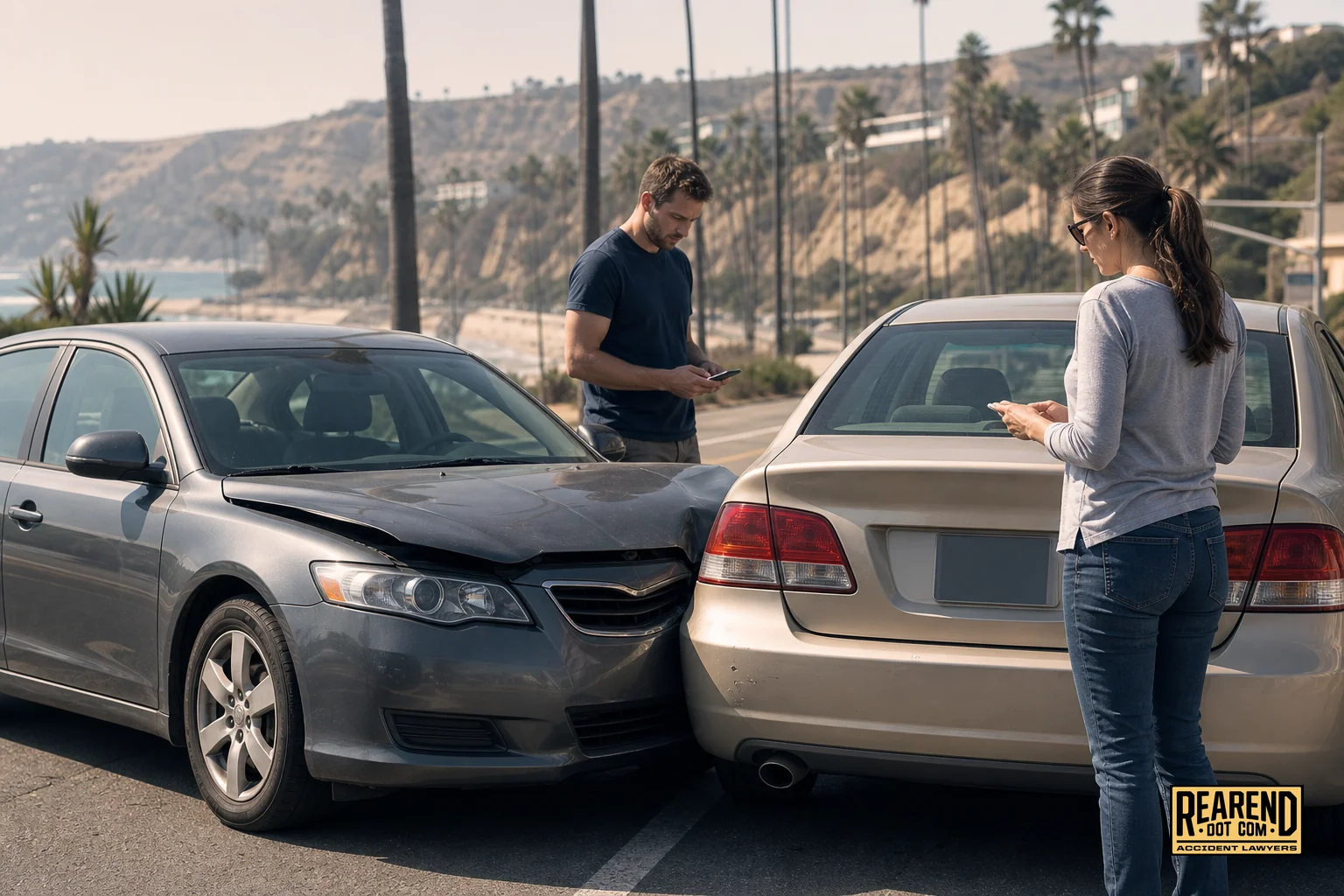
It’s possible to handle a rear-end claim without an attorney, and some people do, especially when damage is minor and there are no injuries. But it helps to understand what you’re up against if you go that route. The adjuster you speak with, even if friendly, represents the insurance company’s financial interests, not yours. Their training generally includes strategies for resolving claims quickly and for less than they might otherwise pay.
Common tactics include an early lowball offer before your medical treatment is complete, a request for a recorded statement that can later be used to minimize your claim, or pressure to settle quickly “before things get complicated.” None of these are illegal, but they can work against an unrepresented claimant who doesn’t know what a claim might realistically be worth.
There’s also the question of coverage. California’s minimum liability coverage requirements are generally described as 30/60 coverage, referring to per-person and per-accident limits; check current DMV or Department of Insurance guidance for the exact figures, as requirements can change. In a serious rear-end crash with real medical treatment, that minimum can be exhausted quickly, particularly if there’s ongoing physical therapy, imaging, or a specialist referral involved. Understanding whether the at-fault driver carries only the minimum, or something closer to adequate coverage, is part of what a case evaluation may help clarify.
For a closer look at how this dynamic plays out when a claim moves through the adjuster relationship, see Rear-End Accident Lawyer vs Insurance Adjuster Los Angeles: Who Works for You?.
6. What Affects How Much Your Claim May Be Worth
There’s no fixed formula for what a rear-end claim pays out, and anyone who states a specific number before reviewing your case is getting ahead of the facts. That said, several factors tend to influence claim value across most cases:
- Medical treatment and diagnosis: The type, length, and cost of treatment, from an ER visit to ongoing chiropractic or physical therapy care.
- Lost wages: Time missed from work due to injury or medical appointments.
- Property damage: Repair costs or a total loss valuation for your vehicle.
- Pain and suffering: The physical and emotional impact of the crash, which is harder to quantify but often part of a claim.
- Available insurance coverage: A claim can only be paid up to what coverage exists, which is part of why understanding the at-fault driver’s policy limits matters early on.
These factors interact differently in every case, which is why a free consultation is useful even if you’re unsure whether your claim is worth pursuing. For a more detailed breakdown, read Rear-End Accident Settlement Amount Factors That Victims Rarely Know About or Rear-End Settlement Payouts: What Factors Affect the Amount?.
Local Considerations for Oceanside and Nearby San Diego County Drivers
Oceanside sits along a stretch of Interstate 5 that carries heavy commuter and military traffic tied to Camp Pendleton, plus seasonal tourist congestion near the coast. Highway 76 feeds inland traffic toward Vista and Bonsall, and Mission Avenue and College Boulevard see frequent stop-and-go conditions during commute hours. These traffic patterns contribute to a steady number of rear-end collisions each year across the area.
If you were rear-ended anywhere in San Diego County, including nearby Carlsbad, Vista, or San Marcos, the same general process applies. RearEnd’s service area also extends across other parts of California, including San Diego, Los Angeles, Riverside, Oakland, and San Jose, so drivers outside Oceanside proper aren’t left without options either.
Frequently Asked Questions
Does the free consultation really cost nothing?
Generally, yes. A free case evaluation is meant to help you understand your options without financial risk. Confirm this directly with any firm you contact, since terms can vary.
How long does the claims process typically take?
It depends on the complexity of your injuries, the clarity of fault, and how cooperative the insurance company is. Some claims resolve in a few months, while others involving ongoing medical treatment or disputed liability can take considerably longer. For a detailed timeline breakdown, see How Long Does a Rear-End Accident Settlement Take From Filing to Payment?.
Can I still file a claim if I don’t have visible injuries?
Possibly. Many rear-end injuries, like soft tissue damage or whiplash, aren’t visible but can still cause real pain and require treatment. A free evaluation can help you understand whether your situation is worth pursuing. Learn more in Can I Sue If I Was Rear-Ended With No Visible Injuries?.
What if the at-fault driver only carries California’s minimum coverage?
This is a common concern. California’s minimum liability requirements are generally referred to as 30/60 coverage (check current state guidance for exact figures), and a serious injury claim can exceed those limits. An attorney can help you understand what options may exist, including your own underinsured motorist coverage, depending on your policy.
What questions should I ask during my consultation?
Ask about the attorney’s experience with rear-end cases specifically, how their fee structure works, how often you’ll receive updates, and who will actually be handling your file day to day. A longer list of suggested questions is available in our related guide on choosing a rear-end accident attorney without getting burned.
If you were rear-ended in Oceanside and aren’t sure what to do next, the first step doesn’t have to be complicated. A free consultation exists so you can ask questions, understand your options, and decide what makes sense, without any pressure and without paying anything upfront. You can start my claim today and get a straightforward read on where things stand, or review your claim in just a few clicks for free before deciding anything else. Either way, getting organized now, while details are fresh and deadlines haven’t crept up, tends to put you in a stronger position than waiting.
Disclaimer: The information provided on Rearend.com is for general informational purposes only and does not constitute legal advice.
Related Articles


Need Legal Help After a Rear-End Accident?
Get a free consultation with our experienced legal team