
Do I Have to Use the Insurer’s Body Shop After a Crash?
No, you generally do not have to use the insurer’s preferred body shop after a crash. Understanding how does an auto body shop referral work after crash situations arise is the first step toward pushing back if an adjuster tries to steer you toward a specific repair facility. In most states, including California, the choice of where your vehicle gets fixed belongs to you, not the insurance company.
Key Takeaways
- You choose the shop: Under California Insurance Code §758.5(a), an insurer generally cannot require you to use a specific repair shop.
- Steering is regulated: Some states penalize insurer steering directly. North Carolina’s anti-steering statute allows penalties of up to $2,000 per incident for violations of § 58-3-180.
- Recommend vs. require: Insurers may suggest a “preferred” or direct repair shop, but a suggestion is not the same as a mandate.
- rearend.com offers referral help: Our team can point you toward independent shops that answer to you, not to an insurer’s cost targets.
- Repair choice can echo into your claim: Where and how your car gets fixed can affect documentation that later supports a property damage or injury claim.
At a Glance: Your Repair Shop Rights
| Question | Short Answer |
|---|---|
| Can an insurer force me to use their shop? | Generally no; they may recommend one, but they cannot require it in most states. |
| Is steering illegal? | Yes, in many states, though enforcement and penalties vary by jurisdiction. |
| Does rearend.com refer repair shops? | Yes, through auto body shop referral assistance connected to your case evaluation. |
| Will my claim be paid if I use an independent shop? | Usually, as long as the estimate is reasonable and supported by documentation. |
| Can the insurer require specific parts? | Generally no; shop and parts decisions typically stay with you and your repair facility. |
| Does my repair shop choice affect my injury claim? | It can indirectly, through documentation and timelines that overlap with your legal claim. |
| What if the insurer flatly denies a non-network estimate? | Get the denial in writing, then file a complaint with your state’s Department of Insurance if the insurer won’t explain or reconsider. |
The Problem: Can an Insurer Force You Into Their Body Shop?
An insurer generally cannot force you to use their preferred body shop. They can recommend one, but the final decision about where your car gets repaired usually stays with you as the vehicle owner.
California law backs this up directly. California Insurance Code §758.5(a) states that no insurer shall require repairs at a specific facility. That protection exists because insurers have a financial interest in steering claimants toward shops that agree to lower labor rates or faster turnaround, sometimes at the expense of repair quality.
Outside California, the picture gets more mixed. As one legal analysis on preferred repair networks explains, an insurer “may recommend a preferred body shop” in many states, but recommending is legally distinct from requiring one. The practical friction shows up in disputes over labor rates, supplements, OEM parts, and rental car time. Knowing that distinction matters because adjusters sometimes blur the line between a suggestion and a condition of payment.
How Does an Auto Body Shop Referral Work After a Crash? Solution Steps
A referral from rearend.com typically starts once you submit a free case evaluation. After that, our team can point you toward independent, community-recommended shops in your area rather than an insurer’s direct repair network.

The goal is simple: give you an option outside the insurer’s list. That way the shop working on your car isn’t financially tied to the same company that’s deciding how much to pay for the repair. You can explore this option through Find Trusted Local Auto Body Shops, which connects you with vetted independent options rather than a pay-per-referral network.
Step-by-Step: What Does the Referral Process Actually Involve?
- Submit a free case evaluation so our team has your location and repair needs on file.
- Receive a short list of independent shops with a track record of fair, documented estimates.
- Compare that list against any shop the insurer names, and confirm neither option is a binding requirement.
- Choose any licensed shop you prefer, including one not on either list, and notify the insurer in writing.
- Ask the chosen shop to photograph damage and itemize the estimate so the paper trail supports your claim later.
This referral process is separate from legal representation. For a deeper walkthrough of how repair coordination and attorney fees can move on parallel tracks, see how attorney fees work on a contingency basis.
The Challenge: What Insurance Steering Looks Like
Steering usually sounds reasonable at first. An adjuster mentions their “preferred” shop, hints at faster processing, or suggests your own choice might slow things down. That framing is the tactic, not a rule you have to follow.
Legal resources describe insurance steering as pressure applied “instead of one you’ve chosen yourself,” and note that every state regulates this practice to some degree, though enforcement mechanisms differ widely. Common steering tactics include:
- Implying that using an outside shop will delay your rental car or reimbursement
- Suggesting a non-network shop’s warranty claims won’t be honored
- Downplaying supplement requests when damage runs deeper than the initial estimate
- Repeating the insurer’s shop name multiple times while never mentioning your right to choose
If you notice this pattern, state plainly that you intend to use your own repair shop. Ask the adjuster to confirm that in writing.
The Solution: Why Choosing Your Own Shop Fixes the Steering Problem
An independent shop answers to you, the customer, not to an insurer’s internal cost targets. That difference shapes decisions about parts quality, labor time, and whether hidden damage gets flagged honestly.
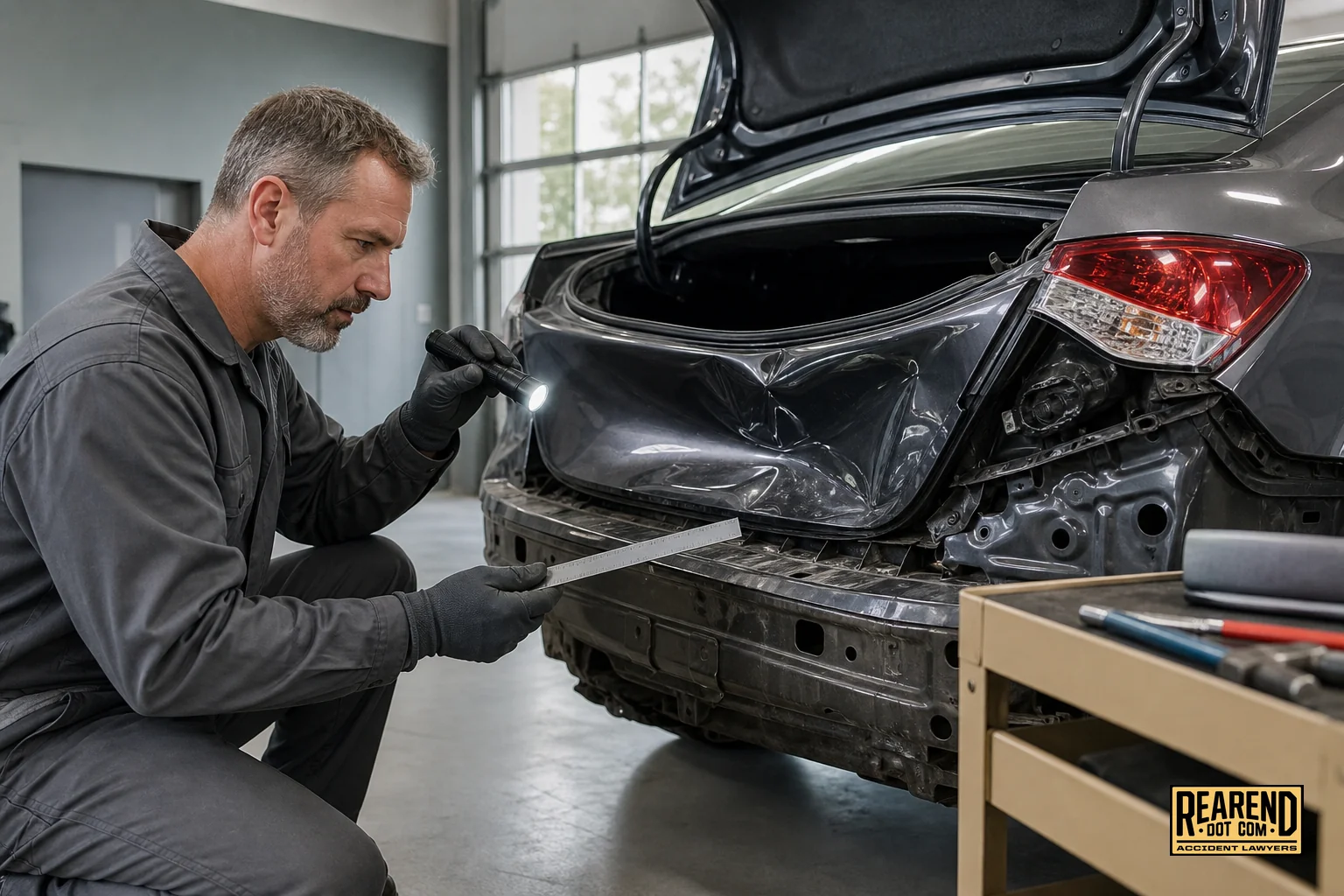
Repair quality connects to more than appearances. A rushed or incomplete repair can leave structural or safety issues unresolved. That matters for resale value and for your peace of mind driving the car afterward.
There’s also a documentation angle. A trusted shop that takes time to photograph damage and write a thorough estimate builds a paper trail that can support your property damage claim if the insurer later disputes the scope of repairs.
Regional Problem, State-Specific Fixes
Insurance steering rules and enforcement differ from state to state. Below is what’s specifically documented for California and North Carolina, plus what to check yourself if you’re in Texas, Florida, New York, or another state not covered by our sources.
California: San Diego, Los Angeles, Oakland, San Jose
If you were rear-ended in San Diego, Los Angeles, Oakland, or San Jose, California’s protections under §758.5(a) apply the same way regardless of city. The insurer can name a preferred shop, but it cannot condition payment on your using it. This holds across the service areas rearend.com works in, from Riverside to Oceanside to Fresno.
North Carolina
North Carolina’s § 58-3-180 requires insurers to give four written disclosures when recommending a direct repair shop, including a statement that you are not obligated to use it. Violations can carry penalties up to $2,000 per incident. That’s a sharper, disclosure-based enforcement structure than California’s statute, even though the underlying right, the choice is yours, is the same.
Texas, Florida, New York, and Other States
Based on the legal analysis cited above, “every state regulates this practice” of steering to some degree. If you’re in one of these states, the checkable next step is to search your state’s insurance code, or contact your state Department of Insurance, for its anti-steering or unfair claims practices provisions. That’s the same way California’s is codified at §758.5(a) and North Carolina’s at § 58-3-180. Ask the adjuster directly whether their recommended shop is mandatory, and get the answer in writing before you agree to anything.
If the insurer denies payment for a non-network estimate entirely, don’t treat that as final. Request the denial in writing with a specific reason. Then file a complaint with your state’s Department of Insurance, the same regulator that enforces statutes like California’s §758.5(a) and North Carolina’s § 58-3-180, and keep a copy of every estimate and communication for that complaint file.
What This Means for Labor Rates and Delays
One practical consideration: choosing an independent shop can sometimes create friction with your insurer over labor rates, OEM parts, and rental car coverage, as adjusters may push back on estimates that exceed their preferred rates. To protect yourself, ask both the shop and the adjuster to put their expected timelines and costs in writing from the outset. Any pushback you encounter is simply a negotiation, not a restriction on your right to choose where your vehicle is repaired.
Related Issue: Does Your Repair Shop Choice Affect Your Injury Claim?
Your repair shop choice does not directly determine your injury claim’s value, but the two often move on connected timelines. Vehicle damage documentation can serve as supporting evidence for the force of impact, which insurers sometimes reference when evaluating injury severity.
Property damage and bodily injury claims are usually processed as separate line items with the same insurer. That said, thorough repair records from an independent shop can strengthen the overall file if your case moves toward a settlement negotiation, since adjusters sometimes try to use minimal visible damage to argue against injury severity, even though that connection is not always accurate.
FAQ: Problems and Solutions for Insurer Body Shop Referrals
Can I still use the insurer’s shop if I want to?
Yes, you can choose the insurer’s recommended shop if you prefer it. The point of your repair rights is choice, not a requirement to avoid the insurer’s network; some drivers find the convenience worthwhile.
Problem: What if the insurer refuses to pay a non-network shop’s estimate?
Solution: Request a written explanation for any refusal. Ask your independent shop to negotiate directly with the adjuster over disputed line items. If the insurer still won’t budge or won’t explain itself, file a complaint with your state’s Department of Insurance. Keep every estimate and communication in writing for your records.
Problem: Does using an independent shop slow down my claim?
Solution: It might add a delay if the insurer disputes labor rates or parts costs. A well-documented estimate from a reputable shop usually resolves those disputes without major setbacks to your overall claim timeline.
Problem: What if I already agreed to use their shop?
Solution: You can generally change your mind before repairs begin. Contact the shop and the insurer promptly, in writing, to redirect the repair to your chosen facility.
Choosing your own repair shop after a rear-end crash is one of the few decisions in the claims process that stays entirely in your hands. Use that leverage.
If an adjuster is pressuring you toward their shop, or you’re unsure whether your claim is being valued fairly, you don’t have to sort it out alone. Start My Claim for a free case evaluation, and our team can walk you through both your repair options and your broader claim. You can also calculate an estimate of what your potential claim could be worth before deciding your next step. For more on what to do in the immediate aftermath of a crash, review our guide on what to do after being rear-ended in the first 72 hours.
Recommended Resources
Start My Claim Find Trusted Local Auto Body Shops Calculate an estimate of what your potential claim could be worth
Related Articles


Need Legal Help After a Rear-End Accident?
Get a free consultation with our experienced legal team