
Who Pays for Repairs After a Rear-End Accident?
Repair bills after a rear-end crash generally fall to the at-fault driver’s liability insurance, but that answer only covers the simple cases. Rear-end accident vehicle repair cost coverage gets complicated fast when policy limits are too low, fault is disputed, or an adjuster’s estimate doesn’t match what your car actually needs. Knowing who pays, and when you might need help, can save you thousands.
Key Takeaways
- Fault usually points backward: The driver who hit you is generally presumed at fault in a rear-end crash, so their liability coverage typically pays for your repairs first.
- California’s minimum limits are thin: State law only requires $30,000 per person and $60,000 per accident in liability coverage, which may not stretch to cover a total loss plus injuries.
- Your own policy can fill gaps: Collision coverage or underinsured motorist property damage coverage may step in when the at-fault driver’s limits run out.
- Diminished value is a separate claim: Even a well-repaired car often sells for less afterward, and California generally allows you to pursue that loss on top of the repair bill.
- Independent estimates matter: A shop referral outside the insurer’s preferred network can catch hidden frame or structural damage that a rushed estimate might miss.
At a Glance: Rear-End Repair Cost Coverage
| Coverage Path | Who Typically Pays | When It Applies | Common Pitfall |
|---|---|---|---|
| At-fault driver’s liability | Their insurer | Fault is clear or accepted | Policy limit too low for full repair cost |
| Your collision coverage | Your own insurer | You want repairs started faster, then insurer subrogates | Deductible comes out of your pocket upfront |
| Underinsured motorist property damage | Your insurer | At-fault driver’s limits are exhausted | Not all policies include this coverage |
| Diminished value claim | At-fault driver’s insurer | After repairs are complete | Insurers often dispute or lowball the amount |
| California minimum liability | At-fault driver’s insurer | Baseline for every CA policy | Just $30,000/$60,000, often not enough for a total loss |
| Independent shop estimate | N/A (documentation) | Any time the insurer’s number looks low | Insurer’s preferred shop may underestimate structural damage |
Who Is Responsible for Rear-End Accident Vehicle Repair Cost Coverage?
In most rear-end crashes, the trailing driver is presumed to have followed too closely or failed to react in time, which puts their liability insurance on the hook for your repairs. This presumption isn’t absolute, but it does mean the burden often shifts to the driver behind you to show otherwise.
Once fault is established, their liability insurer generally becomes responsible for paying to restore your vehicle to its pre-crash condition. That could mean a straightforward bumper repair, or it could mean thousands of dollars in frame, suspension, and sensor recalibration work on newer vehicles packed with cameras and radar units.
Here’s where California’s coverage rules matter. The state requires drivers to carry only $15,000 per accident in liability coverage, and that figure hasn’t kept pace with modern repair costs. A single late-model sedan with a damaged rear sensor array can approach or exceed those limits before other repairs even enter the picture.
If you’re driving through San Diego, Los Angeles, Oakland, or any of California’s busier corridors, this gap between minimum coverage and actual repair costs comes up often. It’s one reason victims sometimes discover, mid-claim, that there isn’t enough insurance money to go around.
How Does Fault Determination Affect Who Pays for Repairs?
Fault determination decides which insurance policy pays first, and it relies on police reports, witness statements, dashcam footage, and physical damage patterns. When fault is contested or shared, California’s comparative negligence rules can reduce what either side recovers.
Insurers sometimes argue you contributed to the crash by braking suddenly or having a broken taillight. Documentation collected right after the crash, photos, contact information from witnesses, and any available video, tends to make the biggest difference in how quickly this question gets resolved. Learn more about how fault gets proven in a rear-end accident if the other driver disputes responsibility.
What Happens When the At-Fault Driver’s Insurance Limits Are Too Low?
When the at-fault driver’s liability limits fall short of your repair costs, your own policy may need to cover the difference. Underinsured motorist property damage coverage, where you carry it, or your collision coverage, can bridge that gap while your insurer pursues reimbursement from the other side.
Collision coverage lets you get your car fixed without waiting on the other insurer’s investigation, though you’ll pay your deductible upfront. Your insurer then typically pursues subrogation against the at-fault driver’s carrier to recover what it paid out, including your deductible in many cases.
This is also where a total loss can create friction. If the repair estimate exceeds a set percentage of your car’s value, insurers usually declare it a total loss and pay out the vehicle’s actual cash value instead of repairing it. That number is frequently a point of dispute, since insurers tend to lean on valuation tools that undercount mileage, condition, or regional market pricing.
Why Insurance Estimates Can Undervalue Rear-End Repairs?
Insurance estimates often undervalue rear-end repairs because initial inspections miss hidden structural or electronic damage that only becomes visible once a panel is removed. Adjusters working under time pressure and cost targets may also write estimates based on used or aftermarket parts instead of the repairs your specific vehicle needs.
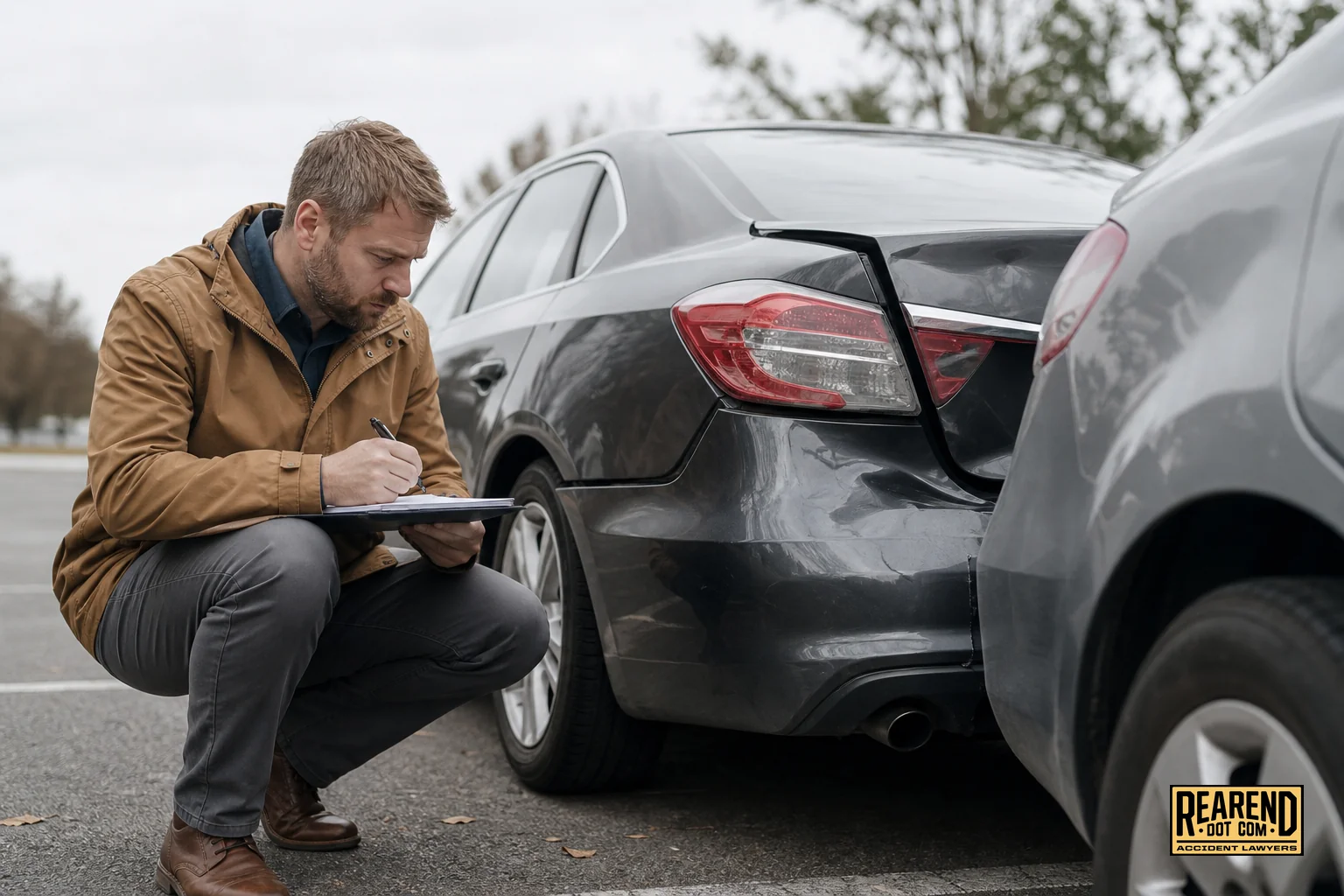
Rear-end crashes look deceptively minor from the outside. A bumper cover might pop back into place, hiding a bent reinforcement bar, a cracked frame rail, or misaligned sensors behind it. Modern vehicles pack backup cameras, parking sensors, and collision-avoidance radar into the rear fascia, and any of those components can require recalibration that a quick visual estimate won’t catch.
Adjusters aren’t necessarily acting in bad faith, but their employer’s interest is minimizing payout, not maximizing your repair quality. That’s a structural conflict worth keeping in mind whenever you’re handed a number that seems low. Our page on whether insurance will pay or try to lowball you walks through the warning signs in more detail.
What Is Diminished Value and Who Covers It?
Diminished value is the drop in your car’s resale worth that remains even after a proper repair, and California generally allows victims to pursue this loss separately from the repair bill itself. Buyers and dealers routinely pay less for a vehicle with an accident history, regardless of how clean the bodywork looks.
This claim typically gets filed against the at-fault driver’s insurer once repairs are finished, since you need a completed repair record and a valuation comparison to support the number. Insurers frequently push back hard on diminished value claims, arguing the vehicle is “as good as new,” which is rarely how the resale market actually treats a repaired car.
A repaired rear bumper doesn’t erase the accident from your car’s history report, and buyers know it.
If you want a rough sense of what a diminished value claim, combined with other losses, might realistically add up to, you can calculate an estimate of what your potential claim could be worth before deciding how hard to push back on an insurer’s offer.
How Can an Auto Body Shop Referral Help You Avoid a Lowball Estimate?
An auto body shop referral connects you with a trusted, independent repair facility instead of the insurer’s preferred shop, which can reduce pressure to accept a rushed or incomplete estimate. Independent shops have less incentive to keep numbers low to stay on an insurer’s approved list.
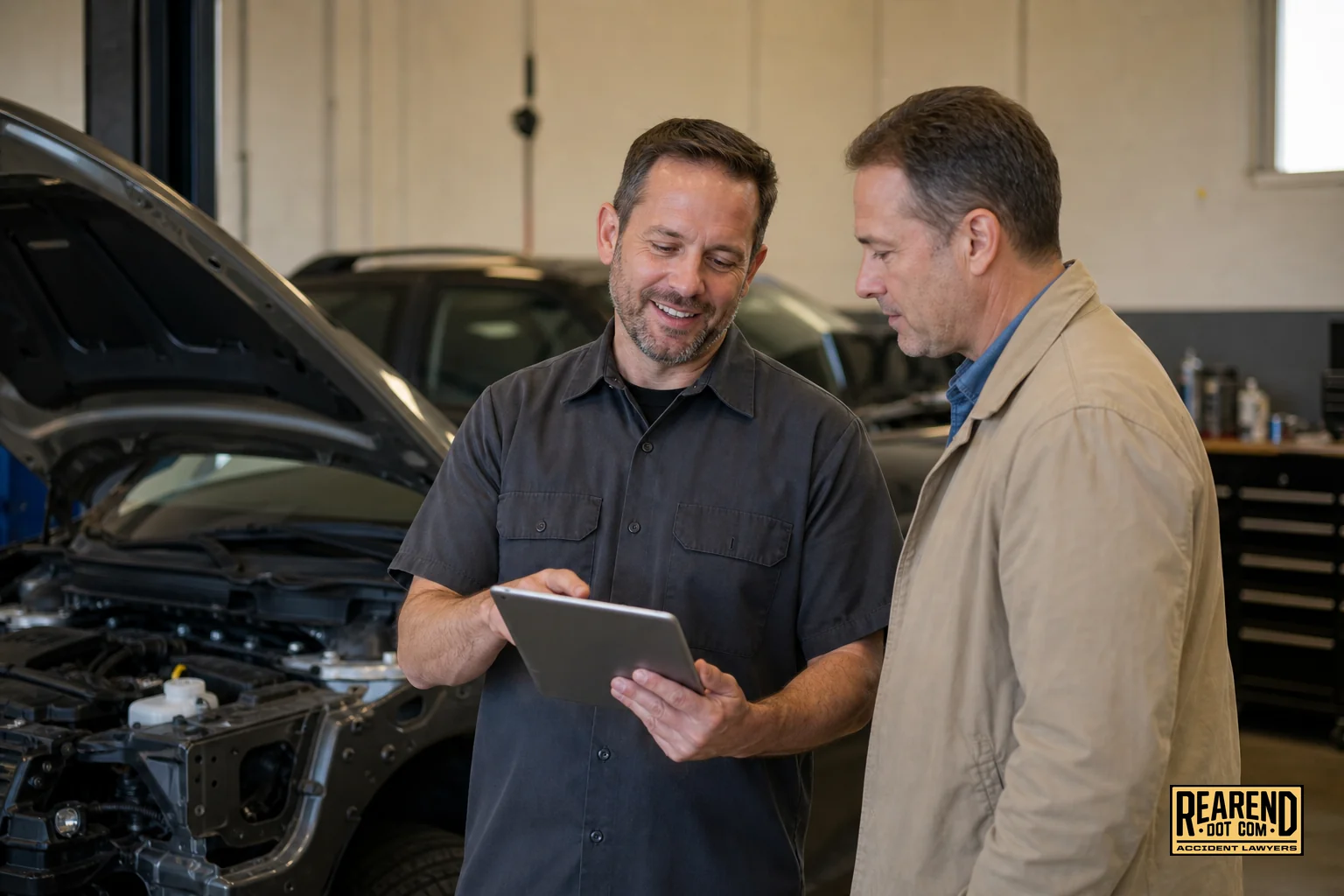
Insurer-recommended shops sometimes work under volume agreements that reward faster turnaround and lower parts costs, which isn’t always the same thing as a complete repair. A shop that isn’t beholden to that relationship can give you a second opinion, catch damage the first estimate missed, and document it properly for your claim.
This is exactly the gap our network of trusted local auto body shops is built to close. If you’d like a fuller breakdown of how this referral process actually works, our article on rear-end accident lawyer cost and fees covers how legal support and repair guidance often go hand in hand at no upfront cost to you.
What Should You Do If Your Repair Claim Gets Denied or Delayed?
If your repair claim is denied or delayed, request the denial in writing, ask for the specific policy language cited, and gather a second repair estimate to challenge the insurer’s reasoning. Persistent denials or unreasonable delays are often a sign it’s time to bring in legal help.
Insurers sometimes stall hoping you’ll accept a lower settlement out of frustration or financial pressure. Keep every email, estimate, and phone log. If the delay stretches past what feels reasonable, our guide on what happens if insurance denies your rear-end claim outlines your legal options in more depth.
Rear-End Collision Repair: Frequently Asked Questions
Does rear-end collision repair cost come out of my settlement?
Vehicle repair costs are generally handled as a separate property damage claim from any injury settlement, though both often move through the same insurer at the same time. Keeping the two claims organized separately can help you track what’s covered under each.
Can I choose my own repair shop instead of the insurer’s recommendation?
Yes, you generally have the right to choose your own repair shop rather than the one an insurer suggests. Many drivers aren’t aware of this option, which is part of why an independent shop referral can be valuable early in the claims process.
How long does it take to get repair costs approved and paid?
Approval timelines vary based on fault disputes, estimate revisions, and how quickly the insurer inspects the vehicle, but straightforward claims often move faster than injury claims tied to ongoing medical treatment. For a broader sense of claim timing, see our page on how long a rear-end accident settlement takes from filing to payment.
If an insurer’s repair estimate feels low, or you’re not sure whether the at-fault driver’s coverage will actually stretch far enough, you don’t have to sort it out alone. You can start your claim for a free review of your situation, and get connected with repair support that pushes back on lowball numbers instead of accepting them.
Recommended Resources
Start My Claim Find Trusted Local Auto Body Shops Calculate an estimate of what your potential claim could be worth
Related Articles


Need Legal Help After a Rear-End Accident?
Get a free consultation with our experienced legal team