
How Does a Lawyer Investigate a Rear-End Accident? Behind the Scenes of a Claim
A lawyer investigates a rear-end accident by securing scene evidence, pulling black box data from both vehicles, interviewing witnesses, cross-checking the police report, and matching medical records to the crash timeline. The goal is to build a paper trail that holds up against an insurance adjuster looking for reasons to pay less.
Key Takeaways
- Speed matters early: Investigations typically start within days of intake, before skid marks fade, surveillance footage gets overwritten, or witnesses move away.
- Black box data is often decisive: Event data recorders (EDRs) can show speed, braking, and throttle position in the seconds before impact.
- Witnesses can outweigh the police report: An independent bystander’s account sometimes carries more weight than a responding officer’s summary written after the fact.
- Medical timelines get scrutinized: Insurers frequently argue pain came from an old injury, so attorneys line up treatment dates against the crash date to counter that.
- Policy limits shape strategy: California requires minimum liability coverage of $30,000 per person and $60,000 per accident, which can affect how a claim gets valued and pursued when injuries are serious.
At a Glance: The Rear-End Accident Investigation Process
| Investigation Step | Typical Timing | What It Establishes |
|---|---|---|
| Scene evidence collection | Days 1-14 after intake | Physical proof of impact location, speed, and conditions |
| Black box (EDR) data request | Days 1-7 after intake | Speed, braking, and throttle data from both vehicles |
| Witness interviews | Weeks 1-3 | Independent account of how the crash occurred |
| Police report review | Weeks 1-2 | Baseline facts, though often incomplete |
| Medical record collection | Ongoing through treatment | Link between the crash and reported injuries |
| Damages calculation | Once treatment stabilizes | Total value of medical bills, lost wages, and pain and suffering |
| Policy limit review | Early in the claim | Whether the at-fault driver’s coverage matches the injury severity |
1. Locking Down the Scene Evidence Before It Disappears
Evidence from a rear-end crash has a shelf life. Skid marks wash away with rain, nearby businesses overwrite security footage on a rolling schedule, and damaged vehicles get repaired or sent to salvage. An attorney focuses on capturing what’s there quickly, often within days of taking the case.
That usually means requesting traffic camera or nearby business surveillance footage, photographing both vehicles’ damage in detail, and documenting the debris field and any visible skid marks at the scene. The angle and length of skid marks can suggest how fast a vehicle was traveling and whether the driver braked at all before impact.
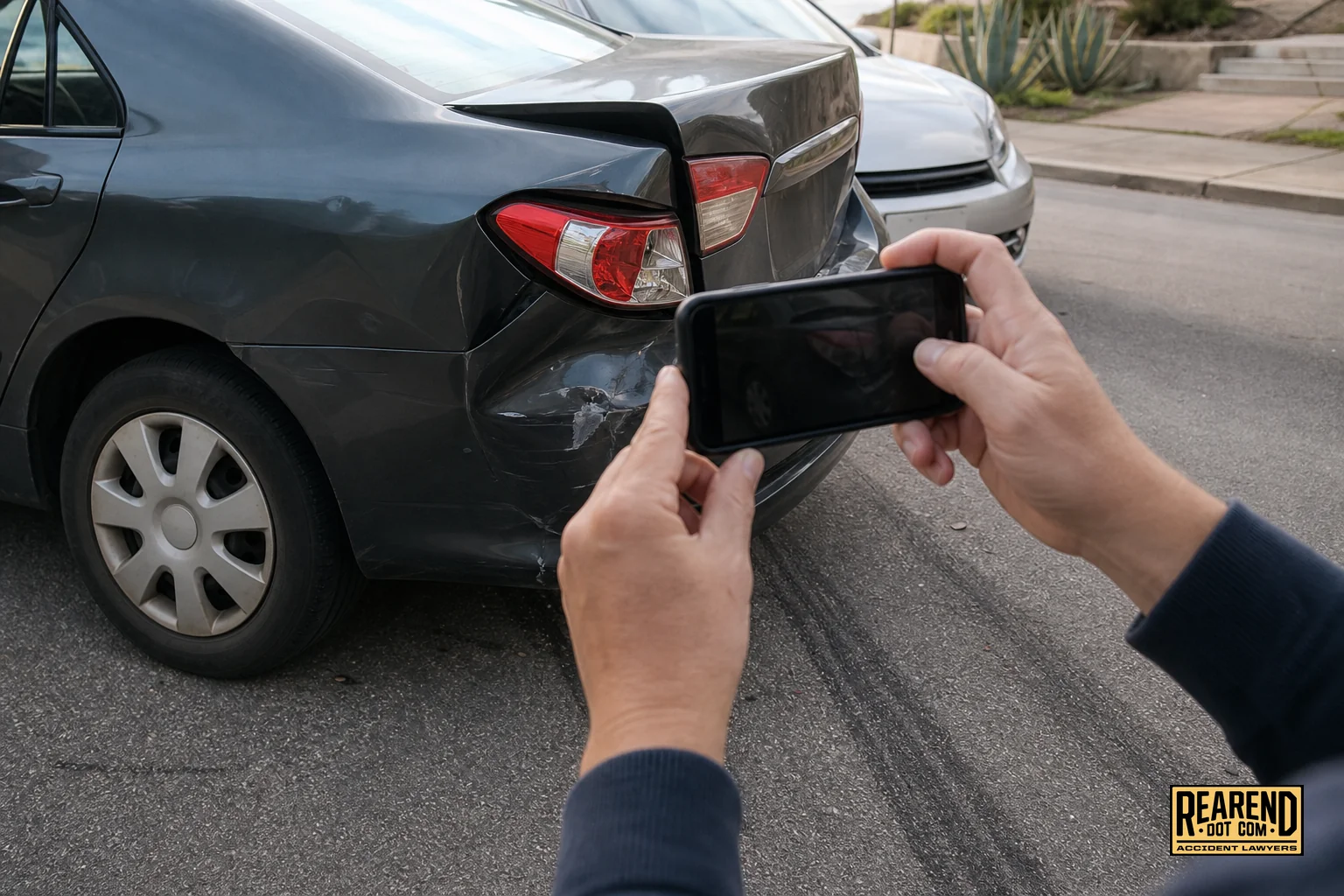
Weather conditions, lighting, and road markings at the time of the crash matter too. An attorney may pull historical weather data or note whether a traffic light was malfunctioning, since these details can shift how fault gets assigned later. If your case involves a crash in a specific city, the local process can look a little different depending on traffic patterns and how quickly local departments respond; our San Diego rear-end accident guide walks through what to expect there.
2. Pulling Black Box (EDR) Data From Both Vehicles
Most vehicles built after the early 2010s carry an event data recorder, often called a “black box,” that logs a short window of driving data before a collision. This can include vehicle speed, brake application, throttle position, and seatbelt status in the seconds leading up to impact.
That data can confirm or contradict what a driver told the police at the scene. If the at-fault driver claimed they braked in time but the EDR shows no brake application until the moment of impact, that’s a meaningful piece of evidence. Attorneys generally send a preservation letter to the vehicle owner or insurer early on, because this data can be overwritten if the car is driven extensively after the crash or if the module gets replaced during repairs.
Retrieving and interpreting this data usually requires specialized tools and, in some cases, a court order if the other party’s insurer resists a request. This is one reason working with an attorney who has handled several rear-end cases can matter: they know which requests to send, and how quickly to send them.
3. Interviewing Witnesses While Memories Are Fresh
Independent witnesses, people with no personal stake in the outcome, often provide some of the most persuasive evidence in a rear-end claim. Their accounts can corroborate speed, following distance, or whether brake lights were working.
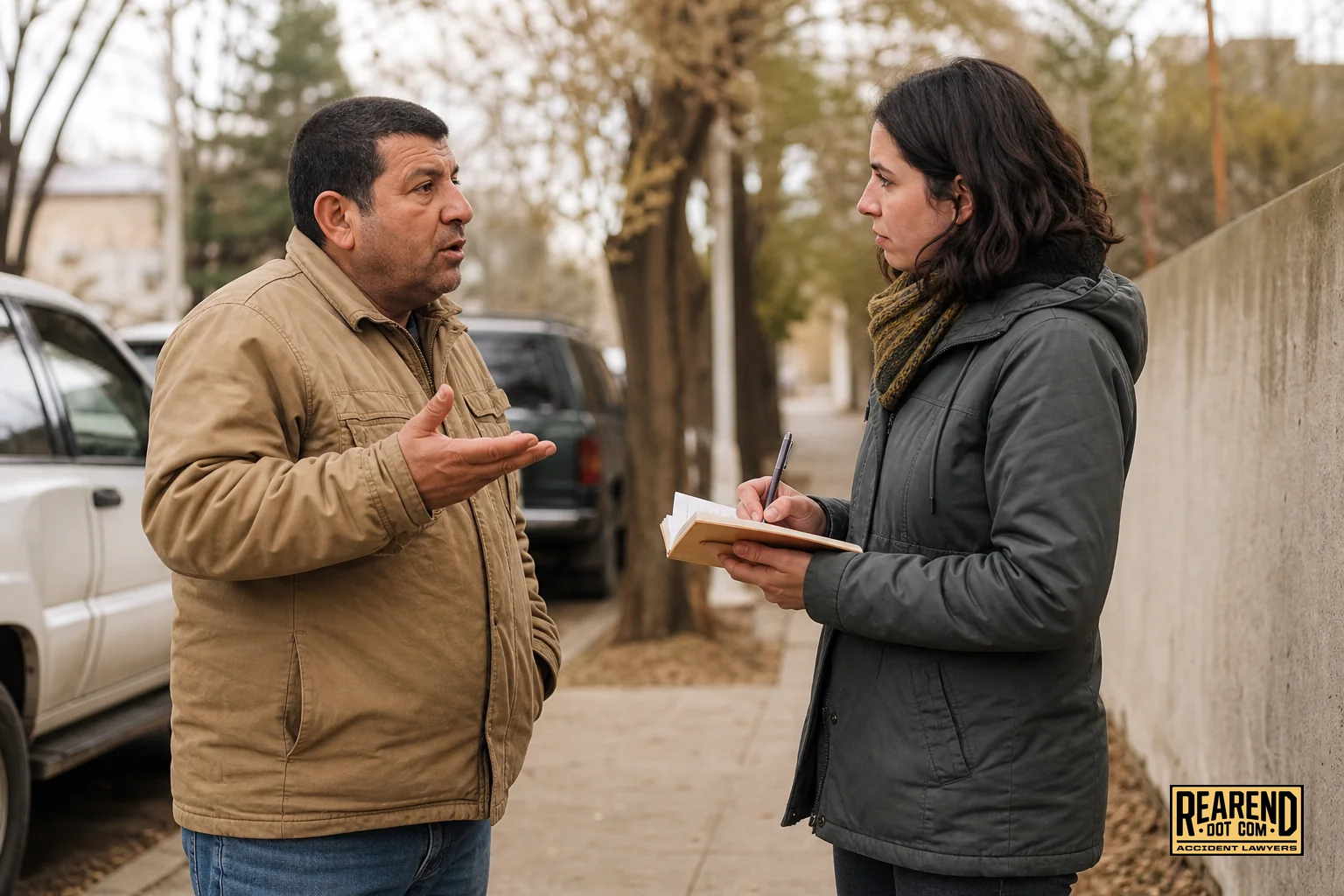
Police reports sometimes list only one or two witnesses, or none at all, especially if officers left the scene before everyone who saw the crash had a chance to speak up. Attorneys frequently canvass the area, checking nearby businesses, apartment buildings, or bus stops for people who might have seen what happened. A short window exists here too; people move, forget details, or become harder to reach as weeks pass.
When a witness is found, the attorney typically documents the statement in writing or on recording, with the witness’s contact information preserved for later use if the case proceeds toward negotiation or litigation.
4. Reviewing the Police Report and Filling Its Gaps
A police report is a useful starting point, but it isn’t the final word on fault or damages. Officers often arrive after the crash occurred, rely on driver statements that can be self-serving, and sometimes make errors in diagrams or citation details.
Attorneys typically read the report alongside the physical evidence gathered separately. If the diagram doesn’t match the actual damage pattern, or if a citation wasn’t issued despite clear rear-end contact, that discrepancy gets flagged and addressed with independent proof rather than left unresolved.
How Do You Prove Fault in a Rear-End Accident?
Fault in a rear-end accident is generally presumed to fall on the rear driver, since following too closely or failing to react in time is the usual cause. That presumption can shift, though, if evidence shows the lead driver stopped suddenly without cause, reversed unexpectedly, or had broken brake lights.
Proving fault typically combines several pieces of evidence rather than relying on one. EDR data showing following distance and braking, witness accounts of the lead vehicle’s behavior, and photos of brake light function all get weighed together. For a deeper look at how this evidence gets assembled into a fault argument, see our guide on how to prove fault in a rear-end accident.
5. Connecting Medical Records to the Crash Timeline
Insurance adjusters often look for any reason to attribute an injury to something other than the crash. A gap between the accident date and a person’s first doctor visit, or a prior injury to the same body part, can become a talking point for reducing an offer.
Attorneys typically request complete medical records and match treatment dates against the crash date to show a clear sequence: injury, symptom, diagnosis, treatment. When a pre-existing condition exists, the argument usually isn’t that it didn’t exist before, but that the crash made it measurably worse.
Consistent treatment matters here. Long gaps between appointments can be used to suggest the injury wasn’t serious or had resolved, even when that’s not what actually happened. Attorneys often encourage clients to keep appointments and report symptoms honestly and in detail.
6. Calculating Damages Beyond the Vehicle Repair Bill
Vehicle repair costs are usually the easiest part of a claim to calculate. The harder part is placing a value on medical bills that may still be accumulating, lost income from missed work, and pain and suffering that doesn’t come with a receipt.
Attorneys typically total current and projected medical expenses, calculate lost wages using pay stubs or employer statements, and factor in the severity and expected duration of pain and recovery. This total then gets weighed against the at-fault driver’s available insurance.
California requires minimum liability coverage of $30,000 per person and $60,000 per accident. When injuries and losses exceed that amount, the investigation may expand to look at whether the injured person’s own underinsured motorist coverage could help close the gap. If you want a rough sense of where your numbers might land, you can calculate an estimate of what your potential claim could be worth.
What Should You Look For When Choosing an Attorney to Investigate Your Claim?
Look for an attorney who can describe specific investigative steps they’ll take, not just a general promise to “fight for you.” A skilled accident attorney who has handled numerous rear-end cases will typically explain how they gather EDR data, find witnesses, and build a medical timeline before you sign anything.

A few red flags are worth watching for. Be cautious of firms that pressure you to settle within days of the crash, before medical treatment is even complete. Vague answers about how they’ll investigate your specific case, rather than a general practice, can also signal less experience with rear-end collisions specifically. Our guide on red flags when hiring a personal injury lawyer covers more warning signs worth knowing before you commit.
It’s also reasonable to ask directly about fee structure, communication frequency, and who on the team will actually handle your case day to day. Our list of questions to ask before you sign anything can help frame that first conversation.
How Rearend.com Approaches the Investigation Process
Rearend.com focuses exclusively on rear-end collision claims, which means the intake process is built around the specific evidence these cases usually need: EDR data, witness statements, and a clean medical timeline. A free case evaluation helps determine early on whether pursuing an investigation is worthwhile, before you commit to anything.
Representation works on a no-fees-unless-you-win basis, so the financial risk of starting an investigation stays with the firm, not with you. Once you submit your information, the legal team typically follows up within 24 hours to begin outlining next steps.
If your vehicle also needs repairs while your claim moves forward, Rearend.com can help you find trusted local auto body shops so that part of the process doesn’t sit on the back burner while the legal side gets underway.
Prior results do not guarantee a similar outcome. Every rear-end claim depends on its own facts, evidence, and injuries.
If you’re still sorting through what happened and wondering whether the evidence in your case supports a claim, the first step doesn’t have to be complicated. You can start my claim today, or review your claim in just a few clicks for free to see what an investigation into your specific crash might uncover.
Related Articles


Need Legal Help After a Rear-End Accident?
Get a free consultation with our experienced legal team