
Rear-end accident during pregnancy what to know: A practical guide
A rear-end accident during pregnancy calls for prompt medical evaluation, even when the crash felt minor and you feel fine. Fetal monitoring, careful symptom tracking, and continuity of prenatal care are what protect both your health and any later claim, since insurers often look closely at how quickly, and how consistently, care was sought after the crash.
Key Takeaways
- Get checked the same day: Many OBs and ER doctors recommend evaluation within hours of a rear-end crash, even without visible injury or pain.
- Fetal monitoring is common practice: A monitoring window of roughly 4 to 24 hours is often used, depending on the provider’s assessment of impact force and symptoms.
- Documentation matters as much as treatment: Ultrasound reports, OB notes, and a symptom journal tied to the crash date can support a claim later.
- California’s minimum liability coverage is $30,000 per person and $60,000 per accident, which may not stretch far if extra monitoring or complications follow a crash.
- Gaps in care can raise questions from insurers, so returning for follow-up visits, even if symptoms seem to fade, generally strengthens your position.
At a Glance: Rear-End Accidents and Pregnancy
| Consideration | What to Generally Know |
|---|---|
| When to seek care | Same day, ideally within a few hours of the crash |
| Typical fetal monitoring window | Often 4 to 24 hours, depending on provider judgment |
| Warning signs to report | Cramping, vaginal bleeding, contractions, decreased fetal movement, dizziness |
| Key documentation | ER/OB records, ultrasound results, symptom journal, follow-up visit notes |
| CA minimum liability coverage | $30,000 per person / $60,000 per accident |
| Fault presumption | The rear driver is generally presumed at fault in a rear-end crash |
| Claim timing | Continuity of care from crash date forward tends to matter to insurers |
Why a Low-Speed Rear-End Crash Still Matters During Pregnancy
The force from a rear-end impact travels through the seatbelt, the seat, and the body before it reaches the uterus, and that chain reaction can happen even at speeds that leave only a scuffed bumper. A properly worn lap belt sits low, under the belly, not across it, which helps reduce direct pressure but does not eliminate the jolt transferred through the torso.
Sudden deceleration can cause the placenta to shift slightly against the uterine wall, something doctors sometimes describe as a concern for placental abruption in more significant impacts. This is why visible vehicle damage is a poor guide to what happened internally. A car that looks fine after a tap can still deliver enough force to warrant a medical look, particularly later in pregnancy when the uterus sits higher and closer to the impact zone.
Does Trimester Affect the Level of Concern?
Later pregnancy generally raises the stakes somewhat, since the uterus is larger and less cushioned by surrounding tissue and fluid. That said, providers typically recommend evaluation after any rear-end crash regardless of trimester, since early pregnancy carries its own risks around cramping and bleeding that can be harder to attribute to the crash without a baseline exam.
What Medical Follow-Up Doctors Generally Recommend
Doctors commonly recommend evaluation the same day as the crash, followed by a period of fetal monitoring that can range from about four to twenty-four hours depending on the force of impact and symptoms present. A same-day exam establishes a medical baseline that can matter later, both for your health and for how the claim gets viewed.
During that visit, a provider will typically check fetal heart rate, look for signs of contractions, and may order an ultrasound to check the placenta and amniotic fluid. Some providers extend monitoring overnight for observation if there is any sign of uterine irritability.
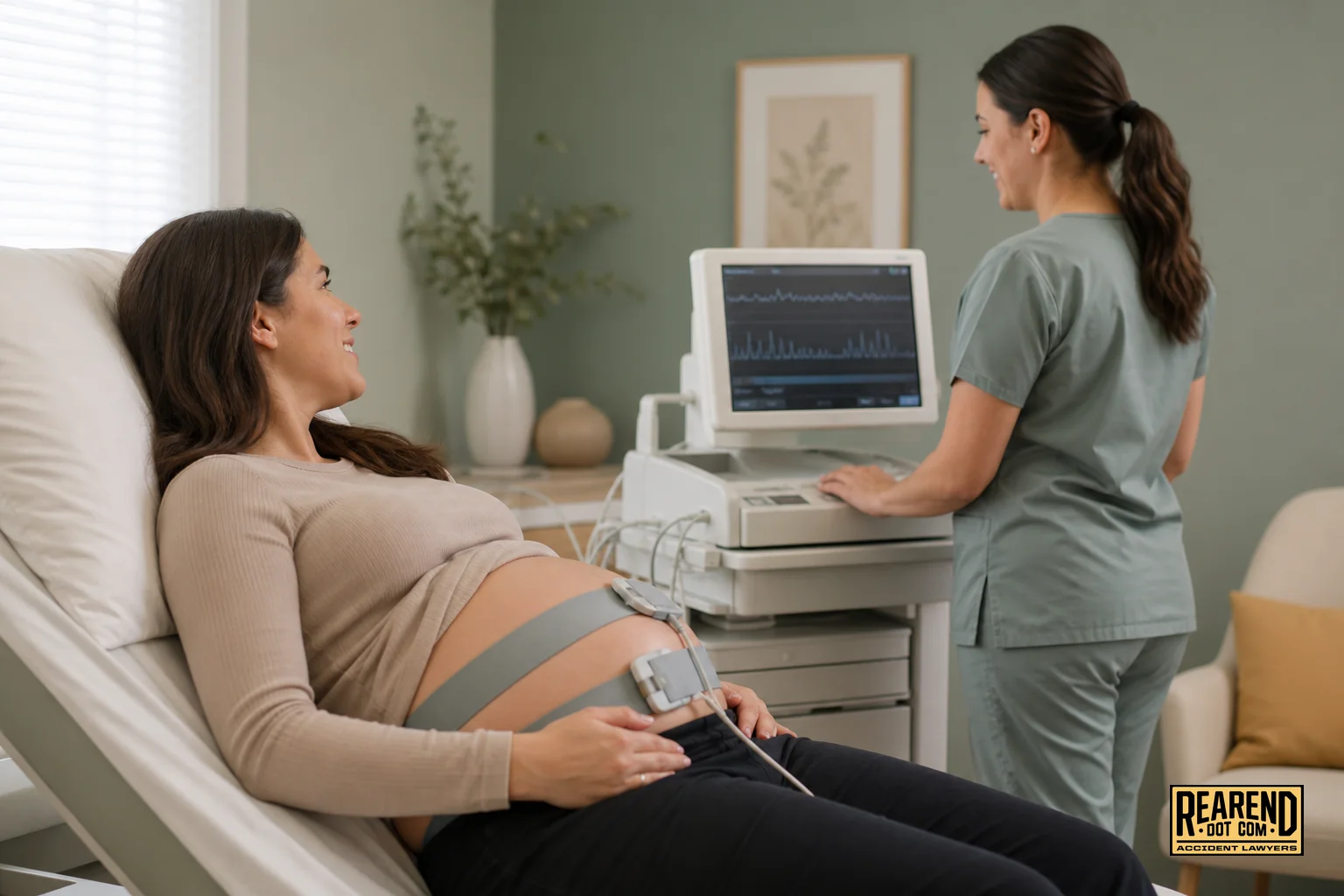
Between the initial visit and your next scheduled prenatal appointment, it helps to watch for a specific set of warning signs rather than general discomfort:
- Vaginal bleeding or spotting
- Cramping or contractions that come at regular intervals
- A noticeable decrease in fetal movement
- Leaking fluid
- Severe headache, dizziness, or abdominal pain
Any of these symptoms generally warrants a call to your OB or a return to the ER, even if it has been a day or two since the crash. Symptoms from a rear-end impact can take time to surface, which is a theme covered in more depth in our guide on what to do after being rear-ended in the first 72 hours.
Should I Go to the ER Even if I Feel Fine?
Yes, going to the ER or your OB the same day is generally advisable even without pain, since adrenaline can mask early symptoms and fetal distress is not always something you can feel. A short monitoring visit is a low-cost way to rule out a problem before it becomes harder to treat.
How Soon Should I See My OB After a Rear-End Crash?
Most OBs recommend a follow-up visit within a day or two of the crash, even after an ER clearance, to reassess fetal well-being and check for delayed signs like placental changes. This second look catches issues that don’t show up in the first few hours.
How Pregnancy-Related Injuries Get Documented in a Claim
A claim involving pregnancy generally relies on the same documentation as any injury claim, but with an added layer: OB records, ultrasound reports, and fetal monitoring strips tied specifically to the crash date. These records help connect the medical response to the collision itself, rather than leaving that link open to interpretation.
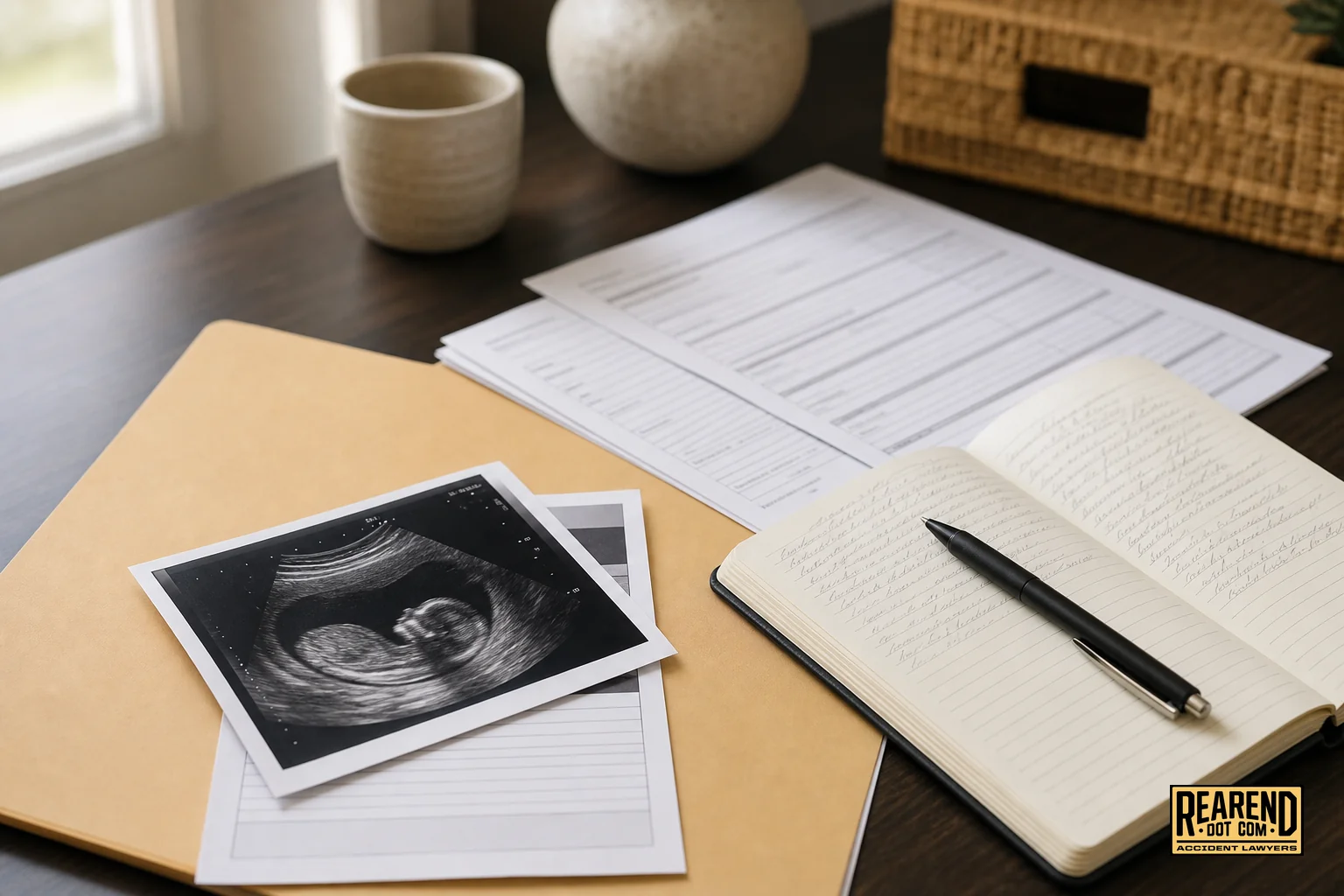
Keeping a simple symptom journal can also help. Noting dates, physical sensations, missed work, and follow-up appointments creates a timeline that supports the medical record rather than relying on memory months later. This kind of continuity often matters more than people expect.
Insurance adjusters sometimes look for gaps between the crash and treatment, or between treatment sessions, as a reason to question whether an injury is actually related to the collision. A pregnancy-related claim with a monitoring visit, a follow-up OB appointment, and consistent notes tends to hold up better under that kind of scrutiny than one with a single ER visit and no follow-through. Our page on rear-end accident settlement amount factors that victims rarely know about covers how documentation gaps can affect value more broadly.
Can I Still File a Claim If I Wasn’t Visibly Injured?
Yes, you can generally still file a claim even without visible injury, since pregnancy-related monitoring, precautionary testing, and emotional distress from the crash are compensable in many cases. The absence of a broken bone does not mean the absence of a valid claim, particularly when medical follow-up was medically necessary.
How Fault and Coverage Work in a Rear-End Crash (California Basics)
In a typical rear-end crash, the driver who struck you from behind is generally presumed to have followed too closely or failed to react in time, which places fault on them in many cases. That presumption can be challenged with evidence, but it generally works in favor of the driver who was hit.
California requires drivers to carry minimum liability coverage of $30,000 per person and $60,000 per accident. That amount can run out quickly once ER visits, an ultrasound, extended fetal monitoring, and follow-up OB care are added to the bill, particularly if any complication requires ongoing observation through the rest of the pregnancy.
This is one reason it helps to have your claim reviewed early, whether you are in San Diego, Los Angeles, Oakland, San Jose, Riverside, Fresno, or Oceanside. Coverage limits and claim handling can vary by insurer and by the facts of the crash, so an early look at what policies are in play matters.
What This Could Mean for Your Claim
A pregnancy-related rear-end claim can include more than the standard medical bills and lost wages seen in other crashes. Extra ultrasounds, monitoring visits, and any additional prenatal appointments recommended because of the collision are generally part of the medical cost picture.
Pain and suffering, and the emotional distress of worrying about a pregnancy after a crash, are also factors an attorney can help document and present, though every case is reviewed individually and no specific outcome can be promised. What matters most is building a clear record: the crash, the medical response, the follow-up, and how it all connects.
If you’re unsure what a case like this might be worth, you can calculate an estimate of what your potential claim could be worth as a starting point before speaking with someone about the specifics.
Common Questions About Rear-End Accidents During Pregnancy
What if My Car Has Little to No Visible Damage?
Minor visible damage does not rule out internal strain or fetal concerns, since the forces involved in a rear-end crash can transfer through the body regardless of what the bumper looks like afterward. Medical evaluation is generally recommended based on the impact itself, not the cosmetic result.
Who Pays for the Extra Monitoring and Follow-Up Visits?
The at-fault driver’s insurance is generally the first place a claim for these costs is directed, assuming liability is established, though your own health insurance may need to be billed first depending on the situation. An attorney familiar with rear-end claims can help sort out which coverage applies and in what order.
Does Rear-End Collision Repair Affect My Medical Claim?
Vehicle repair and your medical claim are generally handled as separate tracks, though photos of the damage can still support the overall record of the crash. If you need help finding a shop while your claim moves forward, you can find trusted local auto body shops without that process slowing down the medical or legal side of things.
Next Steps After a Rear-End Crash While Pregnant
Being rear-ended while pregnant brings a layer of worry that a typical fender-bender doesn’t carry, and it’s reasonable to want clear answers quickly. Prompt medical attention protects your health first. A documented, consistent medical record protects your options second.

If you’re weighing whether to pursue a claim, it helps to talk through the specifics with someone who has handled rear-end cases involving pregnancy before, rather than guessing at what an insurer’s opening offer really covers. You can start my claim today, or review your claim in just a few clicks for free to see where things stand. There’s no cost to ask, and getting a second set of eyes on your situation early tends to matter more than waiting until questions pile up.
Related Articles


Need Legal Help After a Rear-End Accident?
Get a free consultation with our experienced legal team