
Rear-End Accident Claim Denied for a Pre-Existing Condition: What Are Your Options
A rear-end accident claim denied for pre-existing condition doesn’t mean your case is over. Insurers frequently use old injuries as a reason to shift blame away from the crash, but California law generally allows you to recover for the worsening of a prior condition, not just brand-new injuries. Understanding this distinction is the first step toward challenging a denial.
Key Takeaways
- Denials citing prior injuries are a common tactic: Insurers often point to old medical records to argue your current pain isn’t crash-related, even when the crash clearly made things worse.
- The aggravation doctrine may support your claim: California generally allows compensation when a crash worsens an existing condition, not only when it creates a brand-new one.
- Medical comparison evidence carries the case: Before-and-after records, imaging, and physician notes are usually what separates a denied claim from a paid one.
- A free case evaluation could reveal options you didn’t know about: An attorney who focuses on rear-end cases can review the denial letter and your medical file at no upfront cost.
- Timing matters: Waiting too long to gather records or respond to a denial can weaken your position, so acting promptly generally helps.
Claim Denial Snapshot: What You Need to Know
| Denial Reason Given | Why Insurers Use It | Possible Counter-Evidence | Typical Next Step |
|---|---|---|---|
| Prior back or neck injury on file | Suggests current pain predates the crash | Records showing prior condition was stable or resolved | Request denial in writing, gather prior records |
| Degenerative disc disease noted | Common, age-related, easy to point to | Physician statement distinguishing acute injury from degeneration | Get an independent medical opinion |
| Gap in treatment after crash | Implies injury wasn’t serious or crash-related | Explanation for gap plus consistent follow-up care | Resume care, document reasons for delay |
| Prior claim for similar body part | Frames new symptoms as a repeat issue | Comparison imaging showing new or worsened damage | Obtain updated imaging and comparison report |
| No new diagnosis, just “flare-up” | Minimizes the aggravation as temporary | Functional decline evidence (work limits, daily activity loss) | Free case evaluation to assess claim strength |
Why Insurers Point to Pre-Existing Conditions After a Rear-End Crash
When an adjuster requests years of medical history after a routine rear-end collision, it’s rarely random. Insurers know that prior conditions give them a built-in argument: they can suggest your pain existed before the crash and simply continued afterward.
This is a negotiating position, not necessarily a legal conclusion. Adjusters are trained to look for anything that reduces the insurer’s payout, and a documented history of back pain, prior whiplash, or arthritis is an easy target. That doesn’t mean the denial reflects how a court, or even a fair reading of your medical file, would treat the claim.
Many claimants don’t realize how often this tactic gets used. If you were rear-ended in San Diego or another California city, the same playbook tends to show up regardless of which insurer handles your claim.
Is a Rear-End Accident Claim Denied for Pre-Existing Condition Actually Legal?
A denial based solely on a pre-existing condition isn’t automatically valid. California generally recognizes the “aggravation” principle: if a crash worsens an existing injury, you may still recover for that worsening, even though the underlying condition existed beforehand.
Courts sometimes describe this using the “eggshell plaintiff” concept, meaning an at-fault driver generally takes the victim as they find them. If you had a fragile back before the crash and the collision made it measurably worse, the insurer’s job is to show the crash contributed nothing at all, which is often a harder argument for them to win than a flat denial suggests.
Common Counterarguments Attorneys Use Against These Denials
Attorneys who focus on rear-end cases tend to build a response around a few recurring strategies. None of these guarantee a reversed decision, but each addresses a specific weakness in the insurer’s reasoning.
- Before-and-after medical comparison: Pulling records from before the crash and comparing them to post-crash imaging or exam notes can show a measurable change.
- Treating physician statements: A doctor who saw you both before and after may be able to describe, in their own words, how your symptoms changed in type, location, or severity.
- Functional capacity evidence: Could you lift groceries, sit through a workday, or sleep through the night before the crash but not after? That kind of practical detail can matter more than a diagnosis code.
- Independent medical exams: When an insurer’s own doctor disagrees with your treating physician, a second independent opinion sometimes tips the balance.
- Closing documentation gaps: If there’s a gap in treatment, explaining it (financial strain, work obligations, initial belief the pain would pass) can undercut the insurer’s “not serious” narrative.
What Evidence Strengthens a Denied Claim
The strength of a challenge to a denial usually comes down to documentation. Insurers rely on gaps and ambiguity, so filling those gaps with specific, dated evidence tends to matter more than any single argument.
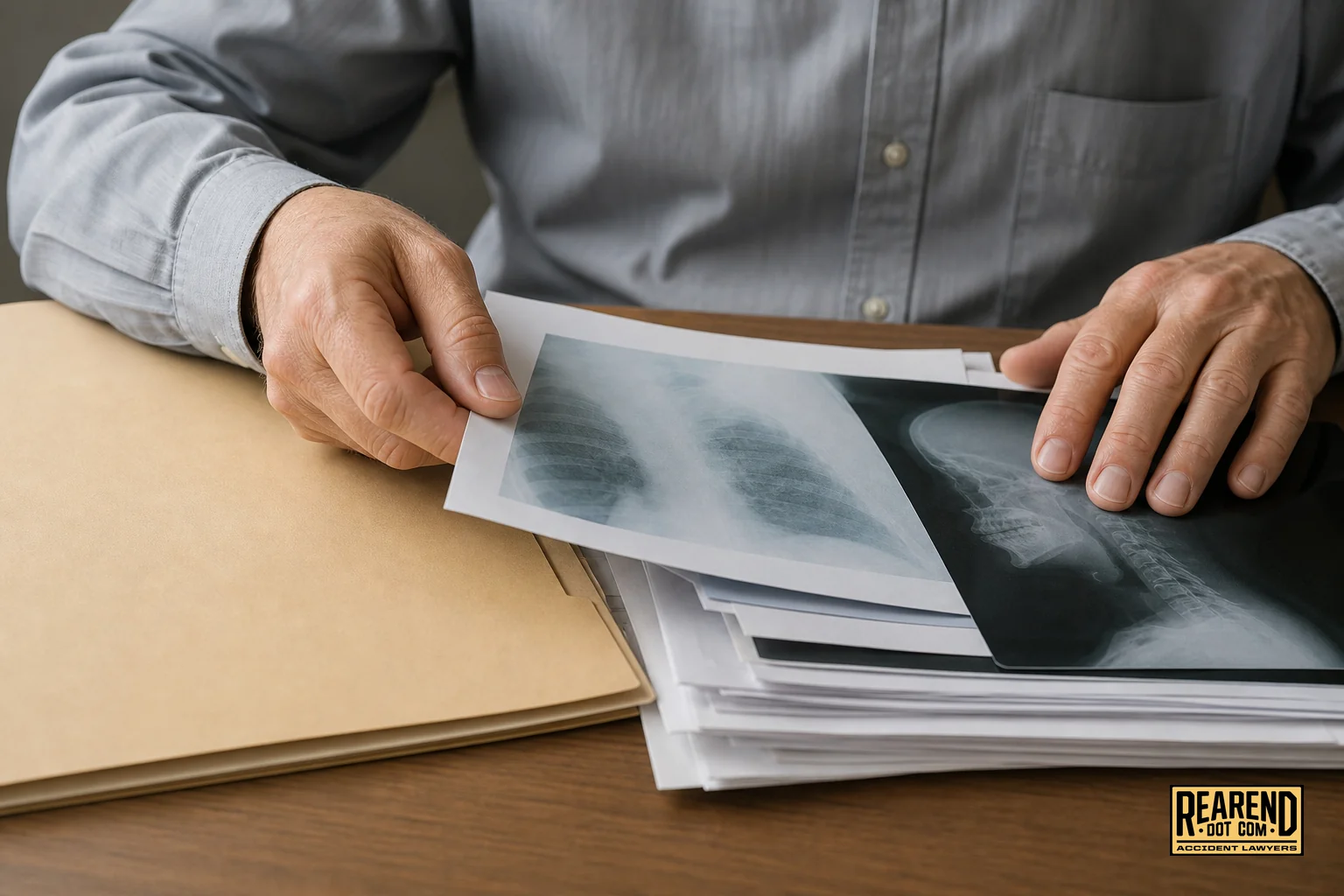
- Complete prior medical history, not just the records the insurer selectively requested
- Post-accident imaging (X-rays, MRIs) compared directly against pre-accident studies when available
- Statements from family members or coworkers describing changes in mobility or daily function
- Consistent treatment records showing regular follow-up rather than sporadic visits
- A personal pain journal noting symptoms, dates, and how they affected daily tasks
None of these on their own settles the question of fault or value. Together, though, they can shift a denial from “case closed” to “case worth another look.”
Steps to Take After Your Rear-End Accident Claim Is Denied
If your rear-end accident claim was denied for a pre-existing condition, the response you take in the following weeks can shape what happens next.
- Request the denial in writing. Ask the insurer to specify exactly which records or reasoning led to the decision.
- Gather your full medical history. Include records from before and after the crash, not just the file the adjuster referenced.
- Avoid giving another recorded statement without understanding how it could be used against your case.
- Get a second medical opinion if your treating physician hasn’t already addressed how the crash affected your prior condition.
- Have an attorney review the denial. A free case evaluation can determine whether the denial is worth challenging before you spend time or money on an appeal.
- Consider a formal demand letter or appeal once your evidence file is complete, rather than responding piecemeal.
- Track your deadlines. California’s statute of limitations for personal injury claims generally runs two years from the date of the crash, so don’t let review and appeal timelines eat into that window.

How a Free Case Evaluation Reviews a Denied Claim
During a free case evaluation, an attorney who has handled rear-end cases involving pre-existing conditions will generally start by reading the denial letter line by line, then compare it against your medical file to see whether the insurer’s reasoning holds up.
They may also flag whether the insurer requested more records than reasonably necessary, whether an independent medical exam was fair, or whether documentation gaps can be explained. Because most rear-end accident attorneys work on a no-fee-unless-you-win basis, reviewing a denial generally doesn’t carry upfront financial risk. You can review your claim in just a few clicks for free to see whether pursuing an appeal makes sense for your situation.
If you’re unsure what red flags to watch for when picking someone to represent you, it helps to review the warning signs of a poor-fit personal injury lawyer before signing anything.
What This Means for Claimants in San Diego and Other California Cities
California requires drivers to carry minimum liability coverage of $30,000 per person and $60,000 per accident. When a claim gets denied for a pre-existing condition, that minimum coverage becomes even more important, since a partial denial can leave a smaller pool of compensation for you to recover from.
This dynamic plays out across the state, from San Diego to Los Angeles, Oakland, and San Jose. Local claim handling can vary slightly by insurer and court backlog, but the underlying legal principle, that aggravation of a prior condition is generally compensable, applies statewide.
Frequently Asked Questions
Can I sue if my rear-end accident claim was denied for a pre-existing condition?
Yes, you generally can still pursue a claim or lawsuit after a denial. A denial reflects the insurer’s initial position, not a final legal determination, and many denials get reversed or settled once additional medical evidence is presented.
How much does a rear-end accident settlement pay out when a pre-existing condition is involved?
Settlement value depends on factors like the extent of the aggravation, medical costs, lost income, and how clearly the evidence separates old symptoms from new ones. There’s no fixed number, but you can use a tool to calculate an estimate of what your potential claim could be worth as a starting point.
How long do I have to appeal a denied rear-end accident claim in California?
There’s no single universal appeal deadline for insurance denials, but the broader statute of limitations for personal injury lawsuits in California generally runs two years from the crash date. Acting well before that deadline gives you more room to gather evidence and negotiate.
Does a gap in medical treatment automatically sink my claim?
Not automatically. A treatment gap can hurt a claim’s credibility, but a documented explanation, such as financial hardship or misunderstanding the severity of the injury, can help address the insurer’s concerns.
A denial letter can feel like the end of the road, but for many claimants dealing with a rear-end accident claim denied for pre-existing condition, it’s really just the insurer’s opening position. If your case involves an old injury the crash made worse, it’s worth having someone review the denial before you accept it as final. Start my claim today and find out whether your denied case still has options worth pursuing.
Related Articles


Need Legal Help After a Rear-End Accident?
Get a free consultation with our experienced legal team