
Can I Still File a Claim If the Police Report Is Wrong?
Yes, you can generally still file a claim if the police report is wrong. A police report is one piece of evidence, not the final word on your rear-end accident case, and insurers and courts routinely rely on other proof, like photos, medical records, and witness statements, when a report contains errors or gaps.
Key Takeaways
- A flawed report rarely ends a claim: Insurance companies and courts weigh multiple types of evidence, not just the officer’s summary.
- California doesn’t require a police report to file a claim: You can still pursue compensation using photos, medical records, and witness accounts.
- Corrections are possible: Many reporting agencies accept supplemental statements or amendment requests within a set window after the report is filed.
- Insurers may exploit report mistakes: Adjusters sometimes point to a wrong diagram or missing citation to dispute fault or lowball an offer.
- An attorney can rebuild the record: A rear-end accident attorney can gather independent evidence and negotiate around a flawed report during case review.
Police Report vs. Your Claim: Quick Facts
| Question | What Actually Matters for Your Claim |
|---|---|
| Is a police report required to file a claim in California? | No, though it helps establish an early record of the crash |
| Who decides fault in the end? | Insurance adjusters and, if needed, a court, using all available evidence |
| Can a report be corrected? | Often, through the reporting agency’s supplemental statement process |
| What other evidence supports a claim? | Photos, dashcam footage, witness statements, medical records, repair estimates |
| California minimum liability coverage | $30,000 per person / $60,000 per accident |
| Does a wrong report stop a lawsuit? | No, but it may complicate negotiations without additional proof |
| Who can help fix or work around report errors? | An attorney who focuses on rear-end cases, during case review |
Why Police Reports Get Things Wrong
Officers usually arrive after the crash already happened. They didn’t see the impact, so much of what ends up in the report comes from statements made at the scene, sometimes while people are shaken, in pain, or talking over each other. That’s how errors creep in.
Common mistakes in rear-end collision reports include a driver’s account being recorded inaccurately, a diagram that doesn’t match how the vehicles actually came to rest, a missing witness name, or a citation that wasn’t issued even though the rear driver was clearly following too closely. Sometimes the report lists the wrong insurance information, or skips visible vehicle damage that later turns out to be relevant to your claim.
None of this means your case is over. It does mean you’ll likely need more than the report alone to support what happened.
1. Understand What a Police Report Actually Does For Your Claim
A police report is a summary, not a ruling. Insurance adjusters use it as a starting point when they open a file, but they generally weigh it alongside everything else you submit. If the report has an error, the fix is rarely to argue with the report itself. It’s to build a stronger evidence file around it.
In California, you’re not required to have a police report to file an insurance claim or a lawsuit after a rear-end accident. If you were rear-ended at a red light or hit while stopped in traffic, the responsibility for the crash usually comes down to who had a duty to stop in time, which can be shown through means other than a report.
2. Gather Evidence That Stands on Its Own
Because a report can be incomplete, it helps to build a case file that doesn’t depend on it. Several types of evidence tend to carry real weight with adjusters and, if needed, in court.
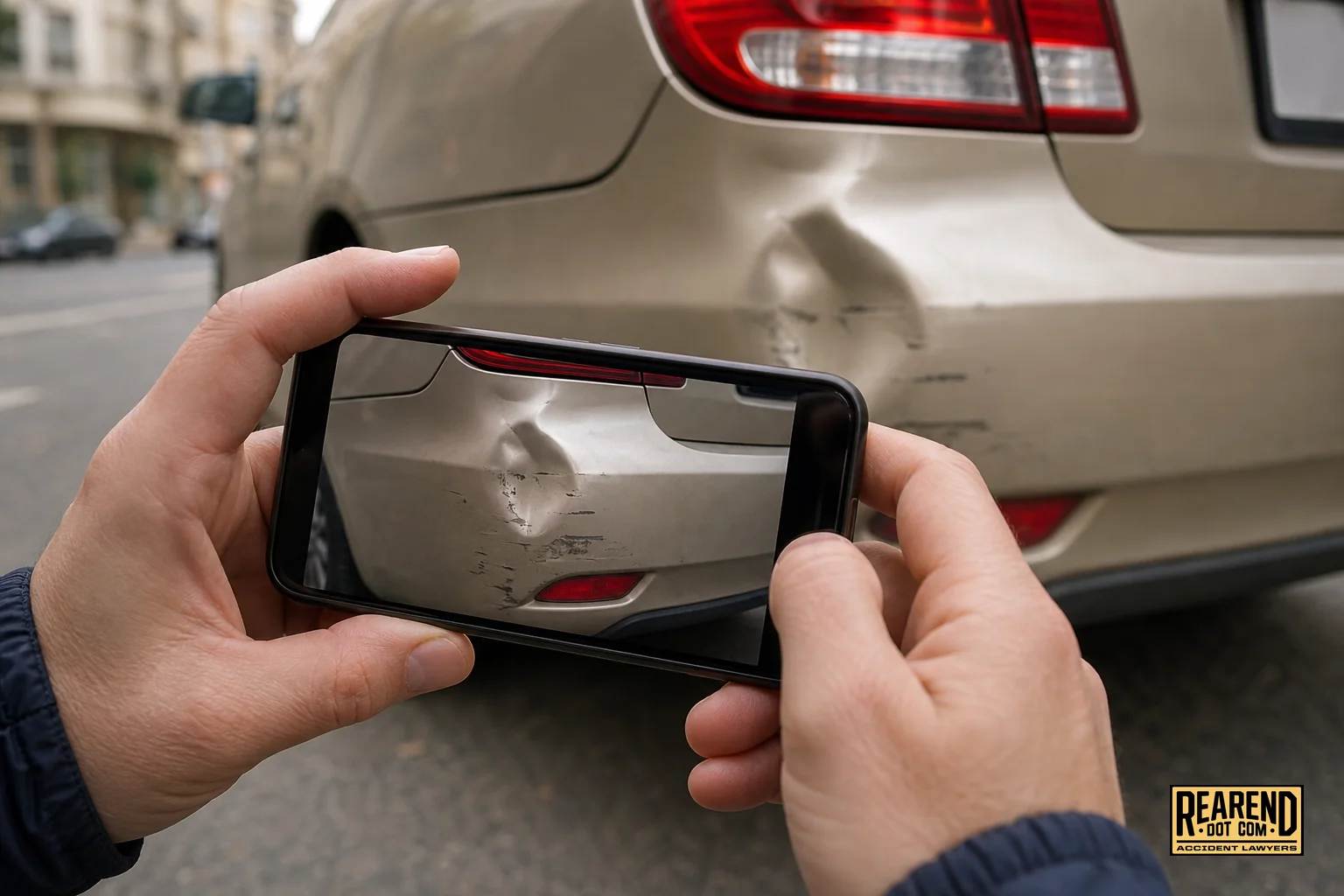
- Scene photos: Vehicle positions, skid marks, traffic signals, and damage patterns, taken before the scene clears.
- Dashcam or nearby surveillance footage: Video often settles fault questions faster than a written report ever could.
- Witness statements: Independent accounts from people who saw the crash and weren’t involved.
- Medical records: Documentation from every provider you saw, starting with the first visit.
- Repair estimates and vehicle damage photos: These can corroborate the mechanics of the impact even when the report’s diagram is off.
If you’re still early in the process, the rear-end accident checklist for the first 24 hours walks through how to collect this evidence before it disappears. And if the other driver’s account doesn’t match what actually occurred, dashcam footage can be especially persuasive, something covered in more depth in our piece on how documentation affects your San Diego claim.
3. Request a Report Correction or Supplement
Many law enforcement agencies allow you to submit a supplemental statement if you believe the report contains a factual error, like a misspelled name, an incorrect vehicle description, or a missing detail about how the crash happened. This usually involves contacting the reporting agency’s records division directly, in writing, and explaining specifically what needs correcting and why.
Some errors, like a diagram that doesn’t reflect the actual point of impact, may be harder to formally amend but can still be addressed through your own evidence rather than a report revision. Timelines for submitting corrections vary by agency, so it’s worth reaching out sooner rather than later once you notice a problem.
Keep in mind that officers sometimes decline to change a report if they believe it reflects what was told to them at the scene, even if one party later disputes it. That’s often where independent evidence becomes more important than the correction itself.
4. Let an Attorney Rebuild the Record During Case Review
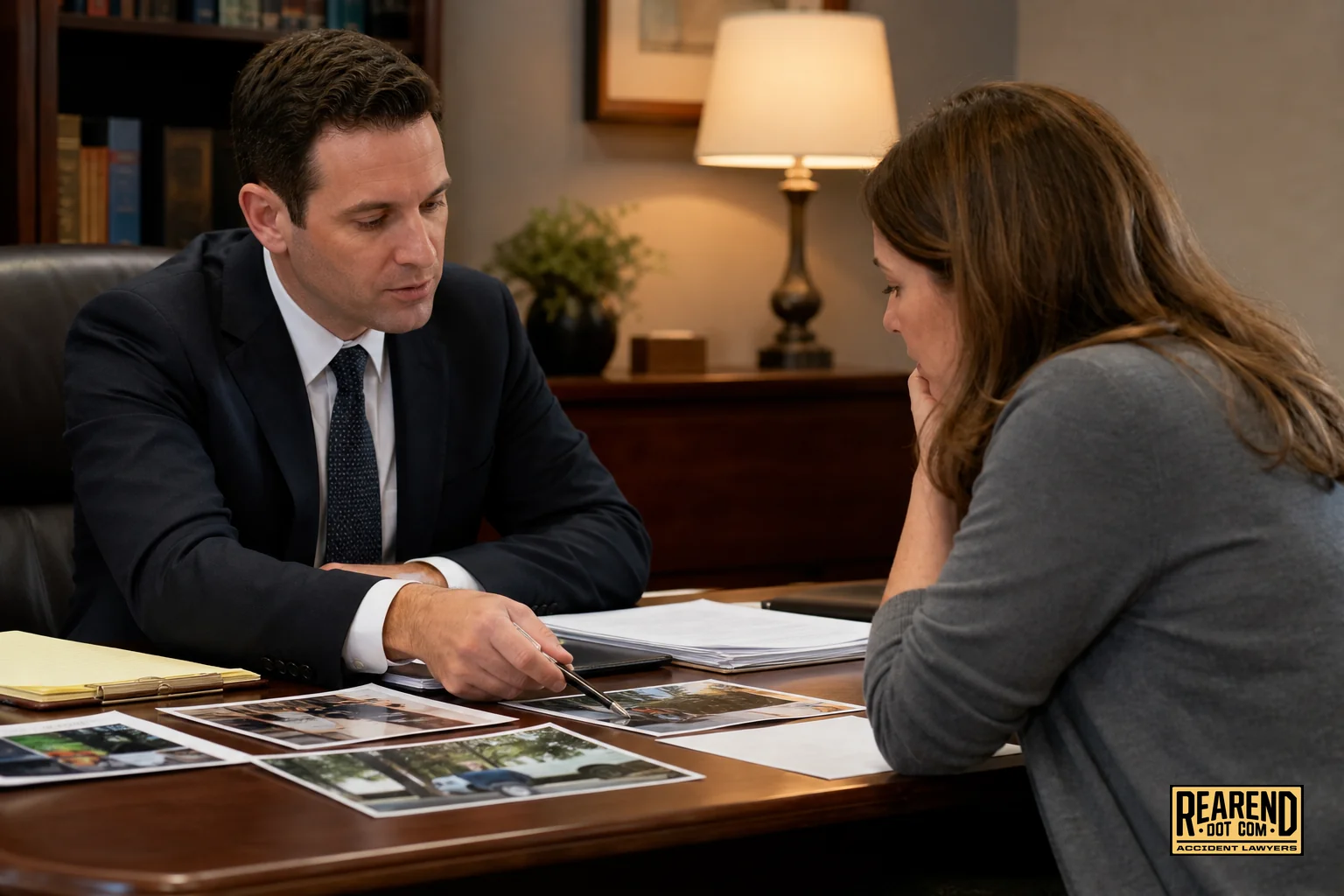
When a report contains errors, a rear-end accident attorney typically starts by requesting the full file, including officer notes, photos taken during the investigation, and any dispatch or radio logs that might clarify what actually happened. From there, the attorney can canvass for additional witnesses, pull traffic camera or business surveillance footage if available, and compare the property damage to the account in the report to see whether the physical evidence lines up.
This kind of case review is often where a flawed report gets neutralized. Instead of relying on the document alone, your attorney builds a broader record that insurance adjusters have to take seriously, even when the official report doesn’t tell the full story.
A police report error is a hurdle, not a wall. The strength of your claim usually comes down to what else you can document, and how quickly you act to preserve it.
You can review your claim in just a few clicks for free to find out how a flawed report might affect your specific situation, and what evidence could help offset it.
5. Anticipate How Insurance Adjusters Will Use the Error
Insurance adjusters occasionally seize on a report error to question fault or minimize a settlement offer. They might point to a missing citation as evidence the crash “wasn’t clearly the other driver’s fault,” or use a mismatched diagram to argue your account isn’t reliable. This tactic tends to fall harder on unrepresented victims who don’t know how to respond.
If an adjuster has already called you and raised questions about the report, it helps to understand your options before responding. Our guide on whether you should talk to an adjuster after an accident covers what to say and what to hold back. And if you’ve already received a number that feels too low, especially one that leans on report discrepancies, see will insurance pay if I was rear-ended or will they try to lowball me for what typically comes next.
Local Considerations Across California
Reporting agencies and their correction processes differ across the state. In San Diego, Los Angeles, Oakland, and San Jose, local police departments and the California Highway Patrol each handle report requests and supplemental statements a little differently, so it helps to know which agency filed your report before you try to fix it.
Coverage gaps can compound the problem. California’s minimum liability coverage is $30,000 per person and $60,000 per accident, an amount that may not stretch far if medical bills and lost wages add up, especially when a disputed report is already slowing down negotiations. Our breakdown on whether California’s minimum coverage is enough looks at how this plays out when the at-fault driver carries only the state minimum.
If you were a passenger rather than the driver when the crash happened, fault and reporting issues can get even more tangled. See passenger injured in rear-end accident not driver for how that situation is typically handled.
Frequently Asked Questions
Can I sue if there’s no police report at all?
Generally, yes. A lawsuit doesn’t require a police report in California. Photos, medical records, witness statements, and other documentation can support a claim even without one.
What if the officer didn’t cite the driver who hit me?
A missing citation doesn’t automatically mean the other driver wasn’t at fault. Traffic citations and civil liability are decided under different standards, and an attorney can help demonstrate fault through independent evidence.
How long do I have to request a correction to the report?
Timelines vary by reporting agency, so it’s worth contacting the records division as soon as you notice an error. Waiting too long can make it harder to track down witnesses or supporting documentation anyway.
Will a wrong report lower my settlement?
It could, if it goes unaddressed and the adjuster uses it to dispute fault. Building an evidence file that stands apart from the report is usually a sound way to help prevent that outcome.
Should I handle a report dispute myself or get help?
Many victims try to resolve report errors directly with the agency, but pairing that effort with a case review from an attorney who focuses on rear-end cases can help you understand what additional evidence might matter most for your specific claim.
A wrong or incomplete police report is stressful, but it doesn’t have to define the outcome of your claim. If an error in your report has you worried about your case, start my claim today for a free evaluation, and find out what additional evidence could strengthen your position. You can also find trusted local auto body shops while your claim moves forward, so the damage to your vehicle doesn’t have to wait on the paperwork getting sorted out.
Prior results do not guarantee a similar outcome. – Rearend.com
Related Articles


Need Legal Help After a Rear-End Accident?
Get a free consultation with our experienced legal team