
Rear-Ended While Stopped in Traffic What to Do in the First Hour
If you were rear-ended while stopped in traffic, the first hour matters more than most people realize. Check for injuries, move to safety if you can, call the police, document everything before the scene clears, and get a medical check even if you feel fine. What you do (and say) in that first hour can shape how your claim plays out later.
Key Takeaways
- Safety comes first: Move your car out of the traffic lane only if it’s drivable and safe to do so, then turn on hazard lights before anything else.
- Call the police even for minor damage: A police report creates an independent record of the crash that insurers and attorneys often rely on later.
- Photograph the scene fast: Traffic gets cleared quickly, so photos of damage, plate numbers, and road position need to happen before vehicles are moved or towed.
- Get checked by a doctor within a day or two: Adrenaline can hide soft tissue injuries that show up hours or days later.
- Be cautious with adjusters: Consider requesting a free case evaluation before giving a recorded statement to the other driver’s insurance company.
At a Glance: The First Hour Checklist
| Timeframe | Action | Why It Matters |
|---|---|---|
| 0-5 minutes | Check for injuries, turn on hazards, move to safety if possible | Prevents secondary collisions and further injury |
| 5-15 minutes | Call 911, request police response | Creates an official report of the crash |
| 15-30 minutes | Photograph damage, exchange info, talk to witnesses | Evidence often disappears once traffic clears |
| 30-60 minutes | Note officer’s name/badge number, get report number | Needed later to request the official report |
| Same day | Seek medical evaluation | Documents injuries close to the time of impact |
| Within 24 hours | Notify your own insurer with basic facts only | Most policies require prompt reporting |
| Before speaking to the other driver’s adjuster | Consider a free case evaluation | Recorded statements can be used to reduce your claim |
1. Check for Injuries and Move to Safety
Right after a rear-end crash, your body is flooded with adrenaline, which can mask pain for a while. Take a moment to check yourself and any passengers before doing anything else. Ask if anyone feels dizzy, has neck or back pain, or is having trouble moving.
If your car is still drivable and it’s safe to do so, move it out of the active traffic lane, ideally to a shoulder or nearby parking lot. Turn on your hazard lights right away. If you have flares or reflective cones in your trunk, this is the moment to use them, especially on a freeway or in low visibility. Staying in a live traffic lane after being rear-ended while stopped in traffic raises the risk of a second collision, so getting to a safer spot is often the priority right after checking for injuries.
If moving the car isn’t possible, or if anyone is seriously hurt, stay put, keep hazards on, and wait for help. Don’t attempt to move an injured passenger unless there’s an immediate danger like fire or a follow-up crash risk.
2. Call 911 and Request a Police Report
Even when the damage looks minor, calling the police is generally a good idea. An officer’s report gives you an independent, third-party account of what happened: the time, location, vehicles involved, and often a preliminary opinion on how the crash occurred. That record can become useful later if the other driver’s story changes or their insurer disputes what happened.
When the officer arrives, stick to the facts. Describe where you were stopped, what you felt or heard, and what you observed after impact. Avoid guessing about speed or intent, and don’t downplay how you feel just to move things along faster. Ask for the officer’s name, badge number, and the report or case number so you can request a copy later.
3. Document the Scene Before Traffic Clears It Away
Traffic control and tow trucks tend to clear a scene faster than most people expect, so try to gather evidence while the vehicles are still in place. Photograph the damage on both cars, including close-ups of dents, broken taillights, and any visible skid marks. Capture wider shots that show where each vehicle stopped relative to the traffic lane and any signals or signs nearby.
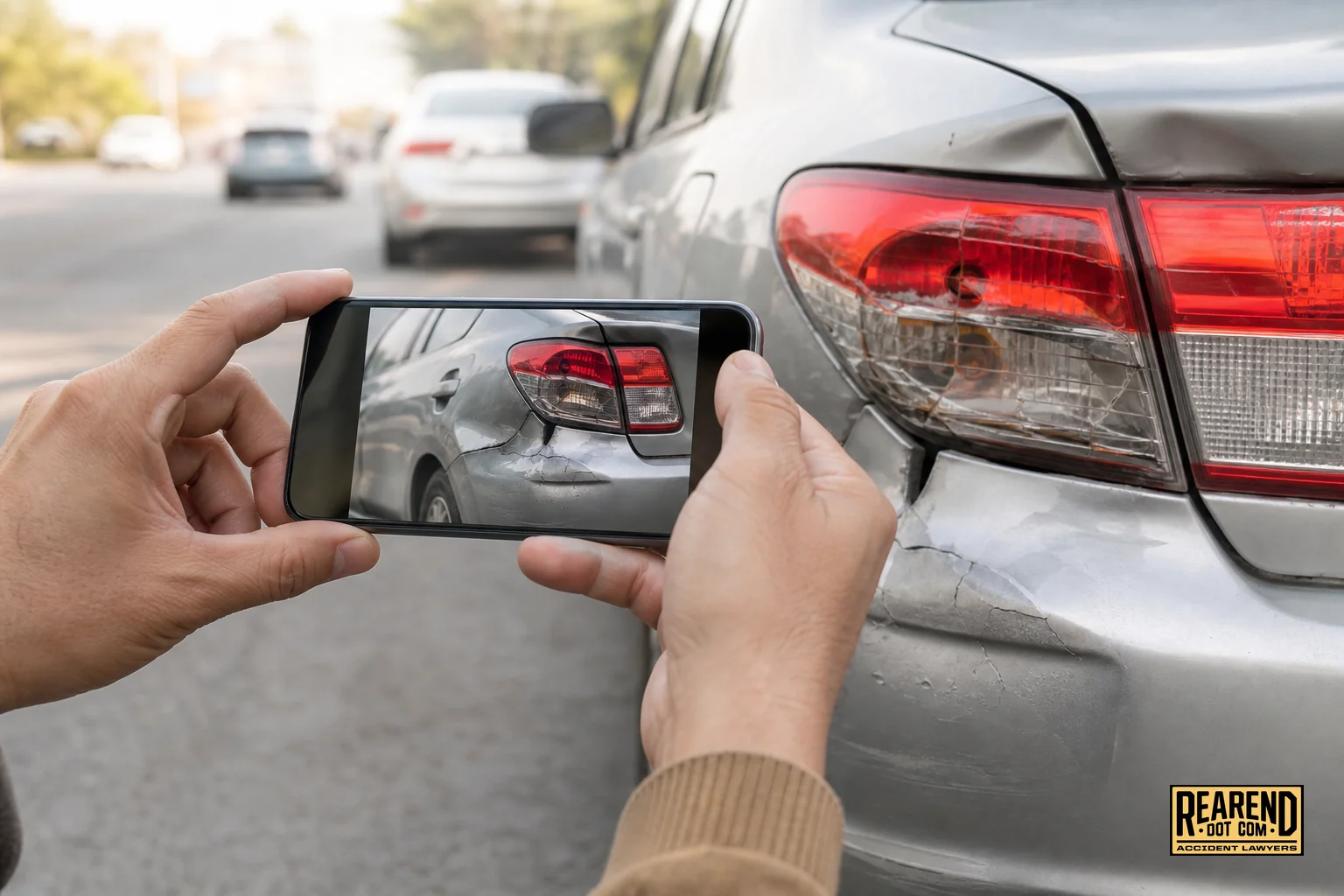
Get the other driver’s name, phone number, driver’s license number, license plate, and insurance information. Note the make, model, and color of their vehicle too, in case any details get mixed up later. If bystanders saw the crash, ask if they’re willing to share their name and contact info as a potential witness. Witnesses can be hard to track down once everyone has driven off.
If you’re unsure who was at fault, our guide on who typically pays after being rear-ended at a red light breaks down how fault is generally determined in these situations.
4. Get a Medical Check, Even If You Feel Fine
Soft tissue injuries like whiplash frequently don’t show symptoms right away. Many people who were rear-ended while stopped in traffic feel mostly normal at the scene, then wake up the next morning with a stiff neck or a headache that wasn’t there before. Getting checked out within a day or two creates a medical record that ties your symptoms to the crash date, which matters if you later pursue a claim.
If neck or back pain shows up in the days after your crash, it’s worth tracking how it develops. It may help to review what typically happens with delayed neck pain after a rear-end accident so you know what patterns are common and when to follow up with a doctor.
5. Notify Your Own Insurer, But Watch What You Say
Most auto policies require you to report a crash within a reasonable window, so contact your own insurer the same day if possible. Keep it factual: when and where it happened, which vehicles were involved, and that a police report was filed. You don’t need to speculate about who was at fault or how serious your injuries might turn out to be.
It’s generally fine to speak with your own insurer about basic facts. The bigger caution zone is the other driver’s insurance company, which is where the next step matters most.
6. Be Careful Before You Speak With the Other Driver’s Adjuster
It’s common for the at-fault driver’s insurance adjuster to call within a day or two of the crash, sometimes sooner. They may sound friendly and ask for a “quick recorded statement.” That statement can end up being used to minimize what your claim is worth, especially if you’re still learning the extent of your injuries.

You’re not generally required to give a recorded statement to the other driver’s insurer before you’ve had a chance to understand your situation. If an adjuster calls before you’ve seen a doctor or spoken with anyone about your rights, it may be worth pausing the conversation and requesting time to think it over. This is often the point where getting a free case evaluation before saying anything further can help you understand what information you actually need to share, and what you’re not obligated to answer yet. If you’re unsure whether the caller was really an adjuster or what they might ask, our article on whether insurance will pay fairly or try to lowball your claim covers common tactics to watch for.
What Rear-End Accident Costs Can Add Up To
The financial side of a rear-end crash tends to grow faster than people expect. Vehicle repair costs, medical bills from urgent care or physical therapy, and lost wages from missed work days can stack up within the first few weeks, well before any settlement is close.
In California, drivers are required to carry minimum liability coverage of $30,000 per person and $60,000 per accident. That may sound like a reasonable cushion, but a rear-end crash with ongoing physical therapy, imaging, or missed work can approach or exceed those limits fairly quickly, particularly in cities with heavy traffic congestion like San Diego, Los Angeles, Oakland, and San Jose. If you’re trying to figure out whether the at-fault driver’s coverage might fall short, our breakdown of whether California’s minimum coverage is enough after an Oceanside rear-end crash walks through how that math plays out.
Repair costs alone can be a source of frustration. If you’re trying to find a shop and aren’t sure where to start, you can find trusted local auto body shops to get an estimate without guessing which repair facility to trust.
How an Attorney Who Focuses on Rear-End Cases Can Help After the First Hour
Once the immediate scene is handled, many people find themselves unsure what comes next: how to talk to adjusters, how to track medical bills, and how to know if an early settlement offer is reasonable. This is where working with an attorney who focuses on rear-end cases, rather than a general practice, can be useful. It’s worth noting that no formal legal specialization exists specifically for rear-end collisions, but many attorneys build significant experience handling this particular type of case.
Rearend.com offers a free case evaluation and works on a no-fee-unless-you-recover-compensation structure, meaning you generally don’t pay legal fees out of pocket unless your case results in a recovery. If you’re curious how that no-fee model actually works in practice, our guide on who qualifies for no-fee rear-end representation explains the process step by step. And if you’re trying to figure out what questions matter most before signing with any attorney, our list of questions to ask a rear-end accident attorney before signing anything can help you evaluate your options.
Frequently Asked Questions
Should I move my car after being rear-ended in traffic?
If the vehicle is drivable and staying in the lane creates a safety risk, moving to the shoulder or a nearby safe spot is often reasonable. If anyone is injured or the car won’t move safely, it’s generally better to stay put with hazards on and wait for help.
Who pays for rear-end collision repair?
Rear-end collision repair costs are typically covered by the at-fault driver’s liability insurance, though this can depend on the specific facts of the crash and each state’s rules. Getting an estimate from a trusted repair shop early can help you understand the scope of the damage while your claim is being reviewed.
Can I sue if I was rear-ended with no visible injuries?
It may still be possible to pursue a claim even without visible injuries, since some injuries like soft tissue damage aren’t immediately obvious. A medical evaluation soon after the crash helps document any symptoms that appear later.
How long do I have to report the accident to my insurer?
Reporting requirements vary by policy, but most insurers expect prompt notice, often within a day or two. Reviewing your policy or contacting your agent directly can clarify the exact window that applies to you.
Being rear-ended while stopped in traffic is disorienting, and the choices you make in that first hour can affect your claim for months afterward. If you’re not sure what to say to an adjuster or how to protect your position before speaking further, you can start my claim today and get a free review of what happened. Taking that step early, before agreeing to a recorded statement, can help you avoid giving away information you didn’t need to share.
Related Articles


Need Legal Help After a Rear-End Accident?
Get a free consultation with our experienced legal team