
LA Rear-End Attorney: Auto Body Shop Referral Help
Your rear bumper is crushed. Your neck feels stiff. And somewhere between the tow truck and the first insurance phone call, you realize you now have two separate problems to solve: getting your car fixed and getting your injury claim handled. Most people searching for a rear-end accident attorney in Los Angeles don’t realize these two problems are far more connected than they seem, and treating them separately is exactly what lets insurance companies pay out less than they should.
In a city where the 405, the 10, and dozens of surface-street corridors see rear-end collisions every day, victims often assume the vehicle repair is a “car insurance” matter and the injury claim is a “legal” matter, handled by two different people who never talk to each other. That gap is where lowball tactics live. This guide explains how an attorney who focuses on rear-end cases can help connect you with a trusted auto body shop referral, why that referral is part of a free case evaluation rather than an upsell, and how coordinating your repair with your injury claim can help support the value of both.
Why Your Car Repair and Your Injury Claim Are More Connected Than You Think
When an insurance adjuster calls after a rear-end crash, the conversation often starts with the car, not your health. That’s not an accident. Property damage is usually easier to quantify, so adjusters use it as an entry point to build a file, and sometimes to start forming a narrative about how “minor” the crash was. If the repair estimate comes in low, that number can quietly follow you into the injury side of the claim, where an adjuster may argue that a low-damage crash could not have caused a significant injury.
This is precisely why coordinating the two processes matters. An attorney who focuses on rear-end collision cases understands that the body shop estimate, the photos of the damage, and the injury claim all tell one connected story. Handling them separately, especially without legal guidance, can leave gaps that an insurer is often quick to exploit.
Your car’s damage report and your medical claim are pieces of the same puzzle. When they’re handled by two disconnected parties, insurance companies may use that disconnect against you.
1. Understand What an Auto Body Shop Referral Actually Means
An auto body shop referral from a law firm is simply a list of vetted, local repair shops that have a track record of transparent estimates and quality work. It is not a kickback arrangement, and it does not require you to use a specific shop. You keep the right to choose any repair shop you trust, including your own mechanic if you have one.
What a referral does is remove a layer of guesswork during an already stressful time. Instead of Googling shops and hoping for the best, or defaulting to whichever shop the at-fault driver’s insurance company suggests, you get a starting point from a source that isn’t trying to protect an insurer’s bottom line. For many Los Angeles rear-end victims, this is one of the more overlooked parts of what a personal injury legal team may offer during intake.
It’s worth noting this service is generally offered as part of the free case evaluation, not a separate paid add-on. If you’re weighing whether hiring an attorney makes financial sense in the first place, our breakdown of rear-end accident lawyer cost and fees explains how contingency-based representation typically works.
2. How the Referral Process Fits Into Your Free Case Evaluation
The referral conversation usually happens early, often during the same intake call or questionnaire where you first describe the crash. Here’s roughly how it tends to unfold:
- Initial intake: You submit details about the crash through an online questionnaire or phone call, including where and when it happened, the other driver’s insurance information, and the state of your vehicle.
- Follow-up within 24 hours: A member of the legal team typically reaches out to review your answers, ask clarifying questions, and discuss next steps, including whether you’ve already been contacted by an adjuster.
- Vehicle damage discussion: This is usually where the body shop referral comes up. If you haven’t started repairs yet, or if you’re unsure whether to trust the insurer’s suggested shop, your intake contact can share a list of vetted local options.
- Coordinated next steps: From there, your repair and your injury claim move forward together, with your legal team aware of both so nothing falls through the cracks.
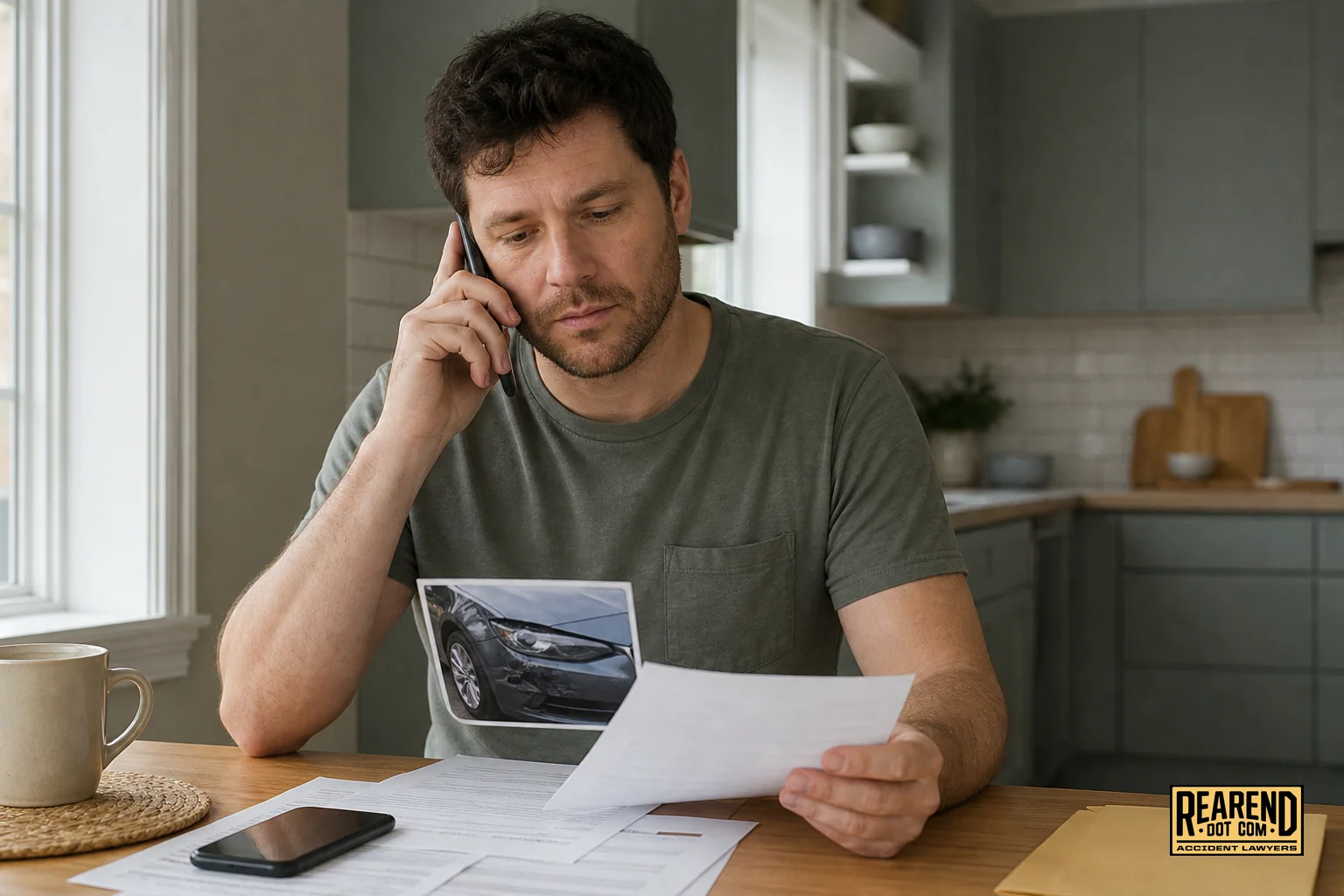
This process is designed to happen quickly because the first days after a crash are when insurance companies tend to be most active. If you haven’t yet submitted your claim details, you can review your claim in just a few clicks for free to see whether pursuing a case makes sense for your situation.
3. Why Insurance Companies Push Their Own Repair Shops in Los Angeles
Many insurers operate what’s known as a direct repair program, or DRP, a network of shops that agree to the insurer’s pricing structure and repair standards in exchange for a steady stream of referred work. These arrangements aren’t automatically bad, but the incentive structure is worth understanding: DRP shops answer to the insurance company’s volume relationship first, not necessarily to you.
In a dense market like Los Angeles, where rear-end crashes are common on corridors like the 405, the 10, and busy surface streets such as Sunset Boulevard or Wilshire, insurers process a high volume of repair claims. That volume can create pressure to move fast, sometimes at the expense of a thorough estimate. A rushed or low estimate can undervalue hidden damage, like frame misalignment or sensor recalibration issues common in newer vehicles with rear-mounted cameras and parking sensors.
This is one of several reasons having a rear-end accident lawyer engage with an insurance adjuster in Los Angeles can make a difference in how your full claim is evaluated. For more on that dynamic, see our guide on rear-end accident lawyer vs insurance adjuster in Los Angeles.
4. Coordinating Vehicle Repair With Your Injury Claim: Why It Matters
Vehicle repair records aren’t just about getting your car back on the road. They can also serve as supporting evidence for your injury claim. A detailed, itemized repair estimate that documents frame damage, suspension issues, or structural impact can help establish the force of the collision, which in turn supports the plausibility of your injuries.
Coordinating both processes through the same legal team can help you avoid a subtle but common problem: giving conflicting information to different parties. If you tell the body shop the impact was “pretty hard” but tell the insurance adjuster it was “not a big deal” out of politeness or uncertainty, that inconsistency can end up in your file and used against you later. Keeping your account consistent across every conversation, and having someone track that consistency for you, is one of the quieter benefits of working with an attorney who focuses specifically on rear-end cases.
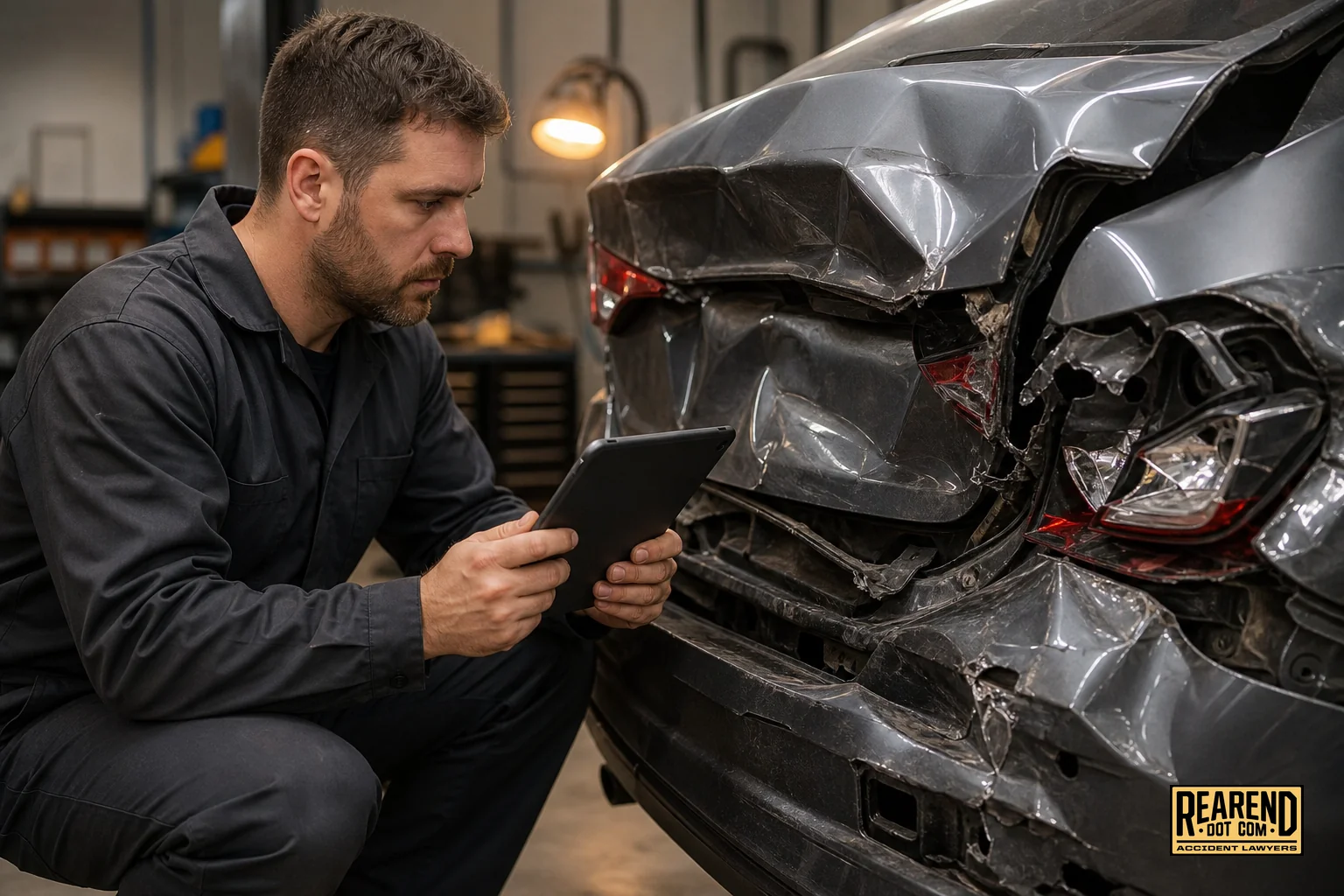
This is also where documentation becomes important for your broader claim. Photos of the damage, the shop’s written estimate, and any supplemental estimates for hidden damage can all become part of the record your attorney uses when negotiating with the insurance company. If you’re unsure how these pieces feed into what your case may ultimately be worth, our article on rear-end accident settlement amount factors victims rarely know about walks through several of them in more depth.
Auto Body Shop Referral vs Insurer’s Preferred Shop: A Side-by-Side Look
Understanding the practical differences between an attorney-referred shop and the insurance company’s preferred shop can help you make a more informed decision after a Los Angeles rear-end crash.
| Factor | Attorney-Referred Local Shop | Insurer’s Preferred (DRP) Shop |
|---|---|---|
| Who the shop primarily answers to | Works for you as the customer, not tied to a single insurer’s volume agreement | Operates under contract terms set by the insurance company |
| Estimate transparency | Generally provides itemized, independent estimates you can review | May follow insurer pricing guidelines that can undervalue hidden damage |
| Parts used | Often willing to discuss OEM vs aftermarket parts options with you directly | May default to aftermarket parts to control insurer costs, unless you push back |
| Repair timeline | Timeline set based on shop capacity and thoroughness | May be pressured toward faster turnaround to meet insurer expectations |
| Choice and flexibility | You choose whether to use the referral; no obligation attached | Often “recommended” by the adjuster, though you generally aren’t required to use it |
| Connection to your injury claim | Can be coordinated with your legal team so records support your full claim | Typically handled separately from your injury claim, with no coordination |
None of this means every DRP shop provides poor service. Many are competent and reputable. The point is that you generally have a choice, and knowing the incentive structure behind each option helps you decide which route better protects your interests, both for your car and for your claim.
5. Questions to Ask Before Choosing a Body Shop After a Rear-End Crash
Whether you go with an attorney’s referral, your own mechanic, or the insurer’s suggested shop, a few questions can help you avoid surprises:
- Will you use OEM (original equipment manufacturer) parts, or aftermarket parts? Ask which the shop plans to use and why, since this can affect long-term value and safety performance.
- What warranty comes with the repair work? Reputable shops generally stand behind their labor and parts for a defined period.
- Will the shop document hidden damage separately? Rear-end collisions can damage components that aren’t visible from the outside, like the trunk frame, exhaust system, or backup sensors.
- How will a rental car be handled during repairs? Some shops coordinate directly with rental companies; others leave that entirely up to you.
- Can I get a copy of the full written estimate? Keep this for your records. It may become relevant to your injury claim later.
If you’re not sure how to evaluate these answers on your own, that’s another reason a vetted referral network can help. A shop that’s used to working alongside personal injury attorneys is generally accustomed to producing the kind of documentation that supports both a smooth repair and a well-supported claim.

6. What Los Angeles Victims Should Know About Local Traffic and Claim Timing
Los Angeles traffic patterns play a real role in why rear-end collisions happen so often here. Stop-and-go congestion on corridors like the 405, the 10, and the 101, combined with distracted driving and dense surface-street intersections, creates frequent conditions for sudden braking and rear impacts. If you were hit in one of these high-traffic areas, you’re far from alone, and insurers in this market handle a high volume of similar claims every week.
Claim timing and repair timing tend to move on parallel but not identical tracks. Your vehicle repair might wrap up in a few weeks, while your injury claim could take considerably longer, especially if you’re still receiving medical treatment. Settling too early, before your medical treatment is complete, is a common mistake that can undervalue your claim. For a broader look at how these timelines typically play out, see how long a rear-end accident settlement typically takes from filing to payment.
It’s also worth understanding California’s minimum insurance requirements, since they affect how much money may actually be available to compensate you. California generally requires drivers to carry at least $30,000 per person and $60,000 per accident in liability coverage, according to the California Department of Motor Vehicles. If the at-fault driver only carries the state minimum, and your damages exceed that amount, your attorney may need to explore other avenues, such as your own underinsured motorist coverage, to help make you whole. The Insurance Information Institute offers additional background on how underinsured motorist claims generally work.
If you’re still deciding whether to bring on legal representation at all, it may help to review some common warning signs first. Our guide on red flags when hiring a personal injury lawyer after a rear-end crash covers what to watch for before you sign anything.
Frequently Asked Questions
Does using an attorney’s referred body shop cost extra?
Generally, no. A referral to a vetted local shop is typically offered as part of the free case evaluation process. You still pay for repairs the same way you would with any shop, usually through the at-fault driver’s insurance if liability is accepted, or through your own coverage depending on your policy.
Can I still use my own mechanic instead of a referral?
Yes. A referral is a suggestion, not a requirement. You’re generally free to use any licensed repair shop you trust, including one you’ve used before.
What if the insurance company denies or lowers my repair estimate?
This happens more often than many victims expect, especially when hidden damage is discovered mid-repair. An attorney can help push back on a denied or reduced estimate and can factor that dispute into the broader injury claim strategy.
How does coordinating my repair with my injury claim affect what my settlement may be worth?
There’s no set formula, since every case depends on its own facts, including your injuries, treatment, and the strength of your documentation. What coordinating the two processes can do is help make sure your file tells one consistent, well-supported story instead of two disconnected ones, which may help you avoid common pitfalls insurers look for. For a deeper look at how settlement values are typically calculated, see how much a rear-end accident lawyer typically costs on a contingency basis.
I haven’t hired an attorney yet. Is it too late to get help with a body shop referral?
Likely not, especially if repairs haven’t been finalized or if you haven’t yet accepted a settlement offer. The earlier you connect with a legal team, the more they may be able to help coordinate both sides of your claim.
Take the Next Step Toward a Coordinated, Well-Documented Claim
Getting rear-ended in Los Angeles is disorienting enough without having to figure out, on your own, whether the repair shop and the insurance adjuster are actually looking out for you. A legal team that focuses on rear-end collision cases can help connect the dots between your vehicle repair and your injury claim, so one doesn’t quietly undercut the other. If you’re ready to see what a coordinated approach could look like for your situation, you can start my claim today and get matched with guidance built specifically for rear-end crash victims.
And if your car still needs work, you don’t have to guess which shop to trust. You can find trusted local auto body shops as part of the same free evaluation process, so your repair and your claim move forward together instead of working against each other.
Prior results do not guarantee a similar outcome. — Rearend.com
Related Articles


Need Legal Help After a Rear-End Accident?
Get a free consultation with our experienced legal team