
Brake Checking: What It Means for Fault in a Rear-End Accident Claim
Brake checking is when a driver taps or slams the brakes on purpose to startle or punish the car behind. In a rear-end accident claim, an insurer may point to it to argue that the lead driver shares the blame. Whether a sudden stop was a brake check or a normal reaction is decided by evidence, and fault rules vary by state.
Key Takeaways
- Brake checking is intentional. A stop caused by traffic, a hazard, or a pedestrian is ordinary driving, and the difference between the two is the heart of most disputes.
- Insurers raise it for a reason. Moving even part of the blame to the lead driver can lower what the insurer is asked to pay.
- Fault turns on two questions. Why did the lead driver stop, and did the rear driver leave enough room and attention to stop safely?
- Early evidence carries weight. Dashcam video, nearby cameras, witnesses, photos, and a factual timeline are easier to gather in the first days than months later.
- The first review costs nothing. rearend.com offers a free, no-obligation case review, and fees are charged only if compensation is recovered.
Brake Checking at a Glance
| Question | Short answer | What helps |
|---|---|---|
| What is brake checking? | Braking hard on purpose to startle or punish the driver behind | Evidence of why the car actually stopped |
| Why do insurers raise it? | To shift part of the blame to the lead driver and reduce the payout | Records showing a real reason to stop |
| What decides fault? | The reason for the stop, plus the rear driver’s distance, speed, and attention | Photos, video, witness accounts, the police report |
| Which evidence matters? | Dashcam and nearby camera footage, witnesses, 911 records, vehicle data | Collect early, because footage is often overwritten |
| What should you do first? | Get medical care, photograph the scene, write a factual timeline | Careful wording with insurers; no guessing about speed |
| What does the first review cost? | A free, no-obligation case review; no fees unless compensation is recovered | Submit the intake at rearend.com |
You are sore, your car is damaged, and now an adjuster is hinting that the crash was partly your doing. That is a stressful turn, and it happens to drivers in San Diego, Los Angeles, Oakland, San Jose, and well beyond, wherever traffic stops and starts quickly. This guide explains the brake checking defense in plain language so you can walk into a case review knowing what you are up against.
What Is Brake Checking in Plain Language?
Brake checking is hard or sudden braking done on purpose to startle, scare, or punish the driver behind you, usually because that driver seems too close. It is different from a stop caused by a real hazard, a pedestrian, or slowing traffic. Intent and circumstances separate the two.
Picture a driver on a busy boulevard who feels a car riding close behind. Annoyed, the driver taps the brakes hard with nothing ahead to slow for. The follower hits the bumper. That is the textbook version, and it is often described as a form of road rage.
The trouble is that the crash itself looks the same either way. Brake lights come on, the cars meet, and two drivers walk away with two stories. One says “I had to stop.” The other says “they stopped for no reason.”
That gap is why the topic matters to your claim. Nobody can see inside a driver’s head, so intent has to be worked out from what can be seen and recorded: the road ahead, the timing, the spacing between the cars, and what each driver said and did afterward.
Brake checking versus a sudden stop
Most sudden stops are not brake checks. Drivers brake hard for yellow lights, merging cars, animals, debris, and stopped traffic around a curve. A driver who braked hard for a reason that is visible in the evidence was driving normally, even if the stop surprised the car behind.
Brake checking, by contrast, has no reason ahead of it. The braking exists to send a message. Because the two look alike after a crash, insurers sometimes use the label loosely, and some claimants are accused of it simply because they stopped in front of someone who then hit them.
Why Do Insurers Raise Brake Checking After a Rear-End Crash?
Insurers raise brake checking because it can move some of the blame from the rear driver to the lead driver. A rear-end crash often starts with the assumption that the driver in back followed too closely. A brake-check claim gives the adjuster a reason to reduce or dispute what the insurer pays.
Think about the adjuster’s starting point. In many rear-end cases, the driver in back is expected to leave enough room to stop. If the insurer cannot change that picture, its insured is mostly responsible. Raising brake checking is one way to change the picture.
It also costs the insurer very little to ask. A single question on a recorded call can plant the idea that you stopped without reason. If you answer carelessly, your own words may later be used to support a lower offer.
What an adjuster may ask you
Questions about your stop are not always signs of bad faith, but they are rarely idle. Expect some version of these:
- Why did you stop, and what was in front of you?
- How fast were you going before you braked?
- Were your brake lights working?
- Did you brake hard, or slow down gradually?
- Were you on your phone or distracted?
Each answer can be taken apart later. A confident guess such as “I was going about 35” can become a problem if video shows otherwise. Saying “I’m not sure” about a detail you truly do not remember is usually safer than guessing.
When the claim comes from the other direction
Brake checking can also come up when you were the rear driver and believe you were set up. In that situation you may be the one asking why the car ahead stopped. The same evidence applies, but you may also face the argument that you were following too closely, so your spacing and attention get examined as well.
Fault rules vary by state
States handle shared fault in different ways, so the same set of facts can lead to different results depending on where the crash happened. Some states reduce compensation by the share of blame assigned to a driver. Others use different approaches. This article does not apply any one state’s rule to your situation, and an attorney reviewing your case can explain the rule that fits yours.
The three main systems work like this. Under pure comparative fault, compensation is reduced by your percentage of blame, however large. Under modified comparative fault, the reduction applies, but a claimant whose share passes a state-set cutoff may recover nothing. Under contributory negligence, any share of blame can bar recovery. Check your state’s statute or your state DMV for which one applies.
Worked hypothetical: if an evaluator assigns one fifth of the fault to the claimant, a comparative system cuts the payout by one fifth, so damages of five equal parts become four. Under contributory negligence, that same share could leave nothing.
Brake checking can also be treated as aggressive driving or road rage, and some states have traffic laws on following distance. Look up your state’s vehicle code for the exact wording.
How Is Fault Evaluated When the Lead Driver’s Sudden Stop Is Disputed?
Fault is evaluated by asking two questions: why the lead driver stopped, and whether the rear driver left enough room and attention to stop safely. Evidence on speed, distance, road conditions, brake lights, and driver statements shapes the answer. Fault may rest on one driver or be shared, depending on state rules.
Hypothetical: suppose a car is traveling 35 mph and the lead car brakes hard with nothing ahead. If the rear driver left only a short gap and hit the bumper, an evaluator may find the rear driver mostly at fault for following too closely, and perhaps assign the lead driver a share if video shows no reason to stop.
If the gap was ample and the rear driver was attentive, the same impact points back toward the lead driver. Courts in New York treat a rear-end collision with a stopped vehicle as creating a prima facie case of negligence for the moving driver, who must give a non-negligent explanation.
Nobody scores these cases with a formula. An adjuster, and later an attorney, weighs the facts against each other. A broader look at this process appears in our guide to how you prove fault in a rear-end accident. Here is how the two questions play out.
The lead driver’s reason for stopping
The first question is whether something ahead of the lead driver justified the stop. Evaluators look for a red or yellow light, slowing traffic, a car pulling out, a pedestrian, an animal, or debris. They also look at the opposite: an open road with no obstacle in view.
If the evidence shows a normal reason, the brake-check argument loses much of its force. If the evidence is silent, the insurer may fill the gap with its own version. That is why records showing the road ahead, such as video, photos, and witness accounts, are so useful.
The rear driver’s room and attention
The second question looks at the driver behind. Drivers are generally expected to keep enough space to react if the car ahead brakes. Evaluators consider speed, following distance, road and weather conditions, and whether the driver was distracted.
A hard stop does not erase that expectation. A driver who left a safe gap and was paying attention would usually have time to stop, even when the car ahead braked sharply. A driver who was too close or looking elsewhere has a harder time explaining the impact.
Where the two accounts meet
Once both sides are looked at, the results can fall anywhere along a spectrum. Fault may rest mostly with the rear driver, be divided between both drivers, or in the less common case rest mostly with the lead driver. What an insurer asserts early on is a negotiating position, not a final answer.
The physical facts also tell part of the story. The location of the damage, the severity of the impact, and the position of the cars after the crash can support or undercut either driver’s account. A sudden stop in heavy, slow traffic reads very differently from a sudden stop on a clear, open stretch of road.
What Evidence Can Show Whether It Was Brake Checking?
Dashcam video, nearby camera footage, witness accounts, the police report, 911 audio, vehicle data, and photos of the damage and road can help show why a car stopped. A single item rarely settles it, so a stronger record combines several.
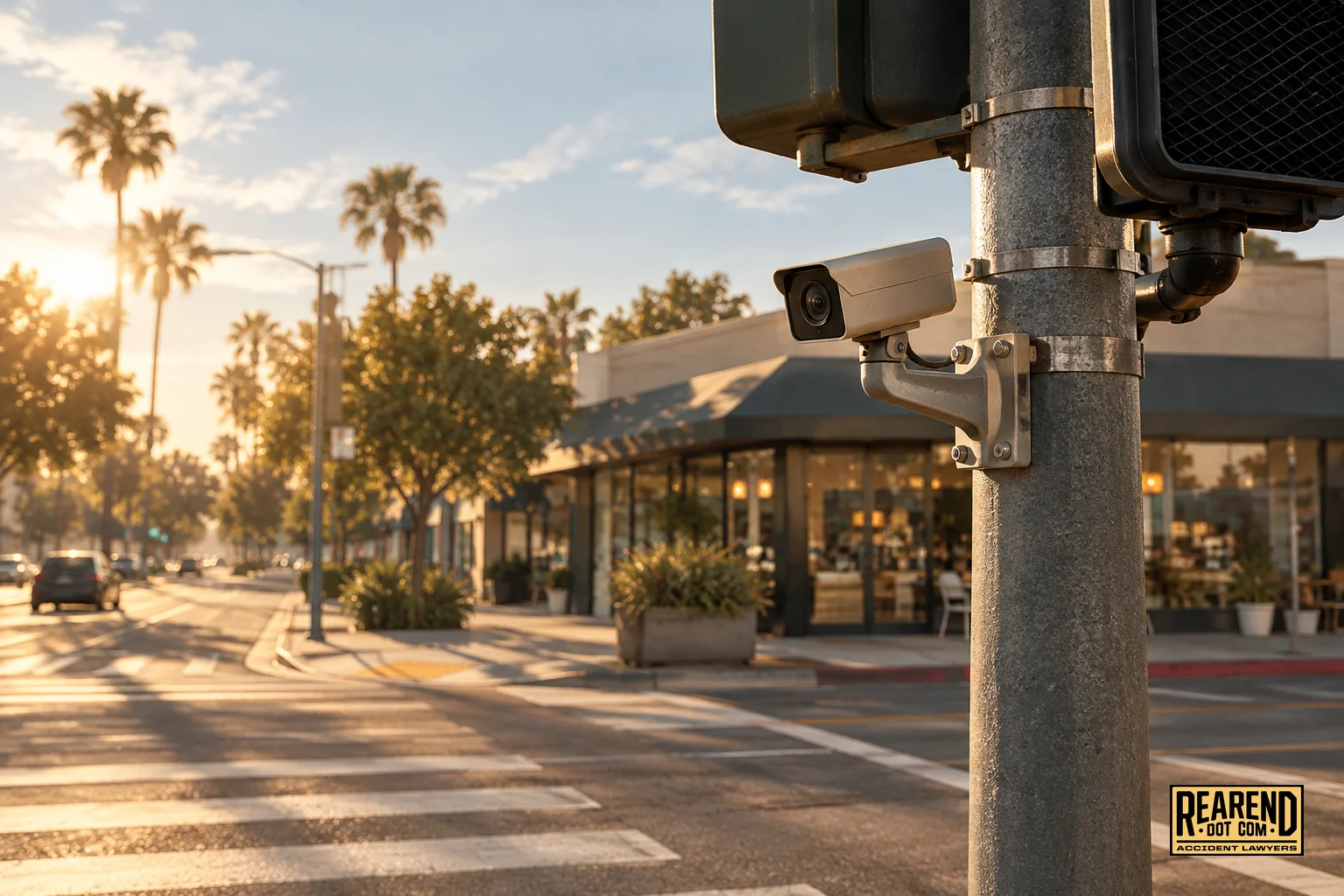
Different sources answer different questions. Video tends to show what was happening ahead. Witnesses can describe whether the braking looked abrupt or routine. Photos and vehicle data speak to speed, spacing, and impact. The table below sets out what each source can help with and how soon to act.
| Evidence | What it can help show | Timing note |
|---|---|---|
| Dashcam video | What was ahead, how fast traffic moved, spacing between cars | Save the original file right away |
| Traffic, store, or doorbell cameras | Traffic flow and how the crash unfolded | Many systems record over footage after a short period, so ask soon |
| Witness accounts | Whether the stop looked abrupt or routine | Names and numbers are easiest to get at the scene |
| Police report | Officer notes, driver statements, any citations | Request a copy; a report may not settle fault |
| 911 call records | Early descriptions of what happened | Records may be kept for a limited time |
| Vehicle data | Speed and braking in the seconds before impact, where recorded | Avoid disposing of the car before it is documented |
| Photos of damage and road | Impact points, tire marks, debris, lane position | Take them before cleanup and repairs |
| Medical records | The link between the crash and your injuries | Follow the treatment plan and keep the paperwork |
Brake lights deserve their own mention. If a bulb was out on your car, an insurer may argue the driver behind had no warning. Checking and photographing the lights, and keeping repair records, can address that point before it becomes a dispute.
Many newer vehicles record speed and braking information in the seconds around a crash. Whether it can be retrieved depends on the vehicle and the circumstances. If your car may be totaled or repaired, ask about preserving that data before anything is sold or scrapped.
Gathering these items is slow, technical work, and it is the part of a claim most people never see. To understand what that looks like, read about how a lawyer investigates a rear-end accident.
What Should You Do First If the Other Driver’s Insurer Says You Brake Checked?
Get medical care, photograph the scene and your vehicle, collect witness contact details, and keep your account factual. Avoid guessing about speed or distance, and avoid wording that sounds like blame. Then speak with an attorney before giving a recorded statement to the other driver’s insurer.
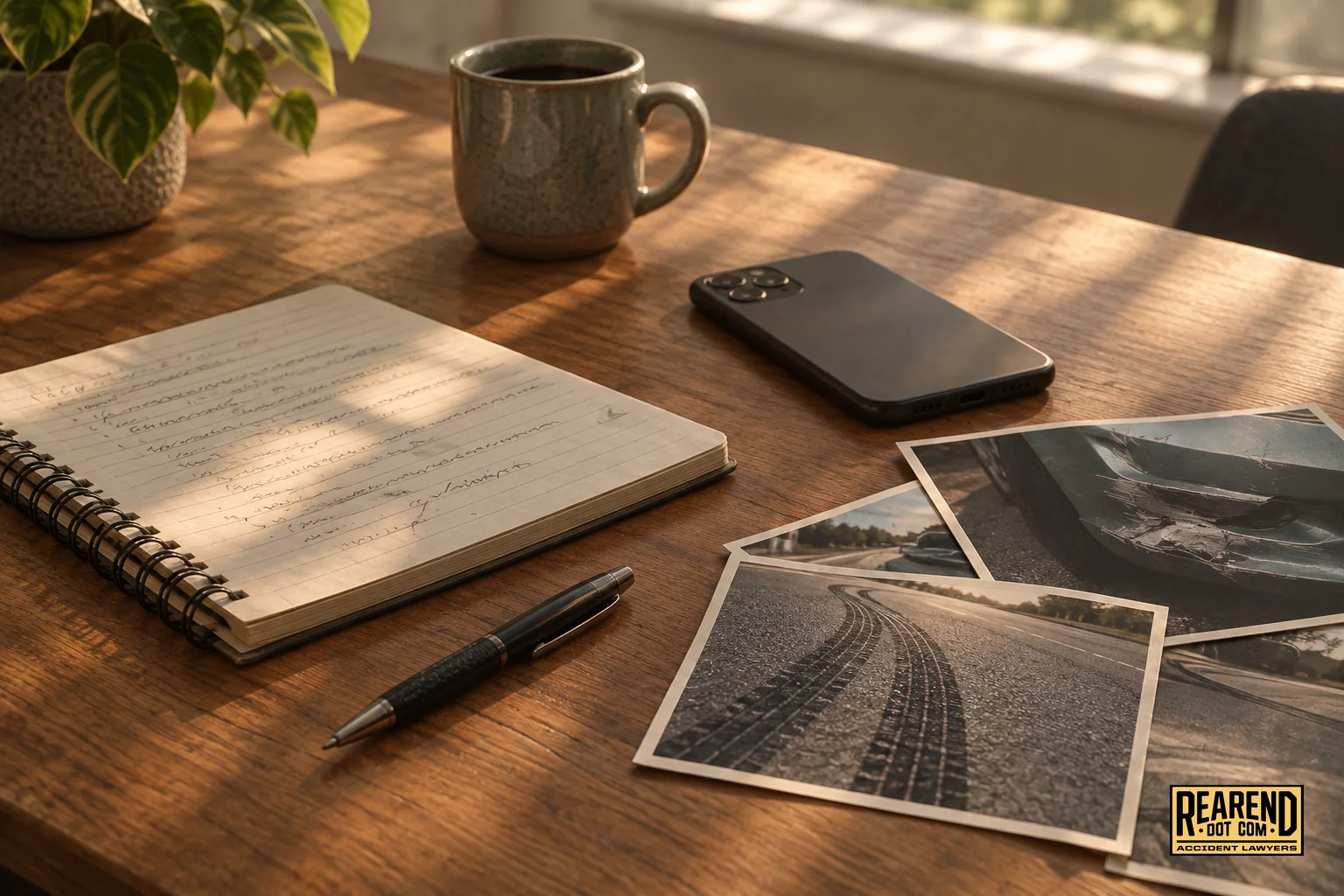
These steps are in rough order. Some happen at the scene, and some can start days later, so do what you can with the time you have.
- See a medical provider. Neck, back, and head symptoms can show up later, and a gap between the crash and treatment gives an insurer room to question your injuries.
- Photograph the vehicles, the lane, the brake lights, any tire marks, and the road ahead of where you stopped. Wide shots help show what was in front of you.
- Note nearby cameras and get witness names and phone numbers. A shop with a camera over its door could hold the footage that settles the question.
- Write a timeline while your memory is fresh. Include where you were headed, what you saw ahead, why you slowed, and what happened next. Stick to facts.
- Keep your wording simple with insurers. Say what you know, say “I’m not sure” when that is true, and skip theories about the other driver’s motives.
- Stay off social media about the crash. A casual post can be read very differently once a fault dispute begins.
- Talk to an attorney before you give a recorded statement to the other driver’s insurer.
Document the damage before repairs begin
Repairs change the physical evidence. Once a bumper is replaced, impact points and crush patterns are harder to show. Photograph your car from several angles and keep the estimate first. After that, you can browse trusted local auto body shops through rearend.com to line up the repair.
Be straight about what happened
If you braked because the car behind seemed too close, say so plainly to your attorney. A fact the legal team hears early is easier to work with than one an adjuster brings up later. Braking for a reason is different from braking to send a message, and a clear account helps tell the two apart.
Common Questions About Brake Checking and Fault
Is brake checking the same as stopping suddenly?
No. A sudden stop can be an ordinary reaction to a hazard, a pedestrian, or traffic ahead. Brake checking is braking hard on purpose to startle or punish the driver behind. After a crash the two can look alike, so the reason for the stop and the surrounding evidence become the focus.
Does an insurer’s brake checking claim mean I lose my claim?
Not necessarily. An accusation is not a finding. The insurer may use it to argue for a lower payout, but the claim is evaluated on the evidence, including why you stopped and how much room the other driver left. How shared fault is treated depends on your state’s rules.
Can I still file a claim if the insurer says I was partly at fault?
Often yes, but the result depends on state rules about shared fault. Some states reduce compensation by the share of blame assigned to you, while others handle it differently. An attorney who focuses on rear-end accident cases can explain how your state treats it during a free case review.
Does a free case review create an attorney-client relationship?
No. Submitting a contact form or intake questionnaire does not create an attorney-client relationship. That relationship begins through a formal, signed engagement agreement. Until then, you can ask questions about your situation, including a brake-checking accusation, without obligation or an upfront cost.
How much does a brake-checking dispute cost to bring to rearend.com?
The case review at rearend.com is free and carries no obligation. Personal injury cases are handled on a contingency fee basis, with no hourly fees, so you pay nothing up front and no fee is owed unless compensation is recovered. Ask for the fee terms in writing before you sign.
One point stays unsettled in many of these disputes: intent. Even with good video, two reasonable people can disagree about whether a stop was a warning tap or a necessary reaction. That uncertainty is one reason an early review of the facts is worth your time.
Your Next Step: A Free, No-Obligation Case Review
If an insurer is suggesting you caused your own rear-end crash, you do not have to sort it out alone. rearend.com focuses on rear-end collisions. You can submit your information in minutes, and you are matched with an attorney who can look at how the stop, the spacing, and the evidence fit together.
The legal team contacts you within 24 hours to discuss your case. The review is free, and you pay nothing unless compensation is recovered on your behalf. To see what comes after that first call, read what happens after you submit a rear-end accident claim.
Many people also want a rough sense of value before they call. You can calculate an estimate of what your potential claim could be worth. Treat it as a general starting point only. It cannot predict an outcome, and a fault dispute such as a brake-checking accusation can change how a claim is evaluated.
Ready to have the facts looked at? Start your claim at rearend.com and let the legal team review what happened. This article is general information, not legal advice, and fault rules vary by state.
Recommended Resources
Start My Claim Find Trusted Local Auto Body Shops Calculate an estimate of what your potential claim could be worth
Related Articles


Need Legal Help After a Rear-End Accident?
Get a free consultation with our experienced legal team