
What Is a Diminished Value Claim After a Crash?
A diminished value claim gets you money for a hidden loss. It covers the gap between what your car was worth right before a rear-end collision, and what it’s worth after repairs. This holds true even when the bodywork looks flawless. Buyers and dealerships generally pay less for a car with a documented crash on its history report. That lost resale value is a separate form of compensation from your repair bill.
Key Takeaways
- Separate from repair costs: A diminished value claim covers lost resale value. It does not cover the cost of fixing the bumper or frame.
- Applies even after perfect repairs: Vehicle history reports flag the accident no matter how good the repair is. Many buyers offer less money because of it.
- California’s minimum coverage may limit recovery: The at-fault driver’s insurer may only carry the state’s minimum liability limits of $30,000 per person and $60,000 per accident. This can cap what’s left once medical bills and repairs are paid.
- Documentation drives the outcome: Pre-crash value estimates, repair invoices, and an independent appraisal strengthen a claim far more than a verbal request.
- Insurers often undervalue these claims: Formula-based lowball calculations and delay tactics are common. This is part of why many claimants seek legal guidance before accepting an offer.
At a Glance: Diminished Value Claim Basics
| Question | Typical Answer |
|---|---|
| What does it cover? | Lost resale/trade-in value after a documented accident, separate from repair costs |
| Who generally pays? | The at-fault driver’s liability insurer, in many first-party and third-party situations |
| Who can typically file? | The vehicle owner, often the driver who was not at fault |
| Key documentation | Pre-accident value estimate, repair invoices, vehicle history report, independent appraisal |
| Common insurer tactic | Formula-based calculations (such as the “17c” method) that may understate the real loss |
| California minimum coverage | $30,000 per person / $60,000 per accident in liability limits |
| Typical timing | Filed after repairs are complete, often alongside or after a bodily injury claim |
What Is a Diminished Value Claim After a Rear-End Accident?
A diminished value claim is a request for money. It covers the drop in your car’s market value that happens once it has an accident on record. This happens even though the repairs restored its function and look. Insurers and courts generally treat this loss as real financial harm. It’s separate from the physical repair itself.
Picture a two-year-old sedan rear-ended at a stoplight. The shop replaces the bumper, repaints the trunk lid, and blends the panels so well that a friend couldn’t spot the damage. On paper, the car looks the same as it did the day before the crash.
But run a vehicle history report and the accident shows up permanently. A dealership appraiser sees it too. Buyers who compare two otherwise identical cars generally offer less for the one with a documented rear-end collision. That gap in price is what a diminished value claim is meant to recover. The steps below walk through how that claim actually comes together, from documentation to demand letter.
1. Understand How Diminished Value Differs From Repair Cost Reimbursement
Repair cost reimbursement pays the body shop to fix physical damage. Diminished value pays you for the resale value the car lost, even after that repair is done and paid for. They are two different checks, from two different calculations. Settling one does not automatically settle the other.
This distinction matters because many claimants assume that once the shop bill is covered, their financial loss is over. It often isn’t. If your vehicle was drivable and got repaired instead of totaled, the diminished value portion of your loss can still be sitting on the table. You have to raise it yourself. For a broader look at how the repair side of a claim typically works, see our guide on what happens if insurance denies a rear-end claim.
2. Confirm Who Can File a Diminished Value Claim
Generally, the owner of a damaged vehicle who was not at fault can pursue a diminished value claim. This claim goes against the at-fault driver’s liability insurer. Some claimants also explore this option through their own insurer, depending on their policy and state rules.
In California, liability coverage minimums sit at $30,000 per person and $60,000 per accident. Say the at-fault driver carries only the state minimum. If medical bills or injury payments already use up a large share of that limit, there may be little left for a diminished value claim. This is one reason claimants in Los Angeles, San Diego, Riverside, Oakland, and San Jose sometimes find their recovery capped by policy limits rather than by the actual value lost.
Leased and financed vehicles can complicate things further. The leasing company or lender may have a financial stake in any settlement. If you’re unsure whether your situation qualifies, a free case evaluation can help clarify whether pursuing a diminished value claim makes sense for your vehicle and policy.
3. Gather the Documentation That Supports the Claim
Strong diminished value claims generally rest on documentation. That paperwork should show both what the car was worth before the crash and what it’s realistically worth now. Weak claims tend to rely on a single number with no supporting paper trail.
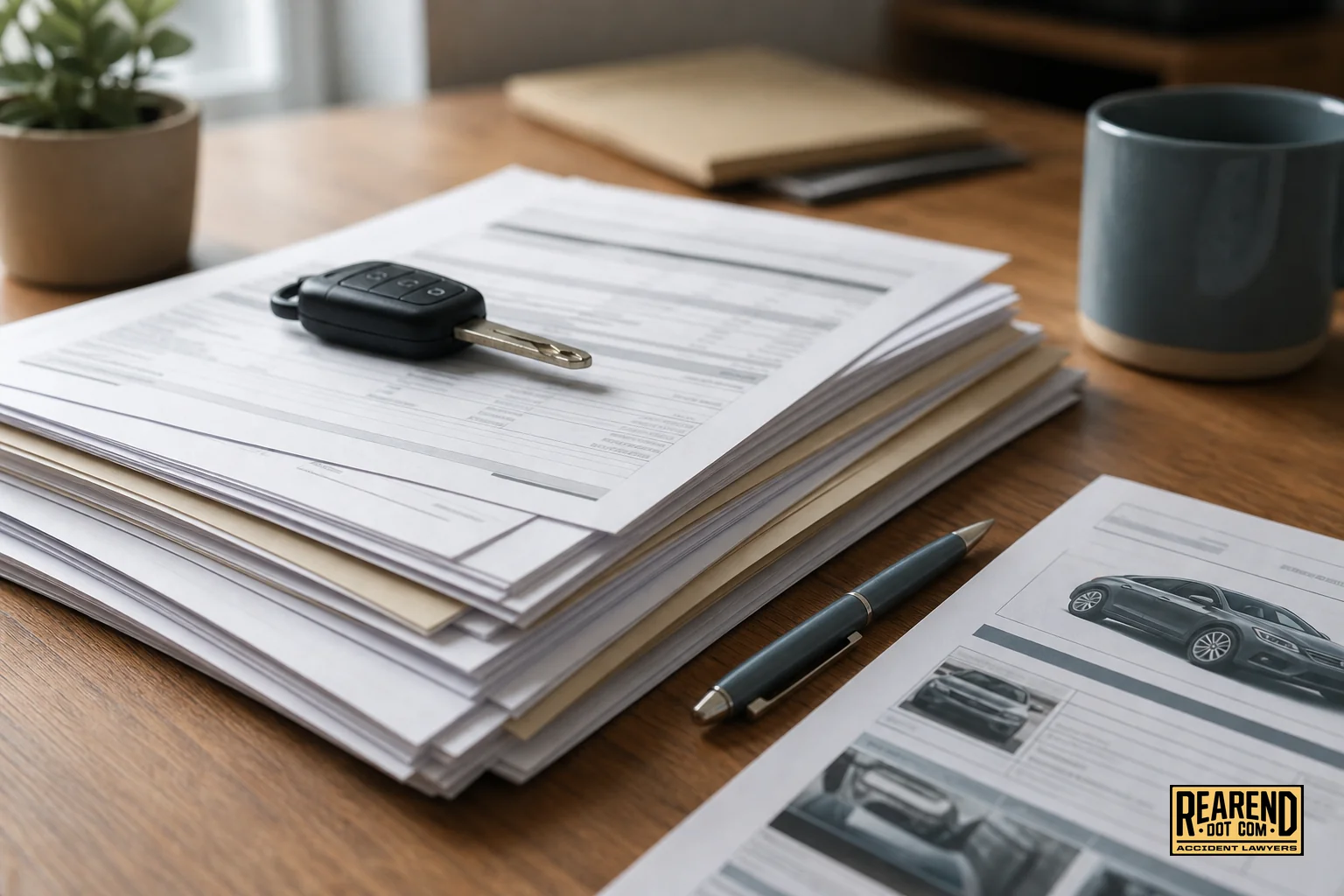
Consider gathering the following before filing:
- Pre-accident value estimate: Comparable listings or a valuation report showing what similar, undamaged vehicles were selling for locally.
- Repair invoices and photos: Detailed records of what was damaged and how it was fixed, including before-and-after photos where available.
- Vehicle history report: A report confirming the accident is now permanently logged against the vehicle’s identification number.
- Independent appraisal: A written valuation from a qualified appraiser comparing the car’s current market value to its pre-crash value.
- Odometer reading and vehicle condition notes: Mileage and condition at the time of the crash, since these affect how much value a documented accident actually removes.
Claimants who skip the independent appraisal step often end up negotiating from a weaker spot. Insurers can dispute a self-reported estimate far more easily than a third-party valuation.
4. Watch for How Insurers Try to Minimize Payouts
Insurers often apply a rigid formula, sometimes called the “17c” method. This formula can significantly understate a vehicle’s actual loss in value. It generally starts with a base value, applies a damage severity multiplier, then a mileage multiplier. The result rarely reflects how the real resale market actually behaves, according to critics.
Beyond formula tricks, adjusters sometimes argue that a repair fully restored the vehicle’s value. They point to quality bodywork as proof there’s nothing left to pay. That argument tends to ignore how vehicle history reports work: a buyer researching the car online will still see the accident, no matter how good the repair looks in person.
Delay is another common tactic. An adjuster may take weeks to respond, ask for repeated documentation, or simply let a claim sit. Some claimants give up or accept a lower offer out of sheer frustration. If this sounds familiar, our article on whether insurance will pay or try to lowball you covers similar patterns in the broader claims process.
5. File the Claim: Step-by-Step
Filing a diminished value claim generally follows a set order. Document the damage, get an independent valuation, build a comparison to pre-crash value, then present a demand to the at-fault insurer with evidence attached.
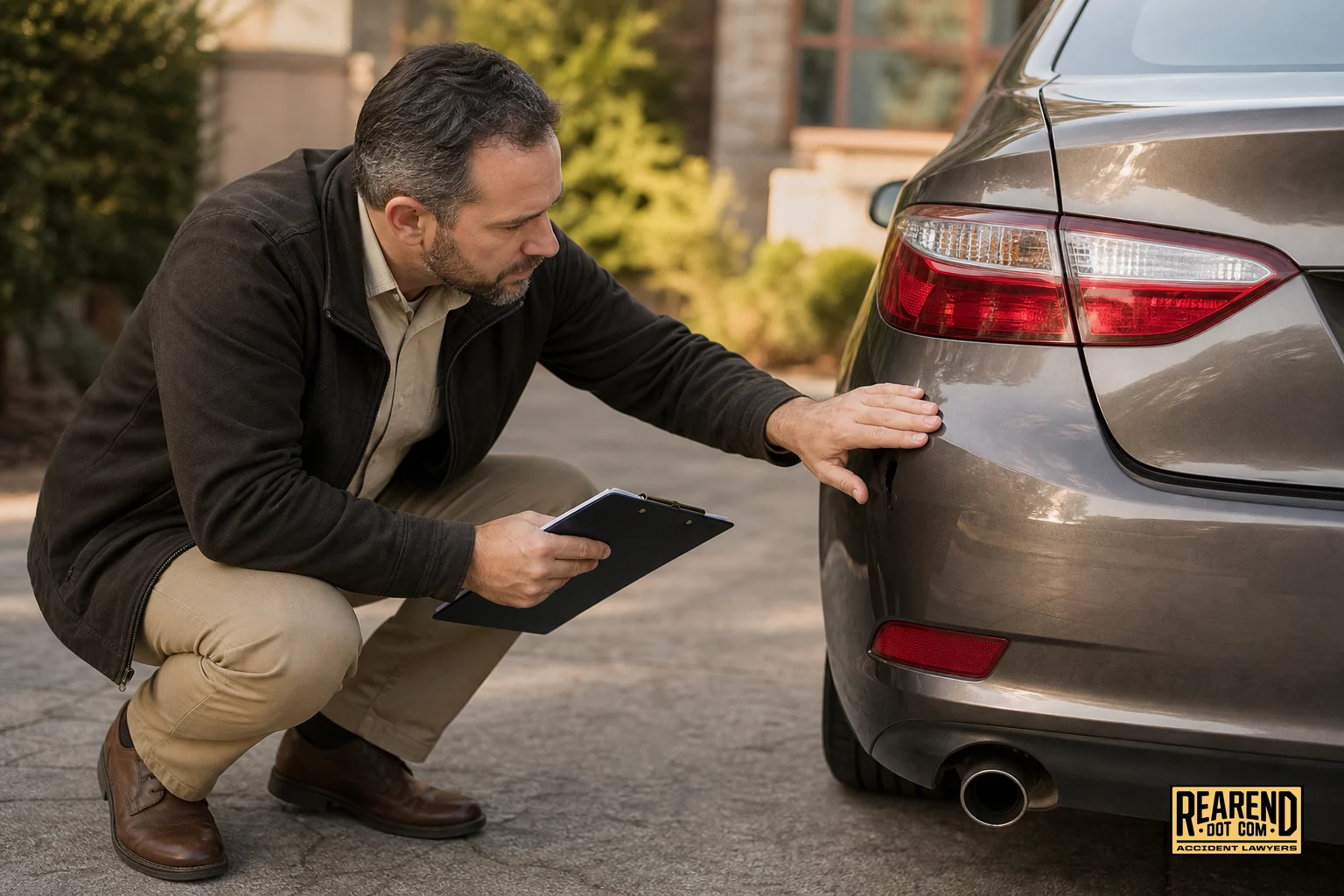
- Document the repair thoroughly. Keep every invoice, receipt, and photo from the body shop, including a description of parts replaced versus repaired.
- Obtain an independent appraisal. A licensed appraiser who works with diminished value cases can write a report comparing pre- and post-accident value.
- Gather comparable vehicle listings. Pull three to five listings for similar make, model, year, and mileage vehicles without accident history. This shows the market gap.
- Submit a demand letter. Send the at-fault driver’s insurer a written demand. Include the appraisal, comparable listings, and repair documentation.
- Negotiate or escalate. If the first offer seems low, respond with more evidence. Some claims need to go further if the insurer won’t budge on a fair number.
Because this process runs on paperwork and negotiation, many claimants handle it alongside their broader injury or repair claim, rather than as a separate request. If you’re weighing whether to handle this step yourself or bring in help, our piece on how to choose a rear-end accident attorney walks through what to look for.
Rear-End Collisions and Diminished Value: A Local Note
Rear-end collisions are common on busy corridors across San Diego, Los Angeles, Oakland, Riverside, and San Jose. The diminished value math doesn’t change much by city. What can shift is the local resale market. A metro area with more used-car inventory may see slightly different discount patterns for accident-history vehicles than a smaller market.
What stays constant is the vehicle history report. Whether the crash happened on the 405 in Los Angeles or a surface street in Riverside, the accident record follows the car’s identification number. It stays there wherever the car is later sold, traded in, or appraised.
Frequently Asked Questions
Can I file a diminished value claim if my car was totaled?
Generally no. If your vehicle was declared a total loss, the insurer typically pays its pre-accident market value directly. That payout already accounts for the vehicle no longer existing in repaired form. So a separate diminished value claim usually doesn’t apply.
Does diminished value apply to leased vehicles?
It can, though the process may involve the leasing company since they technically own the vehicle. Some lease agreements spell out who’s entitled to diminished value proceeds. Review that contract language early.
Will a rear-end collision repair always lower my car’s resale value?
Not always to the same degree. Factors like the vehicle’s age, mileage, damage severity, and local market demand all shape how much a documented rear-end repair affects resale value. That’s why an individual appraisal matters more than a general rule of thumb.
What if the insurance company denies my diminished value claim?
A denial isn’t necessarily final. Review the denial reason, add more documentation, and consider escalating with legal support as common next steps. Our article on what happens if insurance denies a rear-end claim covers this scenario in more detail.
Get Help Building Your Diminished Value Claim
Chasing down comparable listings, appraisal reports, and a formula-driven insurer isn’t a task most people want to take on alone. This is especially true while you’re also recovering from a crash. If you’re trying to figure out whether your rear-ended vehicle qualifies for a diminished value claim, a free evaluation can help. It shows where you stand before you accept any settlement offer.
You can start your claim today to get a case review. Or use this tool to calculate an estimate of what your potential claim could be worth before you talk to an adjuster. If your vehicle still needs repair work documented for your claim, you can also find trusted local auto body shops to get that paperwork started the right way.
Recommended Resources
Start My Claim Find Trusted Local Auto Body Shops Calculate an estimate of what your potential claim could be worth
Related Articles


Need Legal Help After a Rear-End Accident?
Get a free consultation with our experienced legal team