
Does Vehicle Damage Cost Affect Your Injury Settlement?
A small dent in your bumper does not mean a small injury. Insurers often use low repair-cost estimates as an argument to reduce what they offer for pain, medical bills, and lost wages, even though property damage and bodily injury are measured by entirely different standards. Does property damage affect injury settlement value? It can influence how an adjuster frames your case, but it should not determine what your injury claim is actually worth.
Key Takeaways
- Repair cost is a talking point, not a formula: adjusters frequently point to a low estimate to suggest the crash “couldn’t have” caused real injury, but that link is not something insurers substantiate with engineering evidence in most files.
- Low-visible-damage crashes get undervalued often: bumpers are built to absorb impact without showing damage, so a clean-looking bumper can still coincide with a real soft tissue or spinal injury.
- Your two claims are generally separate: a property damage claim and a bodily injury claim are usually handled as distinct matters, meaning settling repairs does not have to lock in your injury number.
- California’s minimum liability coverage is $30,000 per person and $60,000 per accident, which can cap what’s available if the at-fault driver carries only the state minimum.
- Documentation beats damage photos: medical records, gap-free treatment, and a clear injury timeline generally carry more weight than a repair estimate for valuing pain and loss.
At a Glance: Property Damage vs. Injury Claim
|
Factor |
Property Damage Claim |
Injury (Bodily Harm) Claim |
|---|---|---|
|
What it covers |
Vehicle repair, rental, or total-loss value |
Medical bills, lost wages, pain and suffering |
|
Legal classification |
Your car is treated as personal property under the law, so damage to it is a property claim |
Bodily harm evaluated separately from vehicle value |
|
Handled by |
Usually resolved faster, often within weeks |
Can take months, tied to medical treatment length |
|
Are the two linked? |
Generally treated as a separate matter from the injury claim |
Can settle independently of repair costs |
|
Common insurer tactic |
Low repair estimate cited as proof of “minor” impact |
Used to argue against soft tissue injury claims |
|
California minimum coverage |
$30,000 per person / $60,000 per accident (bodily injury limits) |
May cap total recovery if driver carries only state minimum |
|
What can offset a low damage number |
Diminished value claim, repair vs. replacement cost comparison |
Medical imaging, gap-free treatment, witness statements |
1. Understand Why Insurers Link Repair Costs to Injury Payouts
Adjusters use repair estimates as a rough stand-in for how hard your car got hit. A cracked bumper cover and a bent frame rail suggest a harder impact than a light scuff, so the logic feels intuitive on its face.
The problem is that this shortcut ignores basic vehicle engineering. Modern bumpers are designed to absorb impact and often show little visible damage even in collisions that transfer real force into the occupants. Whiplash and other soft tissue injuries frequently occur in exactly these lower-visible-damage crashes, which is why the “low damage means low injury” argument doesn’t hold up as a general rule.
Adjusters know this too, but a lowball opening offer built on a repair estimate is a cheap negotiating tactic. It puts the burden on you to prove your pain is real, using nothing more than a photo of your bumper as their opening argument.
2. Know How “Low Damage, Real Injury” Claims Get Undervalued
Insurers commonly undervalue these claims by anchoring the entire injury conversation to the repair estimate, then arguing that your treatment was excessive relative to that number. It’s a framing trick, not an injury assessment, and it puts you on the defensive from the first phone call.
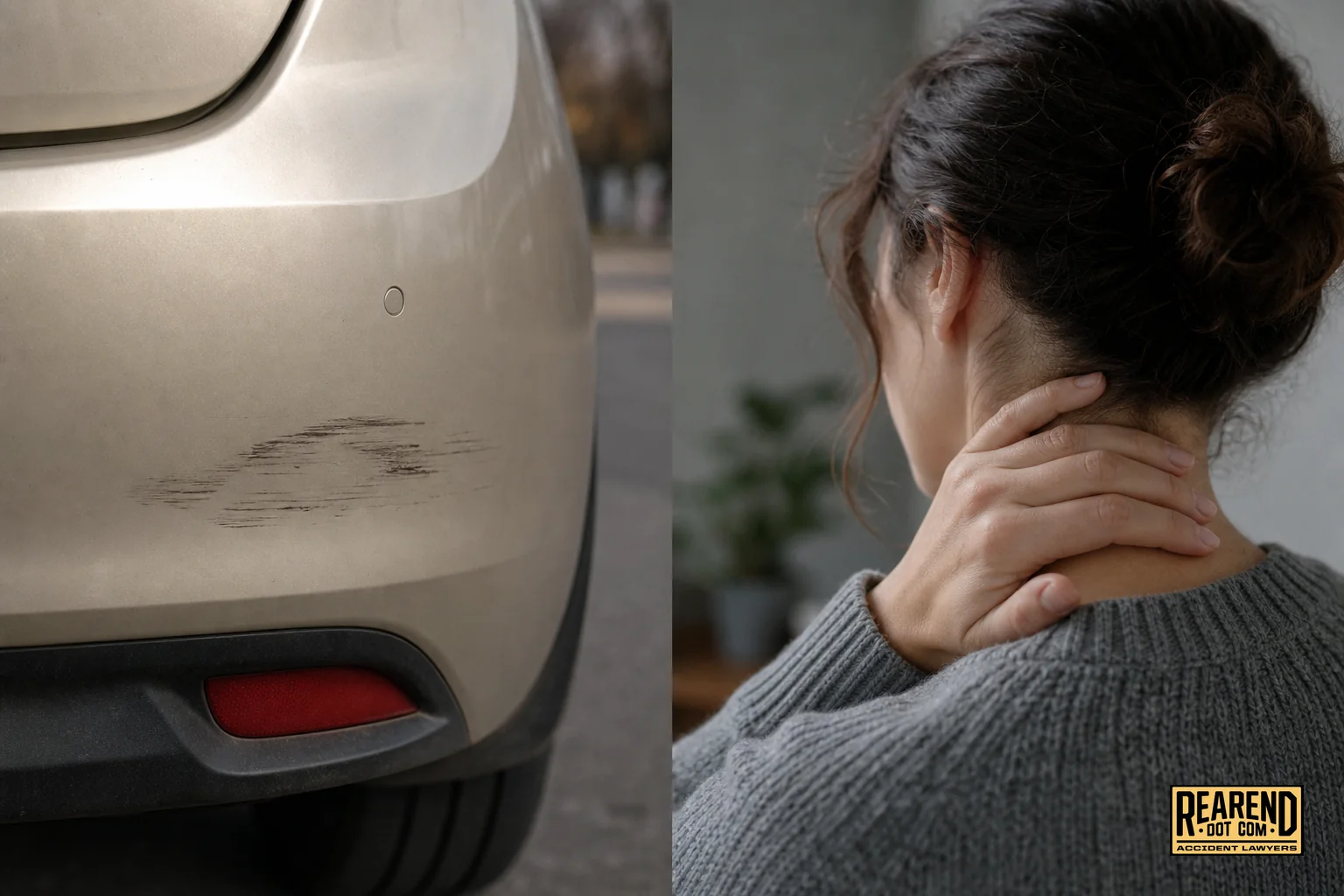
You may hear an adjuster say something like “the damage was minimal, so we don’t see how you’d need months of physical therapy.” That statement conflates two unrelated measurements: what it costs to fix sheet metal, and what it takes for soft tissue, discs, or nerves to heal. Those are not the same question, and no honest injury evaluation treats them as one.
This is also where causation disputes tend to start. If your symptoms appeared a day or two after the crash, rather than immediately, the adjuster may use that gap alongside the damage photos to argue your injury came from somewhere else. Consistent, prompt medical care is what closes that gap.
3. Separate Your Property Damage Claim From Your Injury Claim
Are property damage and injury claims handled together?
No, they’re generally treated as separate matters, even when the same insurer and the same crash produced both claims. You can typically settle your vehicle repair or total-loss payout without that settlement determining your injury compensation.
This separation matters because it means a quick repair check does not have to be the end of the story. Some victims assume that once the body shop is paid and the car is fixed, the case is closed. It isn’t. Your injury claim can still be developing weeks or months after your car is back on the road, particularly if treatment continues.
If you haven’t already gotten your car looked at, finding trusted local auto body shops for an accurate repair estimate is still worth doing early, both for your own peace of mind and because a documented estimate becomes part of your file. Just don’t let that number become the ceiling for how insurers think about your pain and recovery.
4. Does Property Damage Affect Injury Settlement Value in California?
Repair cost alone doesn’t set your injury settlement value in California, but it can shape how hard an insurer pushes back during negotiation. The real drivers of value are your medical bills, lost wages, and documented pain, not the size of the dent.
Where property damage does matter is coverage availability. California requires drivers to carry minimum liability coverage of $30,000 per person and $60,000 per accident for bodily injury. If the at-fault driver only carries the state minimum, that cap can limit what’s realistically recoverable regardless of how well-documented your injury is. This is one reason it helps to know the fuller picture of what a rear-end accident settlement in California typically involves, beyond just the vehicle repair number.
Property damage can also come up through diminished value, since a car that’s been in a collision is often worth less on the resale market even after a proper repair. That’s a separate line item from your injury claim, but it’s worth knowing it exists if your vehicle took a real hit.
5. Build Evidence That Counters a Lowball “Minor Damage” Argument
The strongest counter to a “the damage was minor” argument is a paper trail that has nothing to do with your car. Adjusters weigh what they can verify, so gaps in that trail work against you just as much as a clean bumper does.
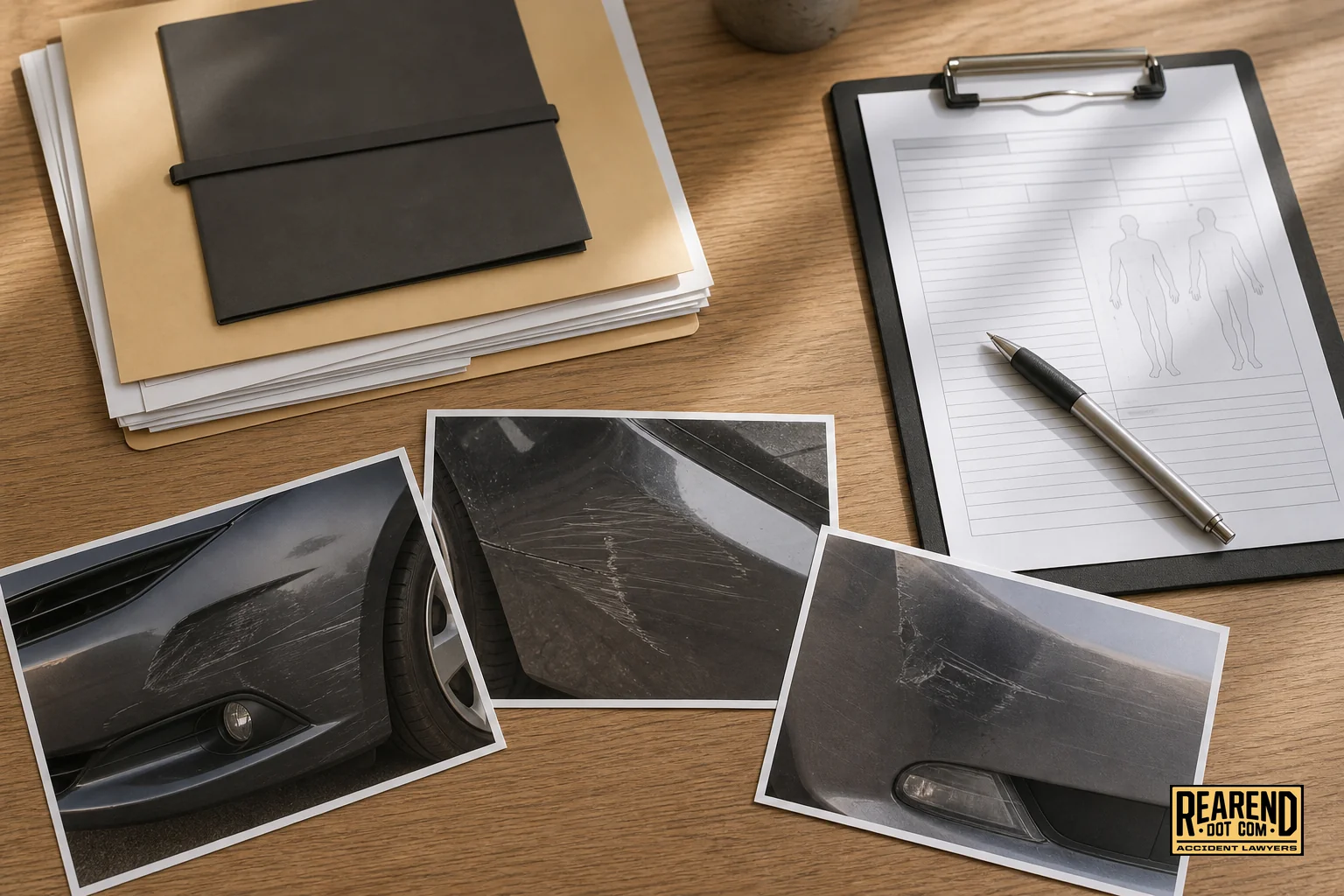
- Prompt medical evaluation: being seen within a day or two of the crash links your symptoms to the collision instead of leaving room for a causation dispute.
- Gap-free treatment: consistent follow-up appointments show the injury is being actively managed, not exaggerated.
- Diagnostic imaging: MRIs or X-rays can document injuries that don’t show up in a basic exam.
- Photos and witness statements: these support the property side of the claim and the sequence of events, since a car is legally classified as personal property, and damage to it is evaluated on its own terms.
- A written record of pain and limitations: a simple daily log of symptoms can carry real weight months later when details get fuzzy.
For a fuller breakdown of what actually moves the number up or down, this rundown of settlement amount factors covers pieces victims often miss on their own.
6. What to Do If an Adjuster Uses Vehicle Damage to Lowball You
Push back with specifics, not frustration. Ask the adjuster to explain, in writing, exactly how they’re connecting the repair estimate to their injury offer, and request the medical review or standard they used to reach that conclusion.
Be careful about signing a property damage release. Some releases are worded broadly enough that they can be read to affect your injury claim too, so read anything you’re asked to sign closely, or have someone review it first.
If the back-and-forth is going nowhere, it’s usually a sign to get a skilled accident attorney who has handled numerous rear-end cases involved before you say anything else to the adjuster. If you’re weighing your options, this guide on choosing a rear-end accident attorney walks through what to look for, and you can also see what factors go into rear-end accident lawyer cost and fees before you commit to anything.
FAQ
Does more vehicle damage mean a bigger settlement?
Not by itself. Vehicle damage severity is one data point among several, and it doesn’t reliably predict injury severity, since low-speed impacts can still cause real soft tissue or spinal injuries.
Can I still get compensated if my car had minor damage?
Yes. Compensation for injury generally depends on your medical documentation and treatment, not on how much the repair bill came to. Many valid injury claims come from crashes with only minor visible vehicle damage.
Should I settle my property damage claim before my injury claim?
You can generally handle them on separate timelines, since the two are usually treated as distinct matters. If you’re unsure whether a release you’re being asked to sign affects your injury claim, it’s worth a second look before you sign.
If an adjuster is pointing at your bumper to justify a low offer, that’s a negotiating tactic, not a final number. You can start your claim with a free case evaluation to get a clearer sense of what your case may actually be worth, or use this estimate calculator to see a potential range before you talk to an adjuster again. Getting the right documentation in place now is what protects the value of your claim later.
Recommended Resources
Start My Claim Find Trusted Local Auto Body Shops Calculate an estimate of what your potential claim could be worth
Related Articles


Need Legal Help After a Rear-End Accident?
Get a free consultation with our experienced legal team