
Free Rear-End Accident Case Evaluation Oakland: Is Your Claim Worth Pursuing?
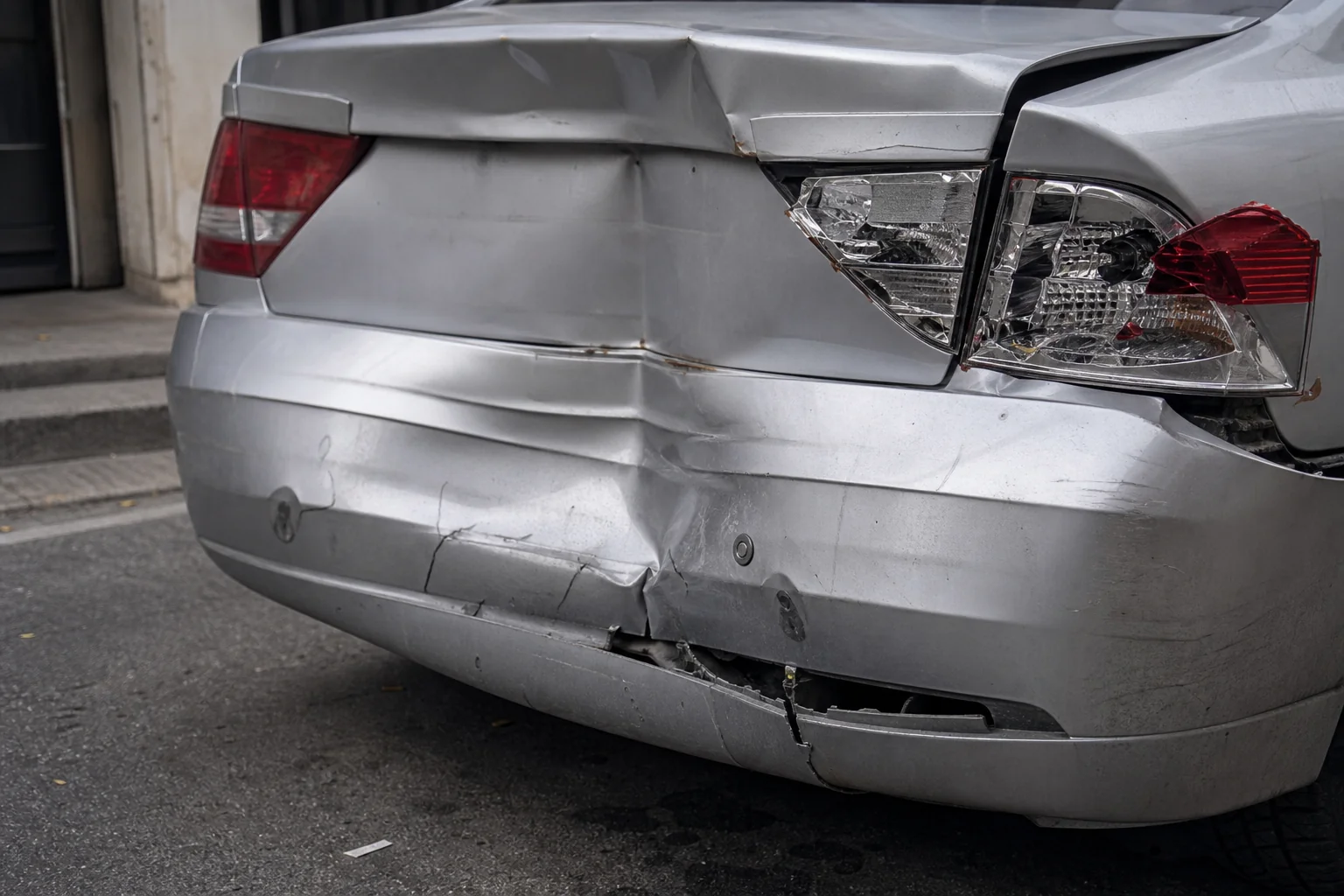
You were stopped at a red light on International Boulevard. A driver behind you wasn’t paying attention. Now your neck hurts, your car has a crumpled bumper, and an insurance adjuster is already calling with questions you’re not sure how to answer.
Before you say a word to that adjuster, there’s one step that costs you nothing and could change the outcome of your entire claim: a free rear-end accident case evaluation. For Oakland victims, this is often the fastest way to find out whether your claim has real financial value, and what it would take to pursue it.
This guide walks you through exactly what happens during a free evaluation, what to bring, how attorneys assess your case, and how to decide whether moving forward with legal representation makes sense for your situation.
What a Free Case Evaluation Actually Involves
A free case evaluation is not a sales pitch. Think of it as a legal triage — a structured conversation where an attorney or trained intake specialist reviews the core facts of your accident to determine whether you have a viable claim and what it might be worth.
During the evaluation, the attorney will look at three main areas:
- Liability: Who caused the crash, and how easy is it to prove?
- Damages: What injuries and financial losses did you suffer?
- Insurance coverage: Is there a policy in place to pay a settlement?
Most evaluations take 15 to 30 minutes. They can happen by phone, through an online intake form, or in person. At Rearend.com, the process is designed to be fast, you can review your claim in just a few clicks for free and receive a follow-up from the legal team within 24 hours.
There is no obligation to hire anyone after the evaluation. You walk away with a clearer picture of your options, and the attorney walks away with enough information to tell you honestly whether your case is worth pursuing.
1. Gather These Documents Before Your Evaluation
You don’t need a complete file to get started. But the more information you bring to your evaluation, the more precise the attorney’s assessment will be. Here’s what to pull together:
- Police report or incident number: If Oakland PD or the California Highway Patrol responded to the scene, request a copy of the report. Even the incident number helps.
- Photos of the damage and scene: Images of your vehicle, the other car, skid marks, traffic signals, and road conditions are valuable evidence.
- Medical records and bills: Even if treatment is ongoing, bring whatever you have, ER discharge papers, imaging results, prescription receipts.
- Insurance information: Your own policy and the at-fault driver’s insurance details, if you have them.
- Witness contact information: Names and phone numbers of anyone who saw the crash.
- Any adjuster communications: Emails, letters, or notes from calls with the insurance company. Do not sign anything before your evaluation.
If you’re missing some of these items, don’t wait. Attorneys who handle rear-end cases regularly can help obtain records, request police reports, and pull traffic camera footage, but time matters. Evidence disappears faster than most people expect. For a detailed breakdown of what to do in the days immediately after a crash, see What to Do After Being Rear-Ended in the First 72 Hours.
2. Understand How Attorneys Assess Liability in Oakland Rear-End Cases
California law creates a strong presumption that the following driver is at fault in a rear-end collision. Under the California Vehicle Code, drivers must maintain a safe following distance at all times. When someone hits you from behind, that presumption works in your favor from the start.
When Liability Gets Complicated
Most rear-end cases in Oakland are straightforward on liability. But a few scenarios can complicate things:
- Sudden stops: If you stopped abruptly without warning, the at-fault driver’s insurer may argue shared fault.
- Multi-vehicle pileups: On Oakland’s I-880 or I-580 corridors, chain-reaction crashes can involve multiple at-fault parties.
- Brake-checking claims: Insurers sometimes allege the front driver intentionally slowed to cause a collision. These claims are rarely successful but can delay resolution.
- Defective traffic signals or road hazards: In some cases, a third party, like a municipality, may share liability.
Oakland’s high-traffic corridors, including the I-880 Nimitz Freeway, I-580, and Highway 13 through the hills, see a disproportionate share of rear-end collisions. Attorneys familiar with Alameda County cases know which intersections generate disputes and how local courts tend to handle them.
What Attorneys Look For to Establish Fault Quickly
During your evaluation, the attorney will ask whether there’s a police report, whether fault was noted at the scene, and whether any witnesses or cameras captured the impact. A clear police report naming the other driver as at fault can significantly accelerate the claims process. California is also a comparative fault state, meaning even if you were partially responsible, you can still recover damages, reduced by your percentage of fault.
For a deeper look at how fault is established in these cases, the California Vehicle Code Section 21703 outlines the following distance requirements that underpin most rear-end liability arguments.
3. Know How Damages Are Calculated
One of the most important things an attorney does during a free evaluation is give you a realistic sense of what your claim might be worth. That number comes from two categories of damages.

Economic Damages
These are the losses you can document with receipts and records:
- Emergency room visits, specialist appointments, physical therapy, and prescription costs
- Lost wages if you missed work during recovery
- Reduced earning capacity if your injuries affect your ability to work long-term
- Vehicle repair or replacement costs
- Transportation costs to medical appointments
Non-Economic Damages
These are harder to quantify but often represent the largest portion of a settlement:
- Pain and suffering: Physical discomfort and limitations caused by your injuries
- Emotional distress: Anxiety, sleep disruption, or PTSD following the crash
- Loss of enjoyment of life: Activities you can no longer do because of your injuries
Why Soft Tissue Injuries Matter in Alameda County Cases
Whiplash and soft tissue injuries are among the most common outcomes of rear-end collisions, and among the most contested by insurance companies. Insurers often argue these injuries are minor or pre-existing. An experienced attorney knows how to document soft tissue damage properly, including through MRI imaging, physical therapy records, and treating physician statements, to support a fair valuation.
Future medical costs also factor into the calculation. If your injuries require ongoing treatment, additional physical therapy, pain management, or surgery, those projected costs belong in your claim. Attorneys work with medical professionals to estimate these figures accurately.
For a broader look at what drives settlement values, see Rear-End Accident Lawyer Cost & Fees and our detailed breakdown of how contingency-based representation works.
4. Ask the Right Questions During Your Evaluation
A free evaluation runs both ways. The attorney is assessing your case, but you should be assessing the attorney too. Here are the questions worth asking before you decide anything:
- “What is the likely value range of my claim?” A good attorney won’t give you a precise number at this stage, but they should be able to give you a realistic range based on your injuries and liability picture.
- “Who will handle my case day-to-day?” At large firms, your case may be passed to a paralegal or junior associate. Know who your point of contact will be.
- “What is your contingency fee percentage?” Standard rates in California typically fall between 33% and 40%, depending on whether the case settles or goes to trial. Get this in writing.
- “How long do cases like mine typically take to resolve?” Oakland-area rear-end cases that settle without litigation often resolve in three to nine months. Cases that go to court take longer.
- “What happens if the insurance company denies my claim?” You want to know whether the firm is prepared to file a lawsuit if negotiations stall.
For a complete list of what to ask before signing a retainer, see Rear-End Accident Attorney in San Diego: What to Expect, the same questions apply whether you’re in San Diego or Oakland.
5. Recognize the Signs That Your Claim Has Real Value

Not every accident produces a claim worth pursuing through an attorney. But most rear-end collisions in Oakland do, especially when the following factors are present:
- Clear liability: A police report naming the other driver as at fault, or a rear-end impact with no complicating factors, gives your claim a strong foundation.
- Documented injuries: Medical records showing treatment, even for soft tissue injuries, are essential. If you sought care at Highland Hospital, UCSF Benioff Oakland, or any urgent care clinic, those records support your claim.
- Lost income: If you missed shifts, lost freelance work, or had to take unpaid leave, those losses are recoverable.
- Insurance coverage on the at-fault driver: California requires minimum liability coverage, but the at-fault driver’s policy limits affect how much you can recover. An attorney can identify all available coverage sources, including your own uninsured/underinsured motorist policy.
- Ongoing symptoms: Injuries that persist beyond a few weeks, neck pain, headaches, back stiffness, numbness, suggest a more serious underlying condition and a higher potential settlement value.
Even if you’re unsure whether your injuries are “serious enough,” the evaluation itself will answer that question. Many victims underestimate the value of their claim because they don’t know what’s recoverable. That’s exactly what the evaluation is designed to clarify.
6. Decide Whether to Move Forward With Legal Representation
After your evaluation, you’ll have a clearer picture of three things: whether you have a viable claim, what it might be worth, and what the legal process would look like. Here’s how to think through the decision.
When Hiring an Attorney Makes Sense
Legal representation is worth considering when:
- Your injuries required medical treatment (even a single ER visit)
- You missed work or expect to miss work in the future
- The insurance company has already made a lowball offer
- The other driver’s insurer is disputing liability
- Your injuries are ongoing or may require future treatment
How the No-Fee Model Works
Rearend.com operates on a contingency fee basis: you pay nothing upfront, and attorney fees are only collected if compensation is recovered on your behalf. If the case doesn’t result in a settlement or verdict, you owe nothing for legal representation.
This model removes the financial barrier that stops many Oakland accident victims from getting the help they need. You don’t need savings, a retainer, or a credit card to start. You just need to submit your claim information.
What Happens After You Say Yes
Once you decide to move forward, the process typically looks like this:
- Intake and retainer: You sign a contingency fee agreement and provide your documents.
- Investigation: The legal team gathers evidence, police reports, medical records, photos, witness statements, and any available traffic or surveillance footage.
- Demand letter: Once your medical treatment is complete (or a clear picture of future costs is established), the attorney sends a demand letter to the at-fault driver’s insurer.
- Negotiation: The insurer responds with a counteroffer. Your attorney negotiates on your behalf.
- Settlement or litigation: Most cases settle before trial. If the insurer refuses a fair offer, your attorney can file a lawsuit in Alameda County Superior Court.
For a detailed look at what can slow this process down, and how to avoid common delays, see Rear-End Collision Claim Process San Jose: What Slows Down Your Settlement. The same bottlenecks apply in Oakland.
Oakland-Specific Considerations
Alameda County Superior Court handles civil cases for Oakland residents. Cases that go to litigation are filed there, and local court timelines, judicial preferences, and jury demographics all factor into how an attorney prepares your case. Attorneys who regularly handle Oakland-area rear-end cases understand these local dynamics in ways that out-of-area firms may not.
California’s two-year statute of limitations for personal injury claims means you have time, but not unlimited time. Waiting too long can result in lost evidence, faded witness memories, and ultimately a barred claim. The sooner you get an evaluation, the more options you have.
Frequently Asked Questions About Free Case Evaluations in Oakland
Is the evaluation really free with no strings attached?
Yes. A legitimate free case evaluation costs you nothing and creates no obligation to hire the firm. You’re entitled to walk away after the conversation with no fees owed and no pressure to sign anything.
What if I don’t have all my documents yet?
You don’t need a complete file to start. Provide what you have, even a brief description of the accident and your injuries is enough to begin the evaluation. The legal team can help you obtain records you’re missing.
Can I get an evaluation if the accident happened weeks or months ago?
Yes. California’s two-year statute of limitations gives you time to act, though earlier is always better. Evaluations are available regardless of when the accident occurred, as long as you’re within the legal filing window.
What if the other driver was uninsured?
This is more common than most people realize. If the at-fault driver has no insurance, your own uninsured motorist (UM) coverage may apply. An attorney can review your policy and identify all available sources of compensation, including underinsured motorist coverage if the other driver’s limits are too low to cover your damages.
How soon after the evaluation will I hear back?
At Rearend.com, the legal team follows up within 24 hours of a submitted claim. You won’t be left waiting days for a response while your questions go unanswered.
Does a free evaluation mean the attorney thinks my case is strong?
Not necessarily. The evaluation is designed to assess your case honestly, including cases where the attorney determines the claim may not be viable. An honest evaluation that tells you your case is weak is still valuable information. It saves you time and helps you make an informed decision.
Take the First Step, It Costs Nothing
You’ve already been through the collision. The last thing you need is to navigate the insurance claims process alone, without knowing whether your case has real value or what you’re entitled to recover.
A free rear-end accident case evaluation in Oakland gives you answers without risk. You’ll know whether your claim is worth pursuing, what it might be worth, and what the legal process looks like, before you commit to anything. If the evaluation shows your case has value, you can move forward with representation at no upfront cost. If it doesn’t, you’ve lost nothing but 20 minutes.
Don’t let the insurance company’s timeline become your timeline. Start your claim at Rearend.com today and get a clear, honest assessment of your options from a legal team that focuses exclusively on rear-end collision cases.
Related Articles


Need Legal Help After a Rear-End Accident?
Get a free consultation with our experienced legal team